




1. Inspect the surface of the tire, which should not have any tread separation or sidewall swelling.
2. Using a caliper depth gauge, measure the tread depth, which should be at least 1.6 mm. Otherwise, the tire cannot be used.
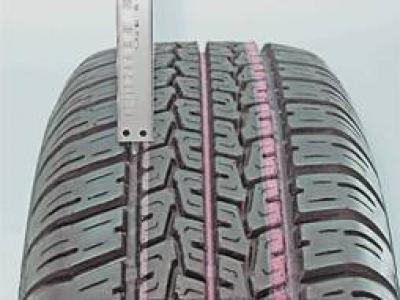
3. For visual monitoring of tread wear, indicators in the form of protrusions with a height of 1.6 mm are made in its longitudinal grooves.
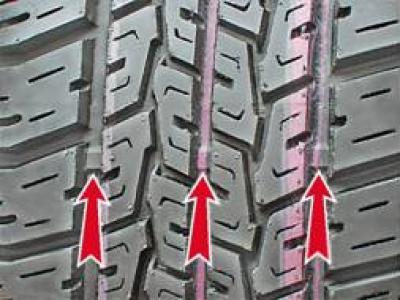
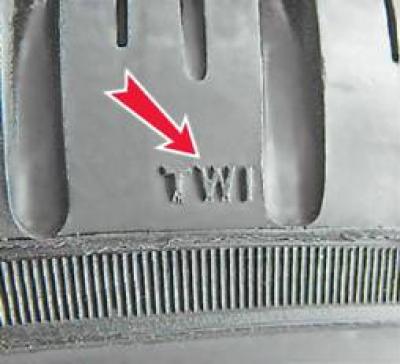
At the location of the indicators on the sidewall of the tire there are marks in the form of the letters TWI or a triangle "A".
Thus, it is possible to compare the degree of tread wear at the edges of the tire and in its center. Accelerated wear of the middle part of the tread indicates the use of the tire with increased pressure, and wear of the inner or outer part of the tread indicates the need to adjust the wheel alignment angles. If one of the wheels is intensively worn, it is possible that the suspension parts or power elements of the car body are deformed.
The original is posted on Internet resource: VAZbook.ru
Warning! According to the "Appendix to the Basic Provisions for Admission of Vehicles to Operation and Duties of Officials to Ensure Road Safety", it is prohibited to operate a passenger car:
- if the tire tread depth is less than 1.6 mm;
- with tires that have external damage (punctures, cuts, tears) exposing the cord, as well as delamination of the frame, peeling of the tread and sidewall; - if there is no mounting bolt or there are cracks in the wheel disk and rims, there are visible violations of the shape and size of the mounting holes;
- if the tires do not match the vehicle model in size or load capacity; - tires of different sizes and designs are installed on one axle of the vehicle (radial, diagonal, tubed, tubeless), models, with different tread patterns, studded and non-studded, frost-resistant and non-frost-resistant, new and restored.