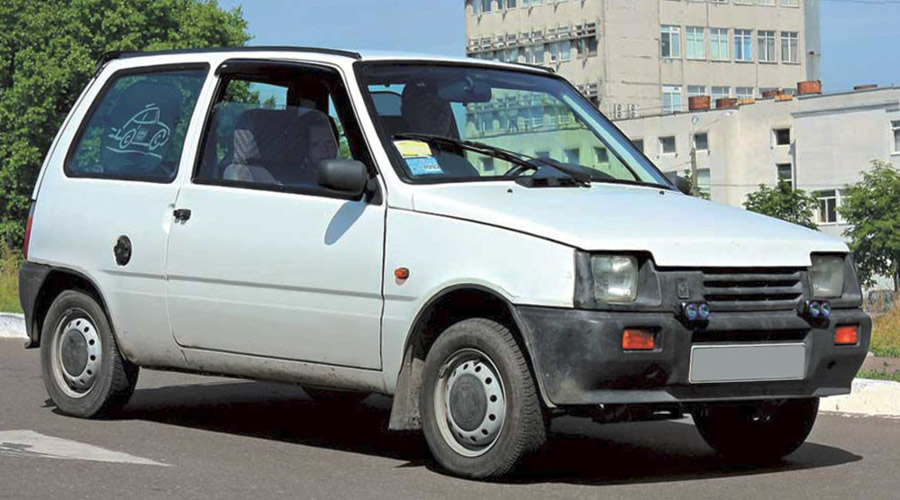
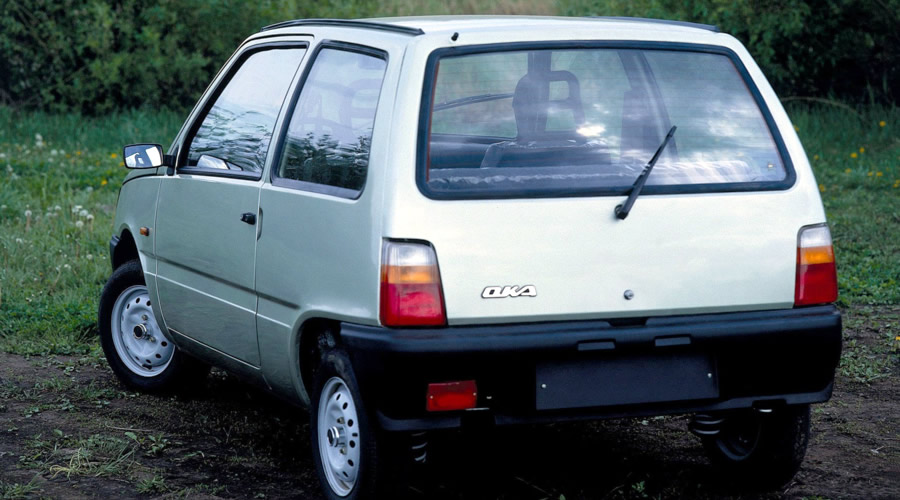
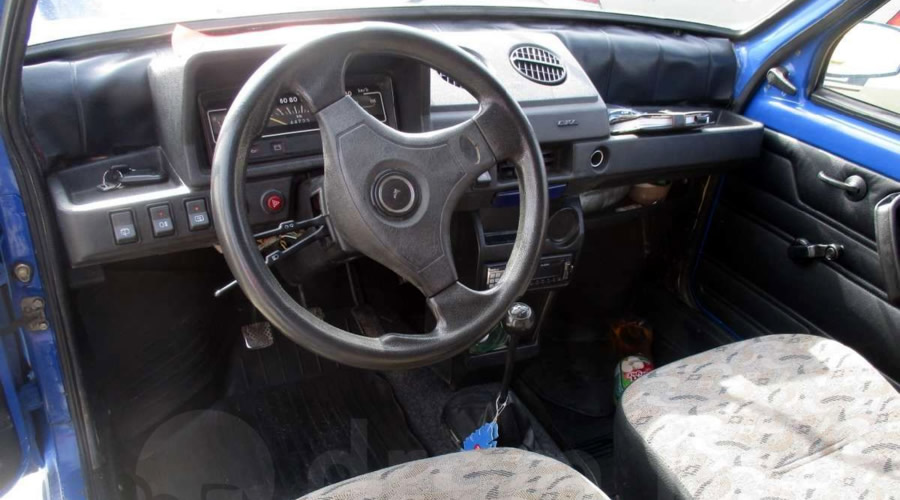
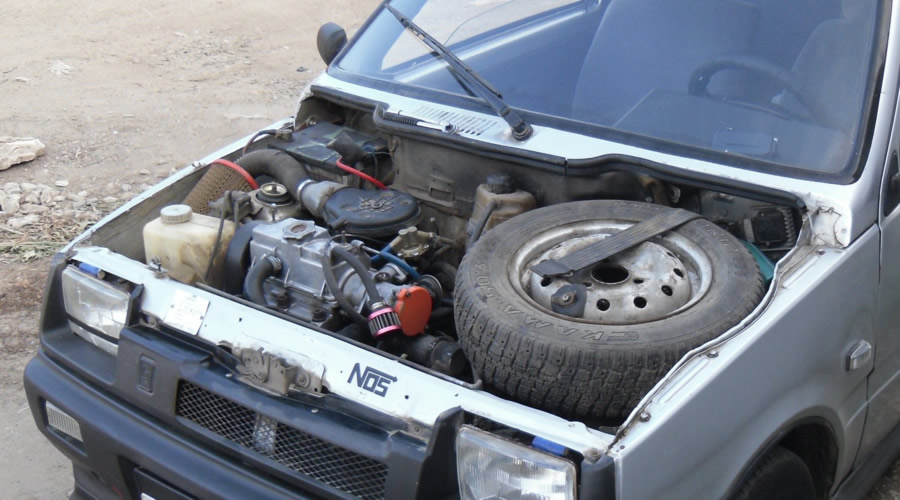
The car body is a 3-door hatchback with a transverse front engine. The dimensions of the car are length: 3200 mm, width: 1420 mm, height: 1400 mm, ground clearance is 150 mm, weight is 645 kg. The engine is a carburetor 2-cylinder based on the VAZ-2108 engine with synchronously moving pistons, but the working one is still alternate, to reduce vibration, two balancing shafts were installed. The front suspension is MacPherson with an anti-roll bar, and the rear with a cross beam. The braking system is hydraulic - disc in front, drum in the back.
From concept to prototype
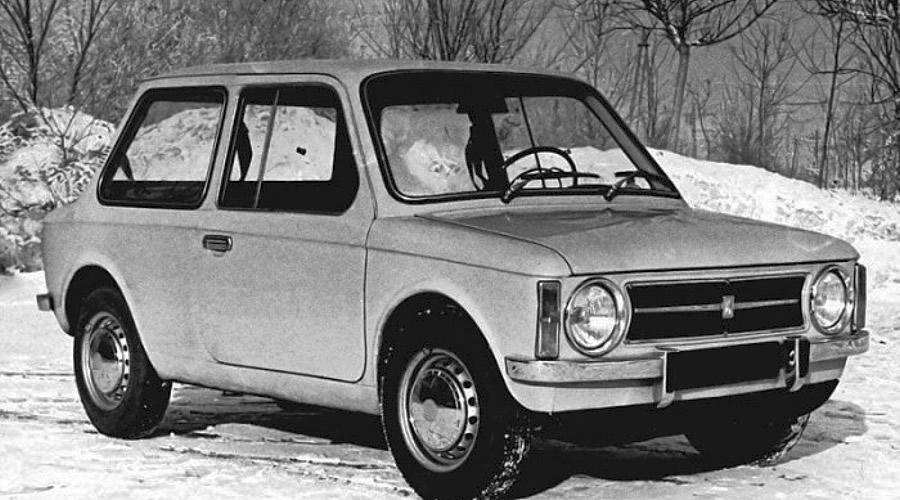
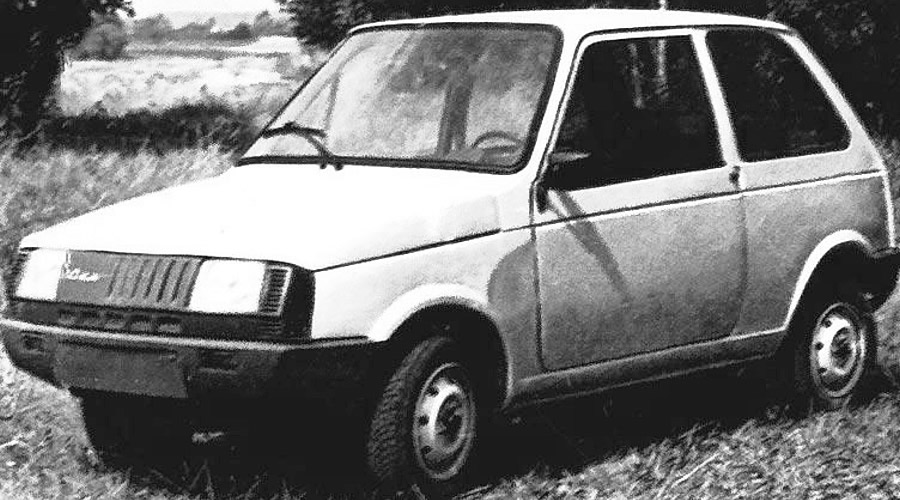
Development began in the 1970s at VAZ, and in 1971 the first prototype of a front-wheel drive compact car, the VAZ-E1101, was presented. Later, two prototypes were built with the codes 2E1101 and 3E1101 and the name "Ladoga". The drawings were transferred to the Zaporozhye plant, where they were laid down as the basis for the future "Tavria". In 1979, the Serpukhov Motorcycle Plant began work on creating a replacement for the outdated S3D wheelchair, and in 1982 they presented a prototype of the SMZ-1101 "Oka" microcar. At NAMI, the Fiat 126 "Malukh" with a two-cylinder engine located at the rear was used as a basis for developing the Oka. The engine was also borrowed from the Fiat and moved to the front. The prototypes were named NAMI-0219M and NAMI-0231, and after the body was modified, NAMI-0266.
In 1982, the Ministry of Automobile Industry issued an order to design a small-class car for the designers of VAZ, as well as SMZ and NAMI. Production was planned to begin in 1984 in the following quantities: AvtoVAZ - 20 thousand, KamAZ - 20 thousand and SMZ - 10 thousand. However, due to economic difficulties in the country, funding was provided intermittently and in insufficient quantities. The prototype SMZ-1101 and its concept were recognized as erroneous and only the name "Oka" remained from it. The Japanese "kei car" Daihatsu Cuore was chosen as a basis, from which only the dimensions and proportions of the body were taken.
There was a big problem with the choice of the engine. At that time, two-cylinder engines were produced only for motorcycles. The two-cylinder power unit "Daihatsu" was chosen as the basis. They tried to unify it as much as possible with the VAZ-2108 engine, but it did not work out. The first engine was assembled in 1984 and had the designation VAZ-1101.
The first two examples of the cars were released in March 1984, and in 1985 another model was built. The test results were not very good - a small trunk and easy to tip over when maneuvering even at low speed. After the modifications, the wheelbase was increased and the suspension was completely redesigned. As a result, excellent controllability and stability were achieved.
Also, the cost of the 1101 engine turned out to be higher than planned, and therefore it was completely unified with the 1.3-liter VAZ-2108 engine. The next engine was designated by the code 1111. It was two cylinders taken from the middle of the 2108 engine, which move synchronously. To compensate for the missing pistons, balance shafts were installed in the engine crankcase. The engine turned out to be slightly more powerful than the 1101 and much cheaper to manufacture, as well as to operate and repair.
The first prototype of the car was officially presented to the public in March 1986. In 1987, state tests of the car were conducted on the proving ground and the track and it was recommended for production. In 1988, the first batch of 300 cars rolled off the assembly line.
Production
It was mass production that was planned in the city of Yelabuga, at the Yelabuga Automobile Plant (ElAZ), which was supposed to produce 900 thousand VAZ-1111 "Kama" cars per year. But due to the collapse of the USSR, only small-scale production of foreign cars under license was established at ElAZ. In 1995, AvtoVAZ considered the production of 20 thousand cars per year unprofitable and completely switched to SeAZ (former SMZ) and on ZMA (kamAZ passenger car division). In the same year, a modification of the VAZ-11113 was released with a more powerful 0.75-liter engine with a capacity of 33 hp.
After the financial crisis of 1998 and the sharp depreciation of the ruble against the dollar, the Oka turned out to be a very cheap car in its class both on the foreign and domestic markets. Until 2005, production only increased, but then with the appearance of Daewoo Matiz and other competitors, demand for the Oka began to fall. In 2006, production remained only at SeAZ, in 2007 the standard engine was replaced by a Chinese injection 3-cylinder FAW with a volume of 1.0 liter. But still, in November 2008, production was completely stopped due to unprofitability.
In 2013, AvtoVAZ announced plans to revive the Oka by 2020, taking into account modern requirements.
Modifications
- VAZ-1111 — a basic model with a 2-cylinder engine with a volume of 0.65 liters. It was produced in 1988-1996.;
- VAZ-1111E is an experimental model with an electric drive.
- SeAZ-1111-01 — for disabled people without both legs;
- SeAZ-1111-02 - for disabled people without one leg;
- SeAZ-1111-03 - for disabled people without one leg and one arm;
- VAZ-11113 (LADA OKA) — modification with a 2-cylinder carburetor engine VAZ-11113 with a volume of 0.75 liters. It was produced in 1996-2007.;
- SeAZ-11113-01 — for disabled people without both legs;
- SeAZ-11113-02 — for disabled people without one leg;
- SeAZ-11113-03 — for disabled people without one leg and one arm;
- SeAZ-11116 — with a Chinese FAW engine with a volume of 1.0 liter. Produced in 2007-2008.;
- SeAZ-11116-01 — for disabled people without both legs;
- SeAZ-11116-02 — for disabled people without one leg;
- SeAZ "Oka Junior" - a small-scale sports version of "Oka" for beginner racers;
- SeAZ "Sport" - pseudo-racing version of "Oka" with safety arcs;
- "Oka-Astro-11301" is a small-scale version of "Oka" by the small firm "Astro-kar" from Chelny. It was produced in 2002-2006.;
- "Astro-113011" is a tuning version of "Oka" produced in Naberezhnye Chelny by a small company "Kama Automobile Assembly Plant". It was produced in 2006-2007.;
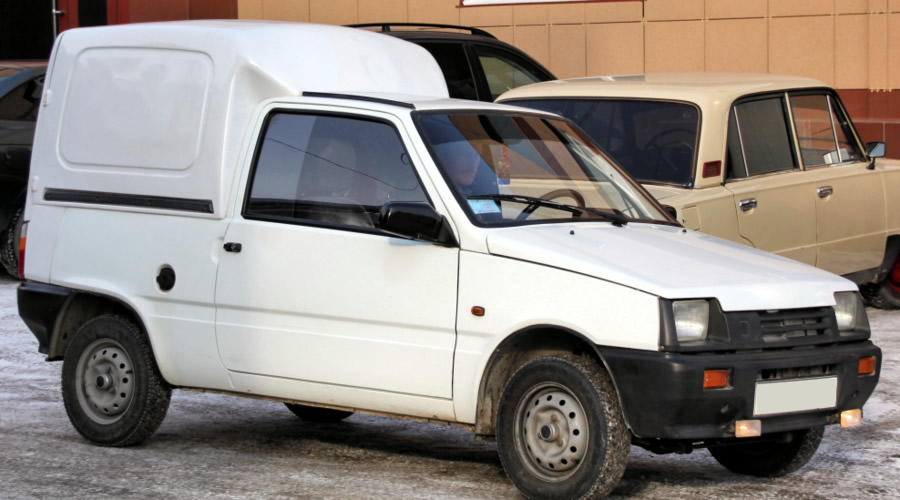
- VAZ-17013 "Toima" is a small-scale commercial model based on the Kama "Oka". It was produced by the Chelny small company "Astro-kar" in 2000-2007.;
- VAZ-1301 "Gnome" - a prototype pickup based on the Kama "Oka";
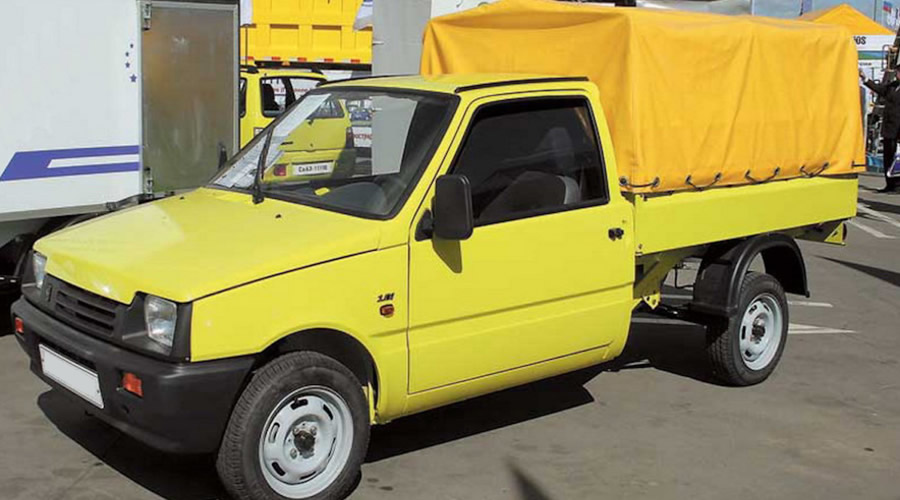
- SeAZ-11116-010-50 "Oka Van" and SeAZ-11116-011-50 "Oka Pickup" are commercial modifications of the "Oka";
- SeAZ-11116-010-52 "Oka Universal" - a commercial modification of the "Oka" with a van-type body;
- SeAZ-11116-60 "Oka Pickup" - a commercial modification of the "Oka" with a pickup-type body with a separate flatbed platform;
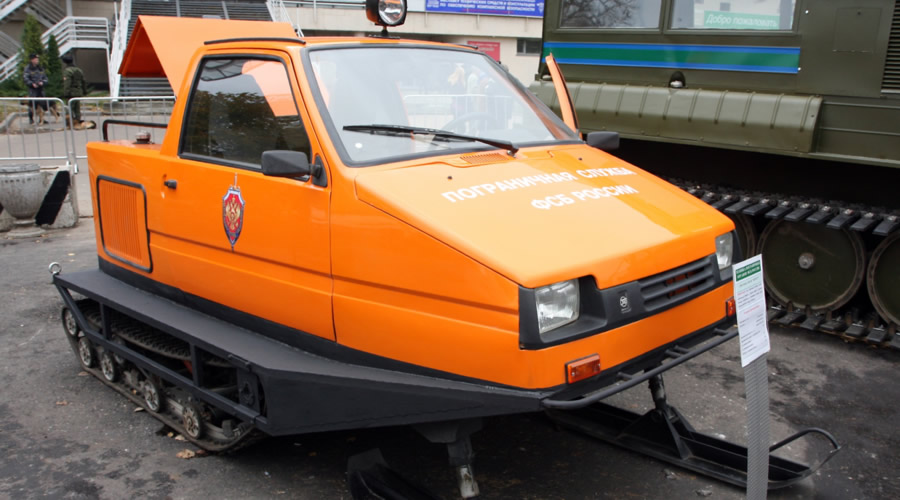
- TTM-1901 "Berkut" is a heavy snowmobile (autosled) of the classic ski-track design. It is produced by the Nizhny Novgorod company "Transport".