




The tire pressure also changes when the car is moving at high speed and making frequent maneuvers. In winter, this is almost unnoticeable. Cold air and low road surface temperature do not allow the tire to heat up. In summer, the oncoming flow of warm air does not cool the tire well, and its temperature begins to rise. Additional heating of the tire occurs from the road surface heated by the sun's rays. All this can increase the tire pressure by 0.2-0.3 kgf/cm².
Warning! The tire pressure is measured when its temperature is equal to the ambient air temperature.
To complete the work you will need:
- pressure gauge;
- compressor or tire pump.
Sequence of execution
1. Prepare the vehicle for operations (see "Preparing a car for maintenance and repair").
Table 10.3.1. Air pressure in tires (kgf/cm²)
|
Tire size |
Front wheels |
Rear wheels |
|
175/70R13 |
1,7+0,2 |
2,0+0,2 |
|
165/70R13 |
1,6+0,2 |
1,9+0,2 |
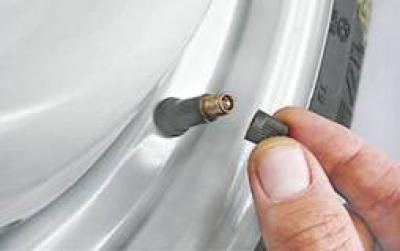
2. Unscrew the protective cap of the wheel valve.
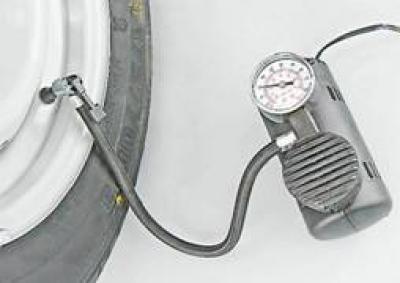
3. Connect a pressure gauge or a tire pump with a pressure gauge to the valve.
4. If the pressure is not normal, then we bring it to the required value by pumping the tire with a pump or releasing excess pressure by pressing on the valve stem with a suitable tool.
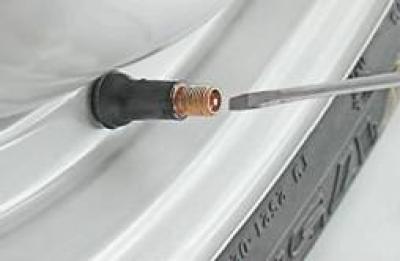
When pumping, we control the pressure according to the readings of the pump or compressor pressure gauge.
Warning! When inflating, the pressure gauge usually shows the pressure in the air supply hose, not the tire. To determine the true pressure in the tire, you must stop the inflation process.
5. Screw the protective cap onto the valve.
6. Similarly, we check the air pressure in the other tires of the car.