




Tip: Check your tire pressure every 500 km.
The air pressure in a car tire is not constant. When the ambient temperature rises, the pressure in the tire increases, and when it falls, it falls. With small fluctuations in the ambient temperature, the pressure in the tire changes insignificantly. If the temperature difference reaches 10-15°C, it is necessary to check and, if necessary, bring the tire pressure to normal.
The tire pressure also increases when the car is moving at high speed and making frequent maneuvers. In winter, this is almost unnoticeable. Cold air and low road surface temperature do not allow the tire to heat up. In summer, the oncoming flow of warm air does not cool the tire well, and its temperature begins to rise. Additional heating of the tire occurs from the road surface heated by the sun's rays. All this can increase the tire pressure by 0.2-0.3 bar (20-30 kPa).
Warning! The tire pressure is measured only when its temperature is equal to the ambient air temperature.
To complete the work you will need:
- pressure gauge;
- compressor or tire pump.
Sequence of execution
1. Prepare the car for work (see "Preparing the car for maintenance and repair").
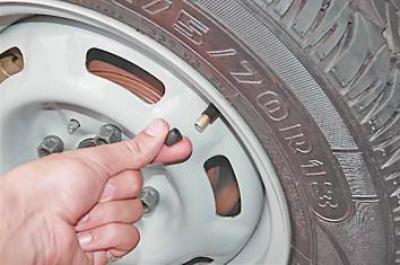
2. Unscrew the protective cap of the nipple.
3. Press the pressure gauge tightly against the end of the nipple and hold it in this position for 1-2 seconds, then disconnect the pressure gauge from the nipple.
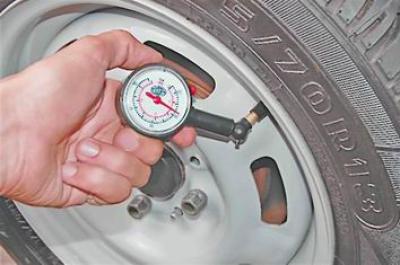
4. Return the pressure gauge arrow to zero and repeat the check.
5. If the pressure in the tire is below 0.19 MPa (1.9 bar), then pump it up using a pump or compressor.
(The information is posted on the portal: VazBook.ru)
Note: When pumping, monitor the pressure using the pump or compressor pressure gauge.
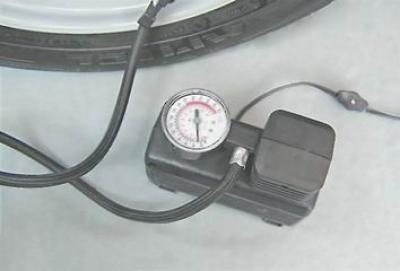
Warning! When inflating, the pressure gauge does not show the pressure in the tire, but in the air supply hose. To determine the true pressure in the tire, you must interrupt the inflation process.
6. If the tire pressure is higher than normal, then release the air by pressing the valve axle with a special pin on the pressure gauge body or a screwdriver blade. Release the air from the tire in small portions with an intermediate pressure check.
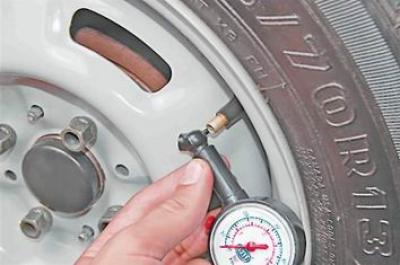
7. Screw the protective cap onto the nipple.
8. We check the pressure in the other wheels of the car in the same way.