




To complete the work you will need an assistant and a special key by 10 mm for brake pipes, transparent vinyl tube of suitable diameter, container for draining brake fluid and fresh brake fluid (see "Operating fluids").
Sequence of execution
1. Prepare the vehicle for operations (see "Preparing a car for maintenance and repair").
2. Remove the brake fluid reservoir cap and, if the level is insufficient, add brake fluid to the reservoir up to the "MAX" mark.
3. Remove the front right wheel (see "Wheel - replacement") and remove the protective rubber cap from the working cylinder nipple.
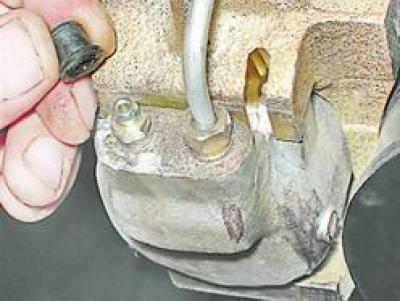
4. Put a rubber hose on the bleeding nipple and immerse its free end in a container partially filled with brake fluid. Pour the fluid into the container so that air bubbles coming out of the rubber hose are visible during bleeding. When using a transparent hose, there is no need to pre-fill the container with brake fluid, since the movement of air bubbles in the hose can be assessed visually.
5. The assistant presses the brake pedal 3-5 times and holds it pressed.
6. Key by 8 mm (10 mm on early production cars) unscrew the bleed nipple by 3/4 of a turn.
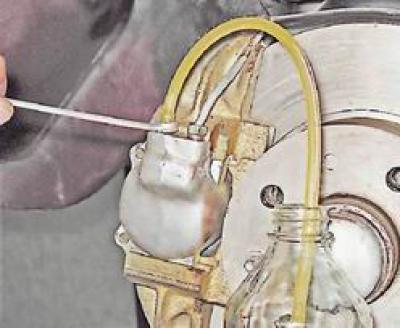
At the same time, the pedal begins to move, displacing the brake fluid through the hose.
7. After the pedal has moved to the stop, tighten the nipple, after which the assistant releases the pedal.
[Original source is on the resource: vazbook.ru]
Attention! When bleeding the brake hydraulic drive, it is necessary to periodically check the fluid level in the reservoir and top it up if necessary.
8. Repeat the bleeding operations until there are no more air bubbles in the brake fluid coming out of the hose.
9. Remove the hose and put a protective cap on the bleed nipple.
10. Install the previously removed wheel.
11. Similarly, we bleed the brake mechanism of the left front wheel and close the lid of the brake system hydraulic fluid reservoir.
12. The rear circuit of the hydraulic drive of the brake system is bled in the same way as the front one, starting from the right side of the car.
13. To replace the brake fluid, use a rubber bulb to remove the used brake fluid from the reservoir and fill it with fresh fluid. Bleed the front and rear hydraulic circuits until fresh fluid comes out of the working cylinder fittings (lighter and more transparent) brake fluid.