




The characteristics of vacuum and centrifugal regulators can only be measured using special equipment.
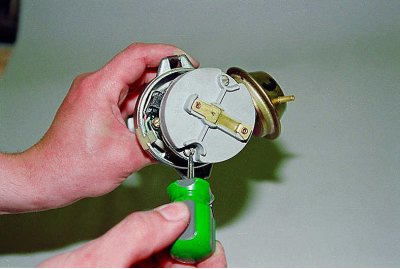
Using a screwdriver, unscrew the two rotor mounting screws.
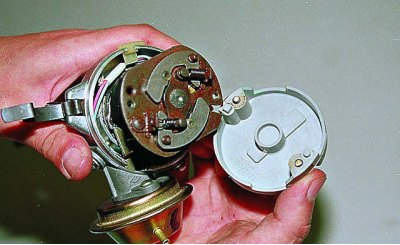
We remove the rotor.
When installing the rotor in place, the square protrusion should fit into the slot and the round one into the hole in the support plate.
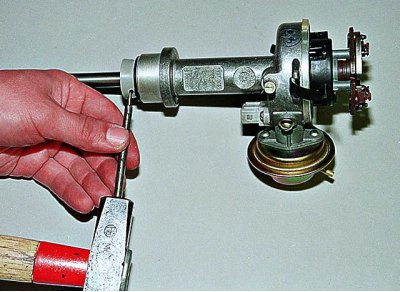
We knock out the cotter pin with a thin punch.
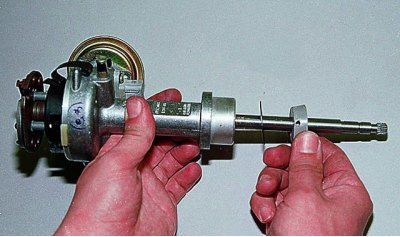
We remove the oil deflector and washer from the shaft.
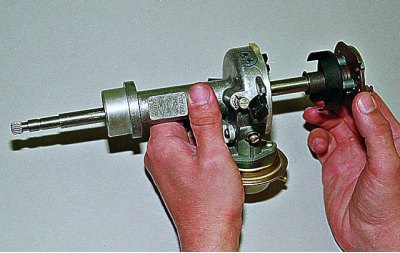
We remove the roller from the distributor housing.
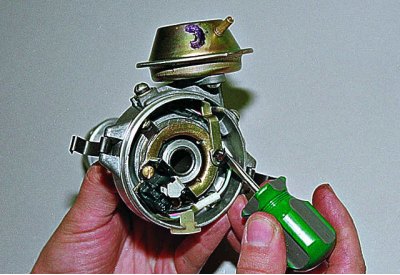
Using a thin screwdriver, remove the locking washer of the ignition timing vacuum regulator rod.
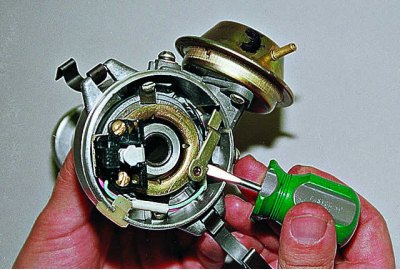
We remove the rod from the pivot plate pin.
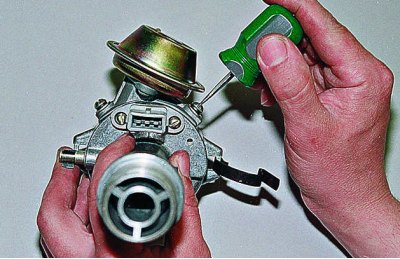
We unscrew the two screws securing the vacuum ignition timing regulator
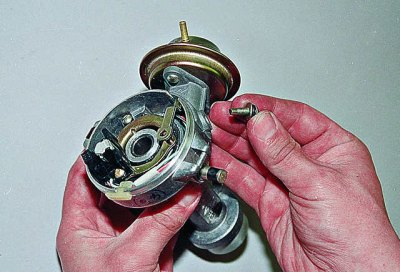
One of the screws has an extension for securing the sensor wiring.
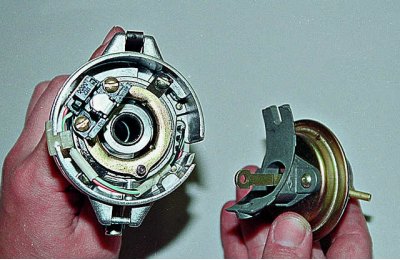
We remove the vacuum regulator.
To check the vacuum regulator, we press its rod and close the nipple hole with our finger. In a working regulator, the rod should extend only part of the length; if the rod immediately extends the entire length, the part is faulty. We replace the regulator.
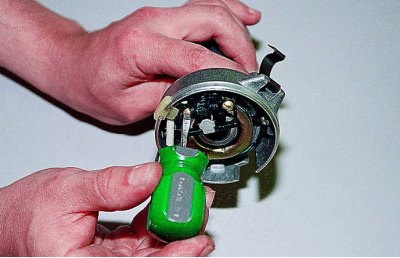
We unscrew the two screws securing the sensor.
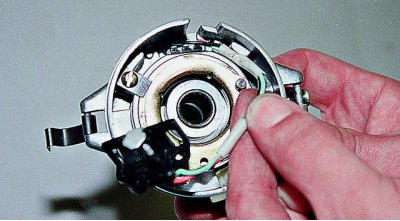
We remove the sensor wiring.
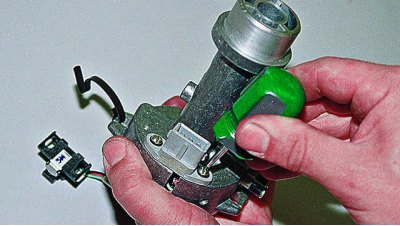
We unscrew the two screws securing the connector..
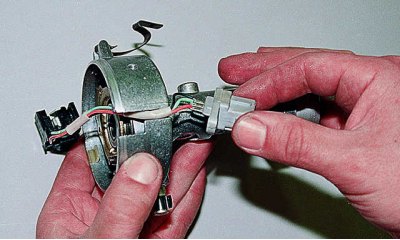
…and remove the sensor. Sensor malfunctions are most often associated with mechanical damage to the wires.
The original source is published on the website: VazBook.ru
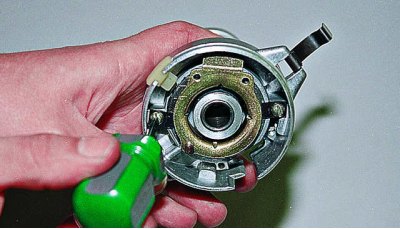
Unscrew two screws..
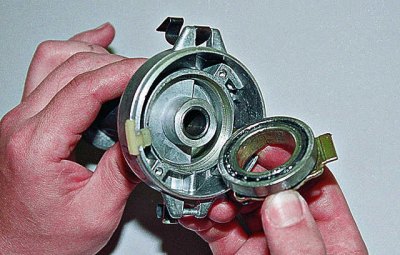
…and we take out the bearing with the swivel plate.
The bearing should not jam or have any play when rotating. Assemble the ignition distributor in the reverse order of disassembly.
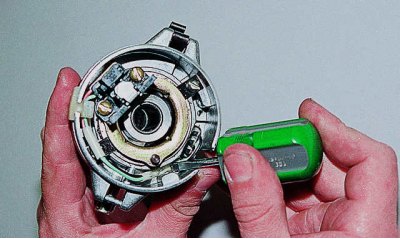
Before installing the vacuum regulator, carefully lay the sensor wiring.
We lubricate the roller bushings, the axles of the centrifugal regulator weights and the bearing of the rotary plate.