




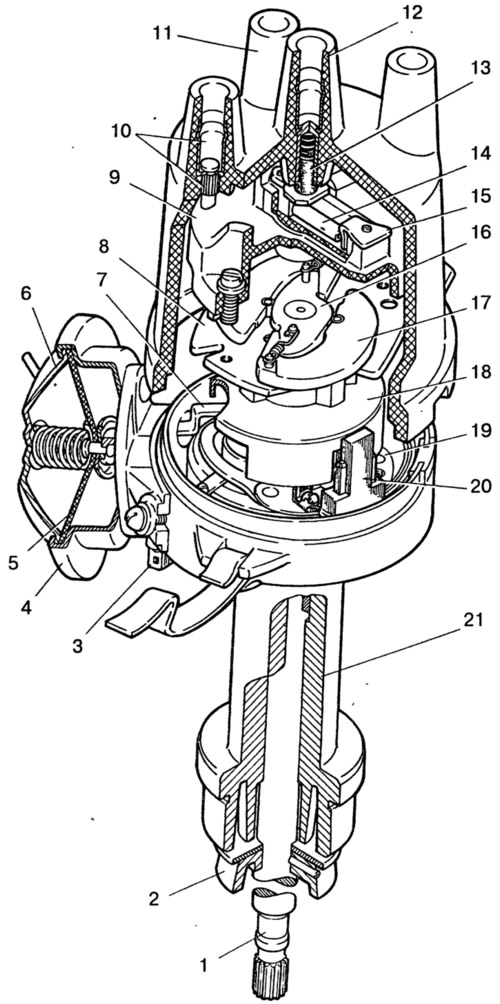
Fig. 7-19. Ignition distributor sensor 3810.3706:
1 - roller; 2 - oil-deflecting clutch; 3 - plug connector; 4 - vacuum regulator housing; 5 - diaphragm; 6 - vacuum regulator cover; 7 - vacuum regulator rod; 8 - centrifugal regulator support plate; 9 - ignition distributor rotor; 10 - side electrode with terminal; 11 - lid; 12 - central electrode with terminal; 13 - central electrode carbon; 14,- resistor; 15 - outer rotor contact; 16 - centrifugal regulator plate; 17 - weight; 18 - screen; 19 - contactless sensor support plate; 20 - contactless sensor; 21 - ignition distributor sensor housing.
Checking the work
Mount the ignition distributor on an electrical test bench and connect it to a variable speed electric motor.
(The information is published on the website: «VazBook»)
Connect the terminals of the ignition distributor sensor to the ignition coil, to the switch and to the stand battery similarly to the diagram of the car ignition system. Connect the four terminals of the cover to spark gaps, the gap between the electrodes of which is adjustable.
Set a 5 mm gap between the arrester electrodes, turn on the stand's electric motor and rotate the distributor sensor roller clockwise for several minutes at a frequency of 2000 min⁻¹. Then increase the gap between the electrodes to 10 mm and monitor for internal discharges in the distributor sensor. They are detected by sound or by weakening and interruption of sparking on the test stand arrester.
During operation, the ignition distributor sensor should not produce noise at any shaft rotation speed.
Removal the characteristics of automatic ignition advance
Install the ignition distributor sensor on the stand, connect its terminals to terminals "3", "5" and "6" of the switch 1 (Fig. 7-20) of the stand. Connect terminal "4" of the switch to the "plus" terminal of the stand, and terminal "1" to the "breaker" terminal of the stand. Set a gap of 7 mm between the spark gap electrodes.
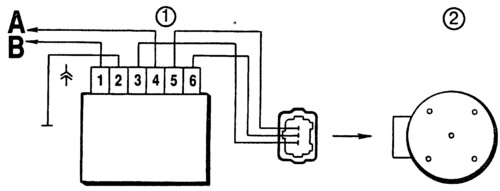
Fig. 7-20. Scheme for taking characteristics of the ignition distributor sensor on the stand:
1 - switch; 2 - ignition distributor sensor; A - to the "plus" terminal of the stand; B - to the "breaker" terminal of the stand.
Turn on the stand's electric motor and rotate the ignition distributor sensor shaft at a frequency of 500-600 min⁻¹. On the stand's graduated disk, mark the value in degrees at which one of the four sparks is observed.
By increasing the rotation speed stepwise by 200-300 min⁻¹, determine the number of degrees of ignition advance on the disk, corresponding to the rotation speed of the ignition distributor sensor shaft. Compare the obtained characteristic of the centrifugal ignition advance regulator with the characteristic in Fig. 7-21.
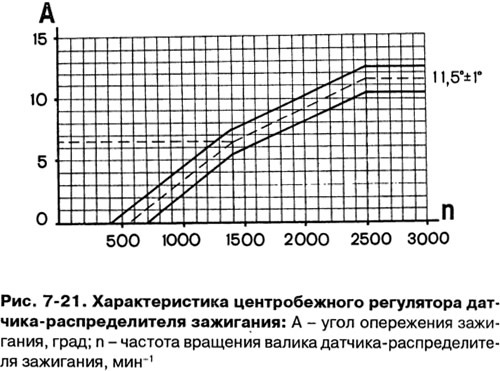
If the characteristic differs from that shown in Fig. 7-21, it can be normalized by bending the spring struts of the centrifugal regulator weights. Up to 1500 min⁻¹ - bend the thin spring strut, and over 1500 min⁻¹ - the thick one. To decrease the angle, increase the spring tension, and to increase it, decrease it.
To measure the characteristics of the vacuum ignition timing regulator, connect the vacuum regulator nipple to the vacuum pump of the stand.
Turn on the stand's electric motor and rotate the ignition distributor sensor shaft at a frequency of 1000 min⁻¹. On the graduated disk, mark the value in degrees at which one of the four sparks occurs.
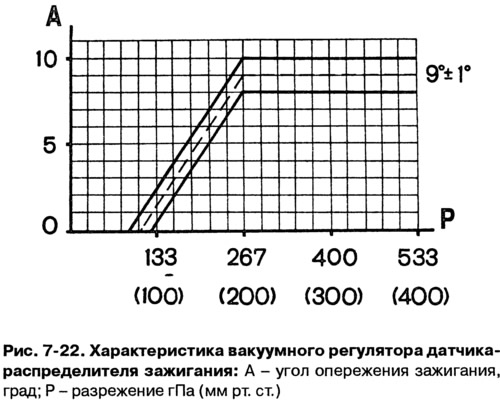
Smoothly increasing the vacuum, every 26.7 hPa (20 mm Hg.) note the number of degrees of ignition advance relative to the initial value. Compare the resulting characteristic with the characteristic in Fig. 7-22.
Please note the clarity of the return to the original position after the vacuum is removed of the plate on which the contactless sensor is attached.
Checking the contactless sensor
Voltage is removed from the sensor output if there is a steel screen in its gap. If there is no screen in the gap, then the voltage at the sensor output is close to zero.
On the ignition distributor sensor removed from the engine, the sensor can be checked according to the diagram shown in Fig. 7-23, with a supply voltage of 8-14 V.
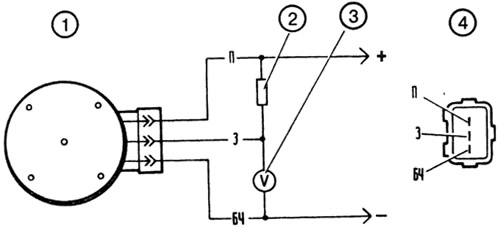
Fig. 7-23. Diagram for checking the contactless sensor on the removed ignition distributor sensor:
1 - ignition distributor sensor; 2 - 2 kOhm resistor; 3 - a voltmeter with a scale limit of at least 15 V and an internal resistance of at least 100 kOhm; 4 - view of the plug connector of the ignition distributor sensor.
Slowly rotating the ignition distributor sensor shaft, measure the voltage at the sensor output with a voltmeter. It should change sharply from the minimum - no more than 0.4 V, to the maximum - no more than 3 V less than the supply voltage.
The sensor can be checked on the vehicle using the diagram shown in Fig. 7-24. An adapter connector 2 with a voltmeter is connected between the plug connector of the ignition distributor sensor and the wiring harness connector. Turn on the ignition and, slowly turning the crankshaft with a special key, check the voltage at the sensor output with a voltmeter. It should be within the limits specified above.
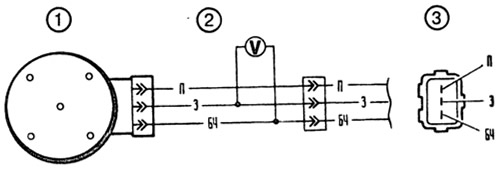
Fig. 7-24. Circuit diagram for testing a contactless sensor on a vehicle:
1 - ignition distributor sensor; 2 - adapter connector with a voltmeter having a scale limit of at least 15 V and an internal resistance of at least 100 kOhm; 3 - view of the plug connector of the ignition distributor sensor.