




Contents: Removal ↓ Installation ↓
Removal
1. Drain the coolant (see "Coolant - replacement").
2. Remove the electric fan (see "Electric fan - removal, disassembly and installation").
Note: If necessary, the radiator can be removed together with the electric fan.
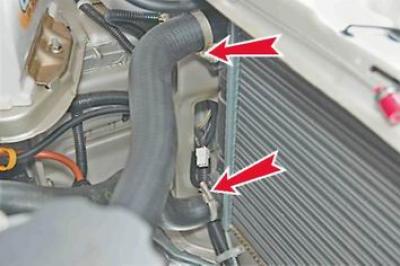
3. Using a Phillips screwdriver, loosen the two clamps securing the upper and lower radiator hoses and remove the hoses from the radiator pipes.
4. Using pliers, loosen the clamp and disconnect the radiator steam outlet hose from the expansion tank.
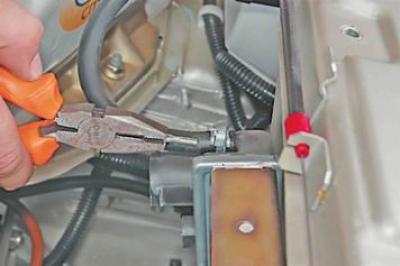
Advice: Replace the band clamp with a more reliable one (for example, screw).
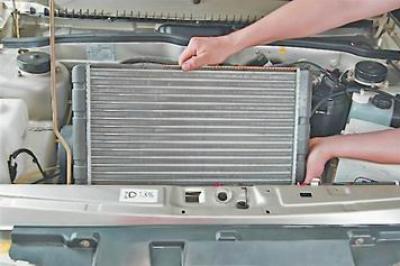
5. Carefully remove the radiator from the engine compartment.
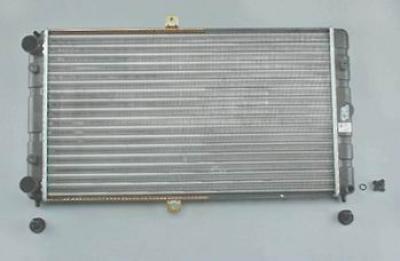
6. If necessary, remove the two rubber supports from the radiator and unscrew the drain plug with the gasket.
Installation
Advice: If the radiator has been in use, clean it from fluff and other debris on the outside before installation.
Wash its interior with a cleaning agent for the cooling system (see "Operating and repair materials"), and from the outside - with a stream of water.
1. When replacing a radiator, we move the rubber supports and the drain plug with the gasket to the new radiator (if they are missing on the new radiator).
2. Install the radiator in place in the reverse order of removal.
3. Install the electric fan and connect the wiring harness block.
4. Fill the engine cooling system with liquid (see "Coolant - replacement").
5. Make sure there is no coolant leakage at the connection points. If necessary, tighten the hose clamps.