
Contents: Checking the oil level ↓ Oil change ↓
To perform the work, you will need a container for draining the oil with a capacity of at least 1.5 liters.
Checking the oil level
1. Place the vehicle on an inspection pit or overpass (see "Preparing a car for maintenance and repair").
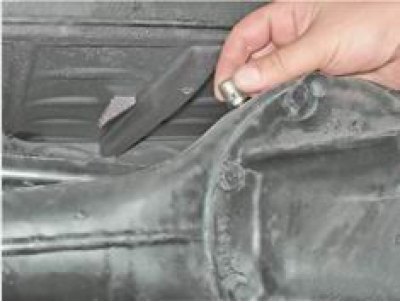
2. Using a steel brush or rag, clean the filler and drain plugs from dirt, as well as the surface of the beam near the plugs.
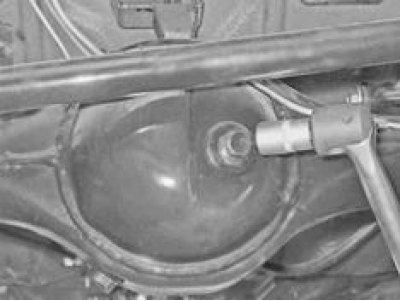
3. Key at 17 mm (better with a socket) unscrew the filler plug.
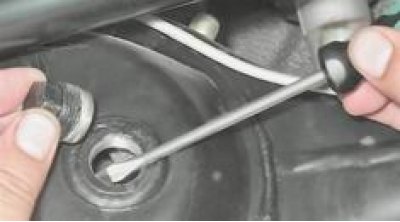
4. Check the oil level with a suitable tool, (for example with a screwdriver) or with a finger.
The level should reach the lower edge of the filler hole.
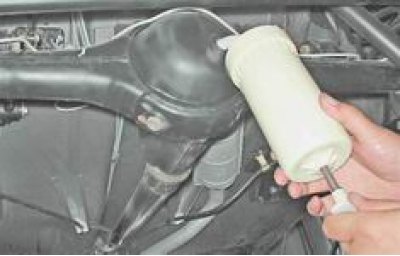
5. If the level is low, add transmission oil (see "Operating fluids") with a special syringe and screw on the cap.
Oil change
Note: The oil should be changed immediately after driving, as hot oil drains faster and more completely along with the particles suspended in it.
Warning! Be careful - oil temperature can reach 90°C.
1. Unscrew the filler plug (see above).
2. Place a container with a capacity of at least 1.5 liters under the drain hole.
3. With a hex key at 12 mm unscrew the drain plug.
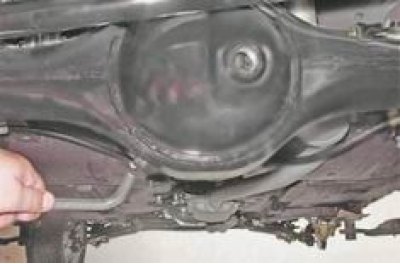
4. Drain the oil.
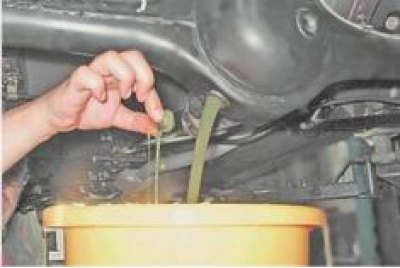
The drain plug is equipped with a magnet that attracts wear products from gearbox parts.
5. Clean the plug and put it back in place.
Note: If the drained oil is dark and metal particles are clearly visible in it, it is recommended to flush the gearbox.
To do this, pour about a liter of low-viscosity oil into the bridge (for example, spindle). Having raised one of the rear wheels (see "Wheel - replacement"), start the engine and engage first gear. After five minutes, turn off the engine, drain the oil, clean it again and screw in the drain plug.
6. Fill the bridge with fresh transmission oil up to the filler hole level and tighten the plug.
7. Clean the breather from the outside with a brush or rag. Turn the breather cap several times to clean its channel.