You will need: A 13 mm wrench, a container for draining the coolant, coolant, and a funnel.
Warnings:
- Use coolants recommended by the manufacturer (see appendix 2).
- Coolant is toxic, so be careful when handling it.
- When starting the engine, the expansion tank cap must be closed. Screw the expansion tank cap tightly. The expansion tank is under pressure when the engine is running, and therefore, if the cap is loosely screwed, coolant may leak from under it.
- With the engine running, monitor the coolant temperature on the indicator. If the arrow has reached the red zone and the fan has not turned on, turn on the heater and check what kind of air is coming through it. If the heater is supplying heated air, then the fan is most likely faulty (contact specialists), and if it is cold, it means that an air lock has formed in the engine cooling system. To remove it, turn off the engine, let it cool down and unscrew the cap of the expansion tank. Start the engine, let it run for 3-5 minutes and close the cap of the expansion tank.
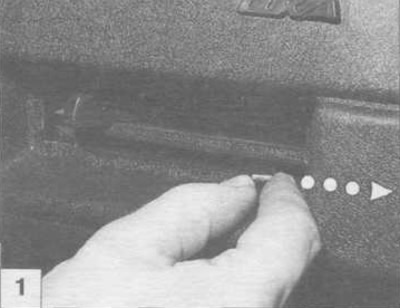
Open the heater valve by moving the control lever to the right until it stops.
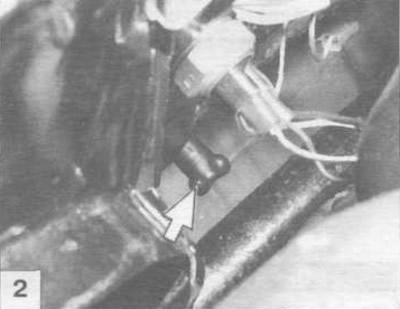
Place a container under the radiator drain plug and unscrew the plug.
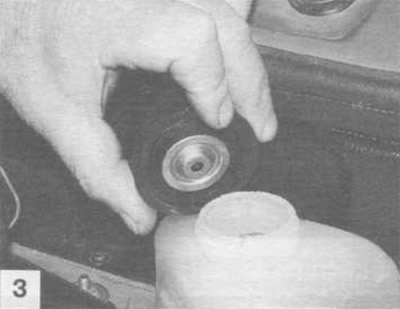
Open the cap of the expansion tank of the cooling system by turning it counterclockwise.
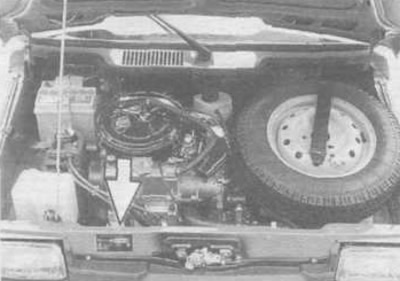
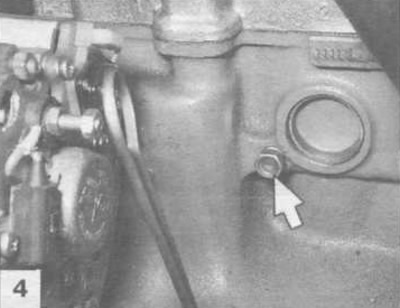
Unscrew the drain plug on the cylinder block and drain the remaining coolant from the cylinder block channels, having first placed a container underneath it. Screw the plug back in.
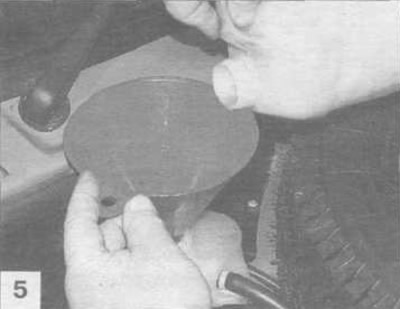
Fill the engine cooling system by pouring coolant into the expansion tank until the level is at the top edge of the expansion tank mounting belt. Screw in the expansion tank cap. Start the engine and allow it to warm up to operating temperature (before turning on the fan). After this, stop the engine, check the coolant level and, if necessary, top up to the level of the upper edge of the tank mounting belt.