
English Русский
Български
Беларускі
Український
Српски
Hrvatski
Română
Polski
Slovenský
Magyar
| Articles | Contacts | Sitemap |   
Repair and maintenance Lada Repair and maintenance Mazda Repair and maintenance Mitsubishi Repair and maintenance Toyota Repair and maintenance Land Rover Repair and maintenance Hyundai Repair and maintenance Nissan
VAZbook.ru


Main     1111   2101   2105   2106   2107   2109   2110   2115   2121  
VAZ-1111 (1988-1996) VAZ-11113 (1996-2003)
  • Main
  • «Oka»
  • VAZ-11113
  • General information
  • Maintenance
  • Bleeding the brake system

Bleeding the brake system (VAZ-11113)

            0

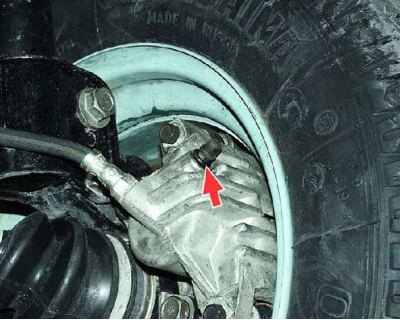
Front wheel brake air release valve
Front wheel brake air release valve


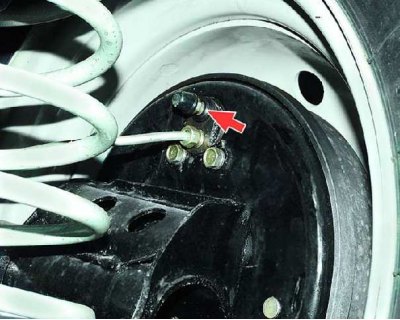
Rear wheel brake air release valve

Rear wheel brake air release valve


You will need:
  • key "8"
  • brake fluid
  • rubber or transparent hose
  • transparent vessel

Bleeding the brake system is necessary to remove air that may enter the system during repairs, replacement of brake fluid, depressurization of the system due to damage to tubes and hoses, or when the brake fluid level in the master cylinder reservoir drops.

Signs of the presence of air in the brake system are increased travel and a "soft" brake pedal.

Before bleeding, inspect the brake system to ensure it is tight. Perform the work with an assistant.

The order of bleeding the brake mechanisms:
  • rear right;
  • front left;
  • rear left;
  • front right.

Warning! Do not reuse the fluid drained from the system: it is contaminated, saturated with air and moisture. Always add only new fluid of the same brand that was previously poured into the system.


Attention! Brake fluid is hygroscopic (absorbs moisture from the surrounding air), therefore it cannot be stored in an open container.

Attention! Brake fluid is hygroscopic (absorbs moisture from the surrounding air), therefore it…


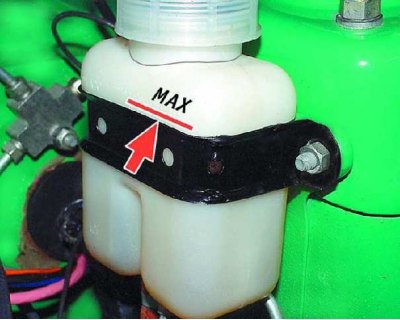
1. Check the brake fluid level in the reservoir and top up if necessary. After installing the sensor, the fluid level should be at the "MAX" mark.
1. Check the brake fluid level in the reservoir and top up if necessary. After installing the…


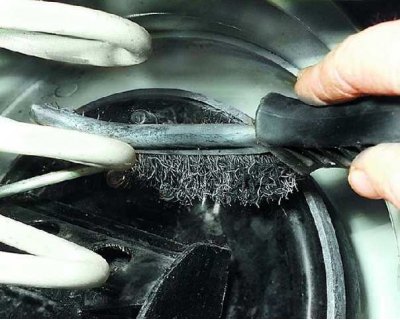
2. Clean the air release valve on the brake mechanism from dirt and dust.
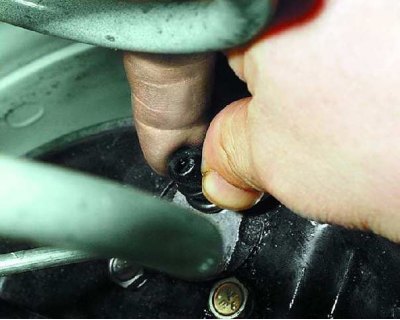
2. Clean the air release valve on the brake mechanism from dirt and dust.


3. Remove the protective cap from the air release valve.

3. Remove the protective cap from the air release valve.


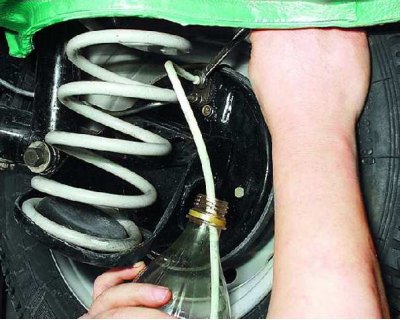
4. Place a rubber hose over the valve head and submerge the end of the hose in a clean, clear container partially filled with brake fluid (the end of the hose must be immersed in the liquid).
4. Place a rubber hose over the valve head and submerge the end of the hose in a clean, clear…


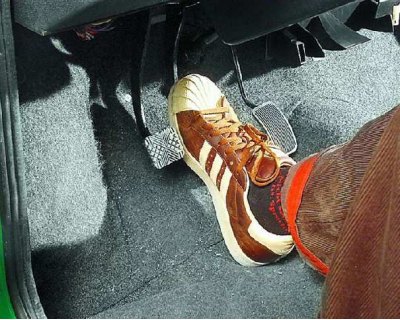
5. The assistant should sharply press the brake pedal 4–5 times (with an interval of 1–2 seconds between presses), and then hold the pedal pressed.
5. The assistant should sharply press the brake pedal 4–5 times (with an interval of 1–2 seconds…


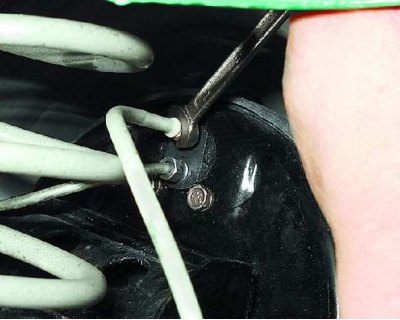
6. Open the air release valve ½ – ¾ turn.

7. Air bubbles will be visible in the fluid flowing out of the hose. When fluid stops flowing out of the hose, close the air release valve completely, after which the assistant should release the brake pedal.

8. Repeat steps 5–7 until the escaping fluid stops releasing air bubbles. Remove the hose, wipe the valve nipple dry and put the protective cap on it.

9. Repeat steps 2–8 for the front left, rear left, and front right brake assemblies.


This article is available at russian, bulgarian, belarusian, ukrainian, serbian, croatian, romanian, polish, slovak, hungarian
The text was reviewed by the specialist: Grigory Vologodtsev

Share with friends:

Previous articles
VAZ-11113: Maintenance
Next articles

Checking the efficiency of the working brake system
Checking the steering wheel play
Checking the condition of the steering
Checking the condition of the front and rear suspension parts
Checking the protective covers of the hinges
Replacing brake fluid
Adjusting the brake pedal free travel
Checking the efficiency of the vacuum booster
Checking the pressure regulator
Replacing the front brake pads

More articles from other manuals on VAZ cars:
➠ Bleeding the brake hydraulic system VAZ-21011 (1974-1983)
➠ Bleeding the brake hydraulic system VAZ-2105 (1979-2010)
➠ Replacing brake fluid and bleeding the brake system VAZ-21061 (1976-2006)
➠ Bleeding the brake hydraulic system VAZ-2109 (1984-1997)
➠ Bleeding the brake system VAZ-2115 (1997-2012)
Link in different formats to this page


Visitor comments

No comments yet


How much will 19 + 22 ?


VAZ-1111 (1988-1996) 
  • General information
  • Vehicle description
  • Vehicle device
  • Vehicle operation
  • Maintenance
  • Applications
  • Power unit
  • Engine repair
  • Cooling system
  • Lubrication system
  • Supply system
  • Transmission
  • Clutch
  • Transmission
  • Chassis
  • Front suspension and wheels
  • Rear suspension
  • Steering
  • Brake system
  • Body
  • Exterior
  • Interior
  • Electrical equipment
  • Engine electrics
  • Equipment and devices


VAZ-11113 (1996-2003) 
  • General information
  • Introduction to the guide
  • User manual
  • Maintenance
  • Power unit
  • Engine repair
  • Cooling and lubrication system
  • Fuel system
  • Exhaust system
  • Transmission
  • Car gearbox
  • Clutch and drive shafts
  • Chassis
  • Front suspension
  • Rear suspension
  • Steering
  • Brake system
  • Body
  • Exterior
  • Interior
  • Doors and locks
  • Electrical equipment
  • Equipment and devices
  • Lighting and signaling
  • Engine electrics
  • Ignition system


VAZbook.ru © 2017 · Mobile version · Contact with administration · Sitemap: EN BG BY UA RS HR RO PL SK HU · Site search · News and articles VAZ-1111 · VAZ-11113 · VAZ-2101 · VAZ-21011 · VAZ-2104 · VAZ-2105 · VAZ-21051 · VAZ-2106 · VAZ-21061 · VAZ-2107 · VAZ-21099 · VAZ-2109 · VAZ-2108 · VAZ-2110 · VAZ-2112 · VAZ-2114 · VAZ-2115 · VAZ-2121 · VAZ-21213 · VAZ-21214 ·
The site stores technical data using cookies to improve the service.