




At least 6 hours have passed since the engine stopped at an outside air temperature of +20°C and at least 3 hours at -20°C; the oil temperature in the engine crankcase coincides with the ambient temperature.
The starting techniques for an engine with a fuel injection system are the same at any outside air temperature.
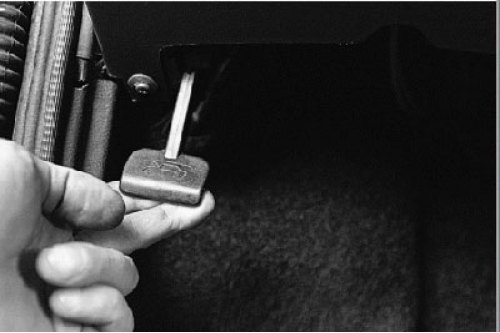
1. Pull the lock handle towards you and open the hood.
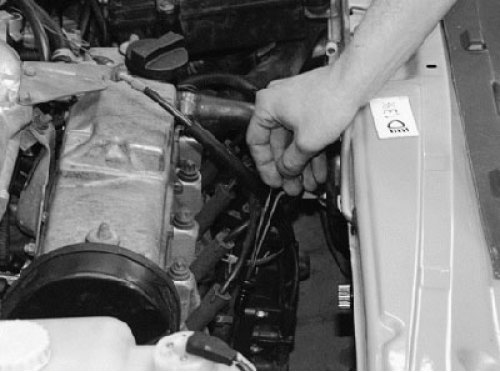
2. Use the dipstick to measure the oil level. It should be between the "MAX" and "MIN" marks.
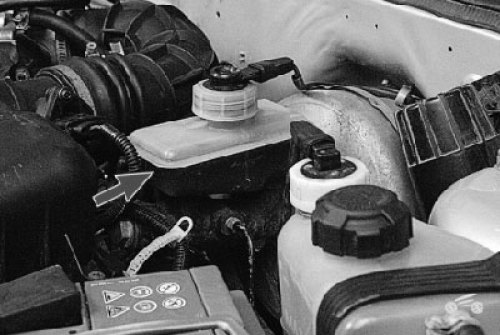
3. Check the brake fluid level…
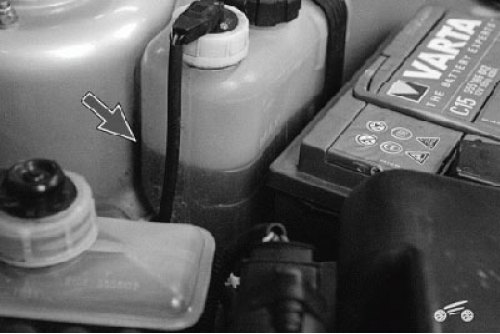
4. … and coolants.
(The article is copied from the website vazbook)
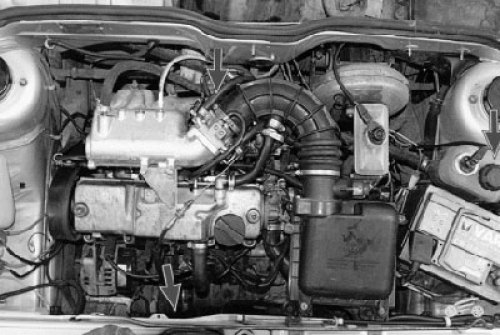
5. Carefully inspect the engine and underhood space. Pay attention to leaks of gasoline, oil, brake and cooling fluids. Make sure the electrical wiring is intact. Check the fit of the high-voltage wires in the ignition module sockets and on the spark plugs.
6. Without closing the hood (in case of rain or snowfall, close the hood), get behind the wheel.
Turn on the ignition by turning the key in the ignition switch to the "I" position. This will turn on the electric fuel pump.
Helpful advice. It is better to close the hood after the engine starts working. Before this, it is advisable to inspect the engine again, make sure there are no fuel, oil, coolant leaks, or extraneous sounds in its operation.
If the engine does not start, there are three main reasons:
- the starting system does not work;
- the ignition system does not work;
- the power supply system is not working.
Helpful advice. If for some reason the spark plugs are "flooded" during an unsuccessful start attempt, use the cylinder "purge" mode. To do this, press the accelerator pedal all the way down and turn on the starter. In this mode, there is no fuel supply and excess gasoline is removed from the cylinders by a flow of fresh air - the spark plugs are dried. After purging, try starting again in the usual manner.