




1. Before removing any injection control system components, disconnect the wire from the "-" terminal of the battery.
Warning! Disconnect the battery only when the ignition is off.
2. Before disconnecting the components and assemblies of the fuel injection system, it is necessary to reduce the pressure in the system (see "Reducing pressure in the fuel system"),
3. Do not start the engine if the battery cable terminals are not tightened properly.
4. Never disconnect the battery from the vehicle's electrical system while the engine is running.
5. When charging the battery, disconnect it from the vehicle's electrical system.
6. Do not allow the electronic control unit (ECU) to heat up above 65°C when operating and above 80°C when not operating (for example, in a drying chamber). It is necessary to remove the ECU from the car if this temperature is exceeded.
7. Do not disconnect or connect the wiring harness connectors to the ECU when the ignition is on.
8. Before arc welding on a vehicle, disconnect the wires from the battery and the wire connectors from the ECU.
9. Perform all voltage measurements using a digital voltmeter with an internal resistance of at least 10 MOhm.
10. The electronic components used in the injection system are designed for very low voltage, so they can easily be damaged by electrostatic discharge. To prevent damage to the ECU by electrostatic discharge:
- do not touch the ECU connectors or electronic components on its boards with your hands;
- when working with the programmable read-only memory (PROM) of the control unit, do not touch the terminals of the microcircuit.
The vast majority of fuel injection system faults are caused by failure of the following sensors:
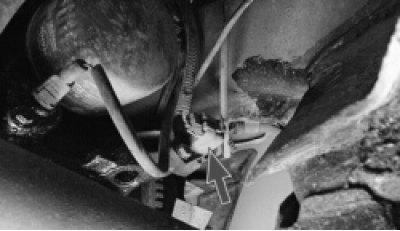
- crankshaft position sensor (synchronization) - complete failure of the injection system, the engine does not start;
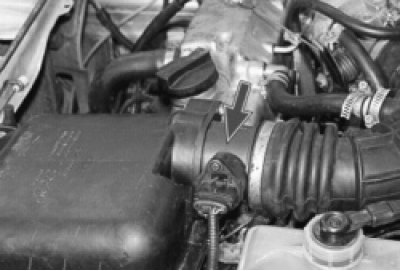
- mass air flow sensor - increased fuel consumption, significant deterioration in dynamics, problems with starting the engine;
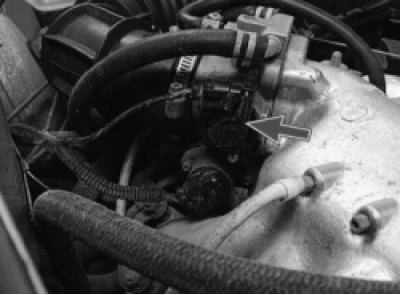
- throttle position sensor idle operation;
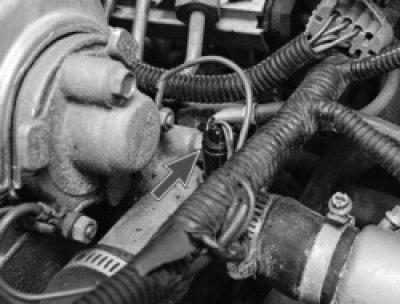
- coolant temperature sensor - difficulty starting an engine that has not reached operating temperature: you have to warm up the engine by maintaining the speed with the accelerator pedal; when overheated, power is significantly reduced and detonation occurs;
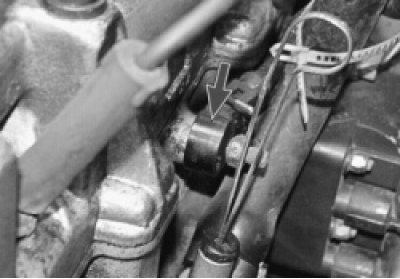
- knock sensor - the engine is very sensitive to the quality of gasoline, increased tendency to detonation;
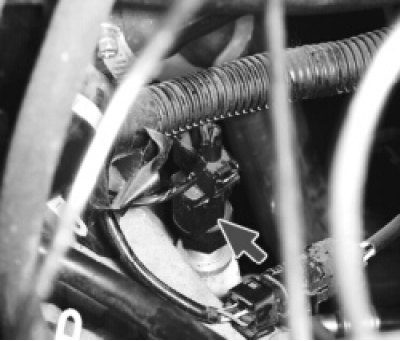
- speed sensor - the impossibility of self-training of the system to adjust to the driving style of a specific driver. Possible deterioration of the dynamic qualities of the car in modes using maximum power (intense acceleration).