

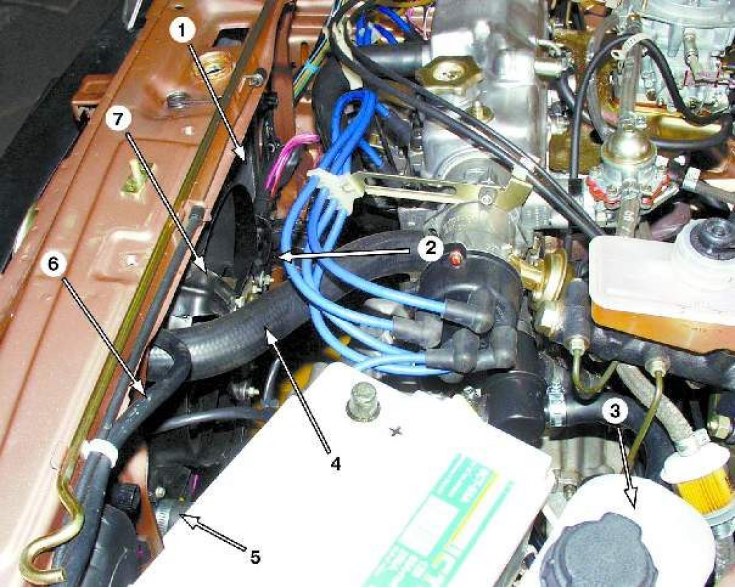
1 - radiator; 2 - radiator drain plug; 3 - expansion tank; 4 - radiator inlet hose; 5 - outlet hose; 6 - steam outlet hose (to expansion tank); 7 - casing with fan
Attention! Before starting work, disconnect the wire from the terminal "–" battery.
Attention! Removal and installation of a radiator is carried out on a cold engine.
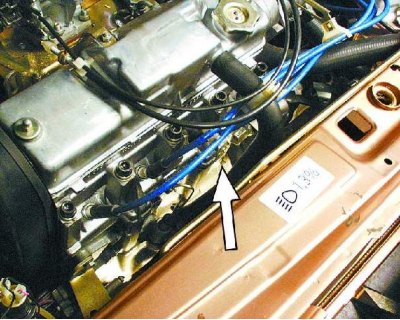
Location of the coolant drain plug on the cylinder block.
If you are removing the fan together with the heatsink, steps 6 and 9 are not necessary.
One possible cause of an engine overheating could be a clogged radiator. In this case, flush the radiator with water.
Check the radiator for leaks. To check, plug the radiator pipes, supply air to it at a pressure of 0.2 MPa (2 kgf/cm2) and lower the radiator into a bath of water for 1 min. If air bubbles appear, the radiator is leaky and needs to be replaced.
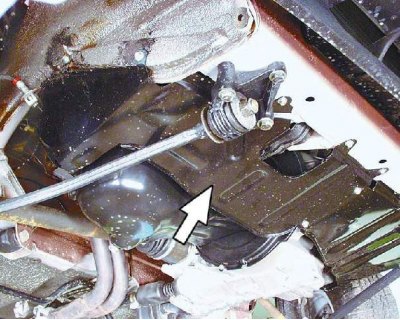
1. Loosen the bolts securing the crankcase protection and remove it.
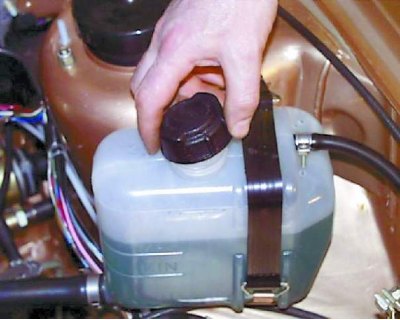
2. Unscrew the plug of the expansion tank and open the heater cock.
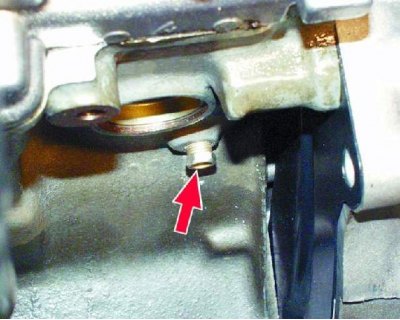
3. Place a container under the drain hole, unscrew the drain plug in the cylinder block and drain the coolant from the block.
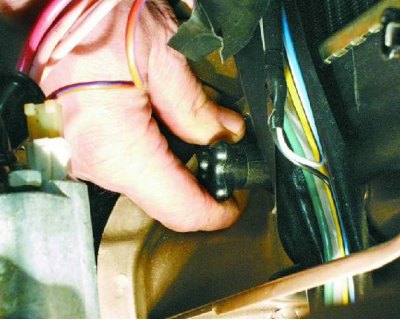
4. Place a container under the drain hole, unscrew the radiator drain plug and drain the coolant from the radiator.
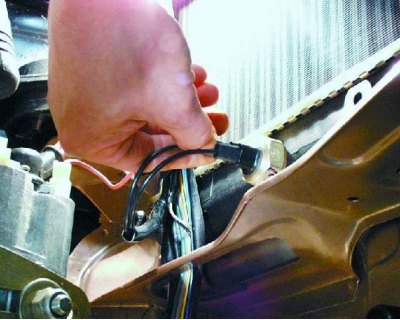
5. Disconnect wires from the switch of the electric fan.
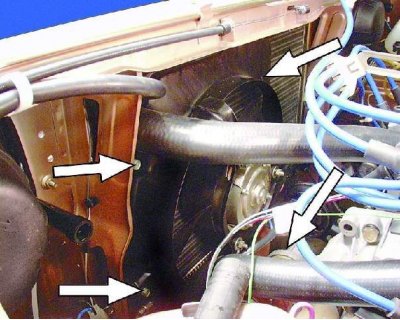
6. Remove the two bolts and two nuts securing the electric fan casing.
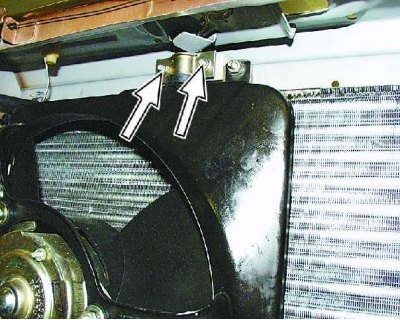
7. Remove the two mounting nuts and remove the bracket.
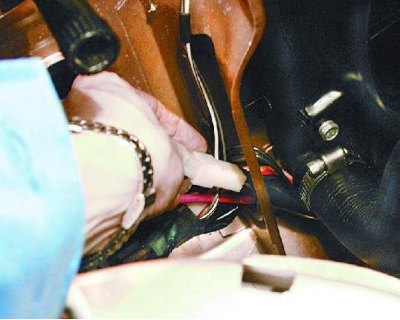
8. Disconnect the wiring harness from the fan motor.
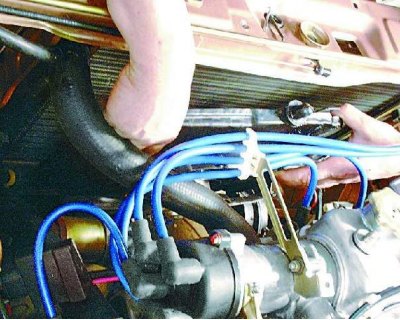
9. Tilt the casing with the electric fan towards the engine and remove it from the engine compartment.
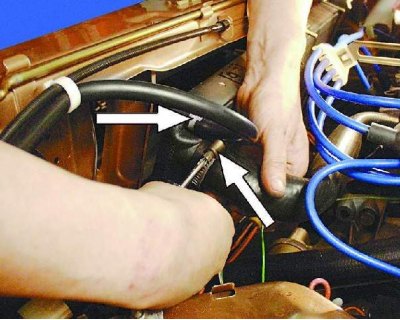
10. Loosen the mounting clamps and disconnect the two upper hoses from the radiator.
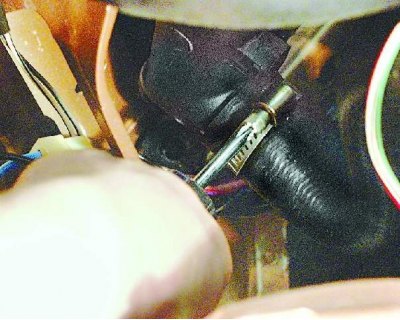
11. Disconnect the bottom hose from the radiator.
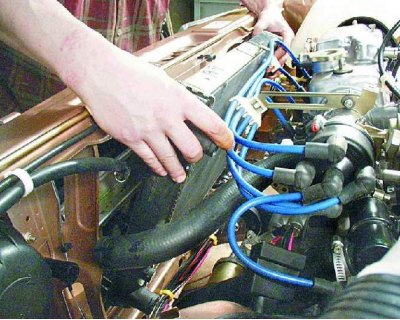
12. Tilt the radiator towards the engine and remove it from the engine compartment.