




Warning! Before raising the rear of the vehicle, engage first gear and place chocks under the front wheels. After raising the rear, place reliable supports next to the jack. Do not place supports under the rear suspension beam, as the suspension must be unloaded.
You will need: keys "17", "19", screwdriver.
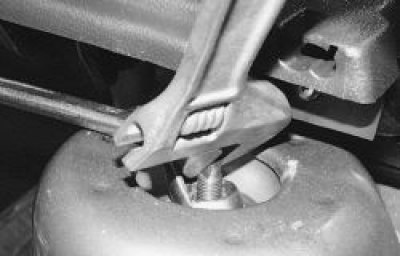
1. Remove the protective cap of the upper strut mount in the trunk, unscrew the nut of the upper strut mount, holding the shock absorber rod from turning, and remove the support washer with the upper cushion.
2. Remove the wheel.
Warning! Loosen and tighten the wheel mounting bolts only with the vehicle on the ground. Tightening torque of the bolts is 65–95 N·m (6.5–9.5 kgf·m).
3. Unscrew the lower shock absorber mounting nut and remove the bolt.
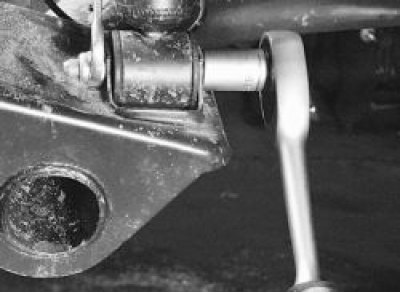
4. Lower the shock absorber and remove the lower cushion with the support washer and spacer sleeve from the shock absorber rod through the spring coils.
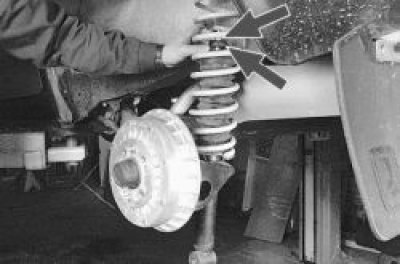
5. Press the shock absorber rod down.
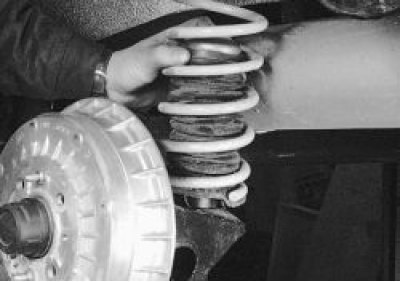
6. Remove the spring with the protective cover, cap and compression buffer.
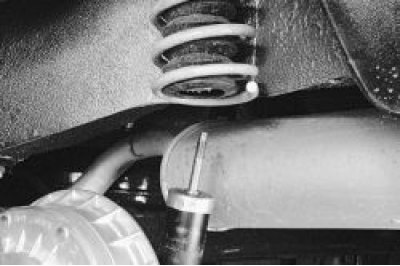
7. Remove the shock absorber from the rear wheel well.
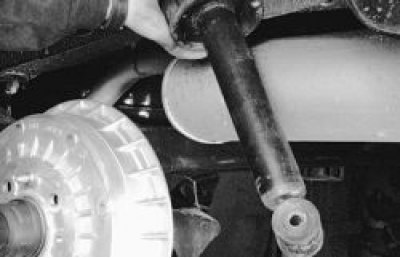
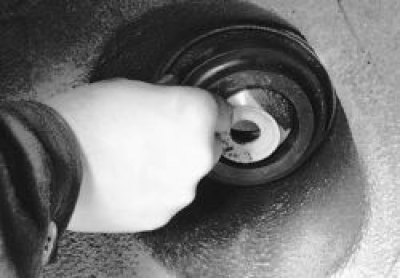
8. Remove the insulating gasket from the upper spring support cup (if it didn't stay on the spring).
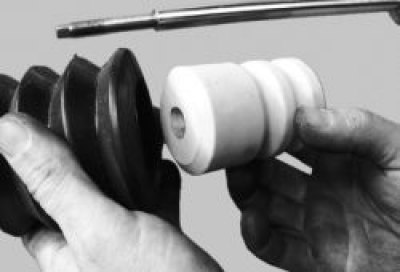
9. Remove the boot from the spring and remove the compression buffer from it.
10. Check the shock absorber in the same way as the front suspension shock absorber.
11. Replace the defective rubber-metal bushing of the lower shock absorber mount.
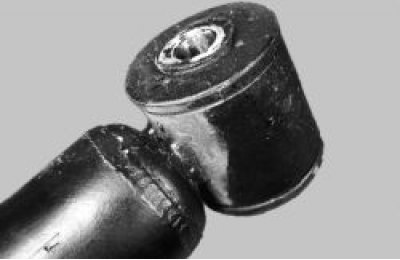
12. Replace torn or loose cushions.
13. Replace the torn cover. When replacing the cover, remove the cover from it.
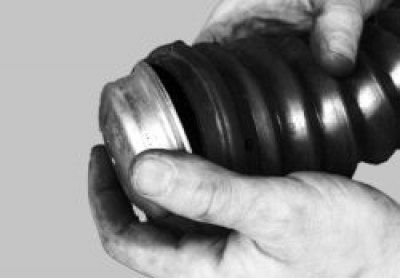
14. Replace the damaged or destroyed compression buffer.
The information is published on the website [www.VazBook.ru]
15. Replace any torn or loose insulating gasket.
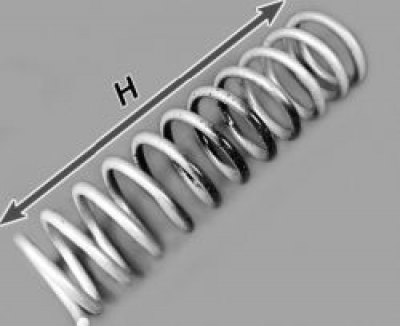
16. Replace the spring if cracks or deformation of the coils are found. Check the spring settlement by "squeezing" the spring three times until the coils touch.
Then apply a load of 3188 N (325 kgf) to the spring. The length of the spring H under the specified load must be at least 201 mm (182 mm for cars supplied for export).
If the length of the spring with yellow marking (class A) is less than 207 mm (188 mm for export vehicles), replace it with a spring with green marking (class B).
Compress the spring along the spring axis, and the support surfaces must match the surfaces of the shock absorber support cups and the body. It is recommended to replace both rear suspension springs, the springs must be of the same group.
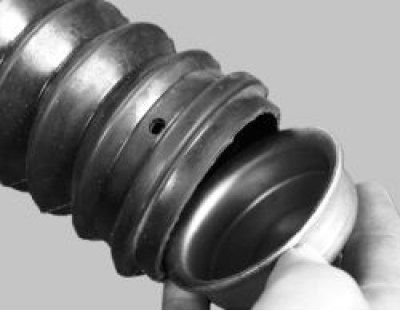
17. Assemble the rack in the reverse order of disassembly. When installing the cover on the casing, tuck its edge onto the cover flange.
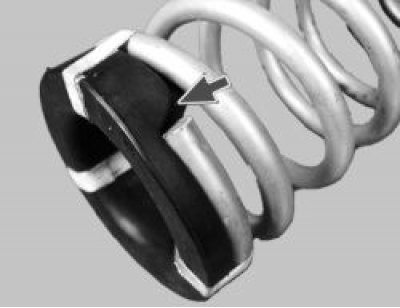
18. First install the insulating gasket on the spring so that the end of the spring rests against the gasket's protrusion. Attach the gasket to the spring with insulating tape so that it does not slip off when installing the spring.
19. Secure the strut and put the protective cover with the lid on it. Pull out the shock absorber rod and install the lower cushion with the support washer and spacer sleeve on it.
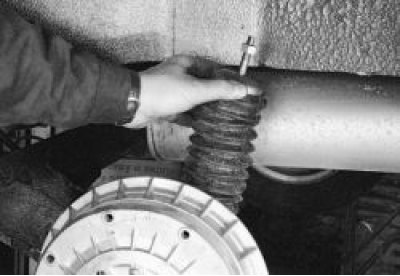
Note: The shock absorber rod can be easily pulled out by screwing a nut onto it.
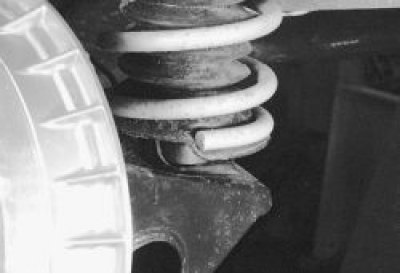
20. Install the spring on the stand so that the beginning of the first turn falls into the stamping in the lower cup.
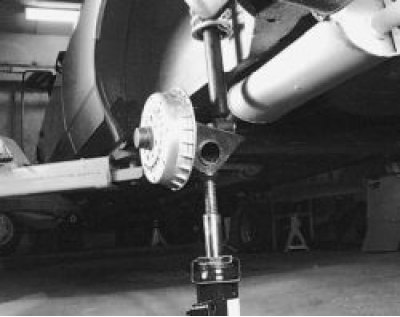
21. To compress the spring when installing the strut, place a jack under the beam. Gradually lifting the beam with a jack and thereby compressing the spring, insert the shock absorber rod into the hole in the body arch.
22. Install the upper cushion with washer on the shock absorber rod and tighten the upper strut mount nut, holding the rod from turning with a second key.
23. Lower the car to the ground, rock it vigorously several times. Tighten corresponding torques for the lower shock absorber mount nut to the beam – 68–84 N·m (6.8–8.4 kgf·m), and the upper shock absorber mount nut – 51–63 N·m (5.1–6.3 kgf·m). After running 100 km, tighten these threaded connections again to the required torques.