




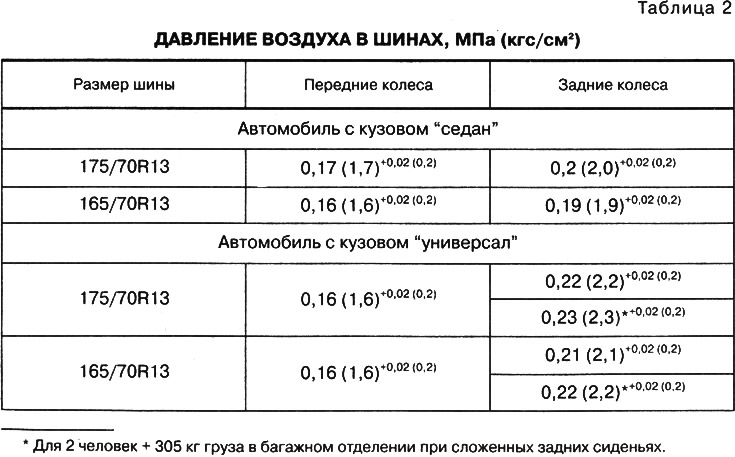
Check the air pressure in your tires periodically with a pressure gauge (see table 2). Operating tires at pressures other than recommended will cause premature wear and poor stability and control of the vehicle. If tire pressure is constantly dropping, check for air leaks through the valve stem. If there is an air leak, tighten the stem, and if that does not help, replace it with a new one.
If the pressure drops even though the valve is working properly, the tire needs to be repaired.
To avoid damaging the sealing layer of the tire, dismount and mount it using a special device or at a PTO certified by the manufacturer. To avoid disturbing the wheel balance, before dismounting, make a mark with chalk on the tire opposite the valve, and when mounting, install the tire according to this mark.
After installing new tires, be sure to have the wheels balanced at a manufacturer-certified service center.
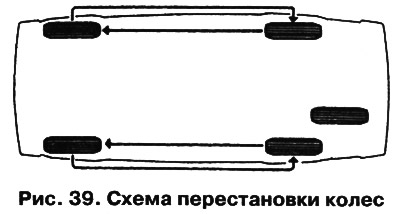
To ensure even wear of the tires, rotate the wheels as shown in Fig. 39 according to the instructions in the service book.
When operating your vehicle, avoid rubbing the wheels against road curbs and driving fast on roads with damaged surfaces (potholes, bumps, etc.), since damage to the wheel rim can cause not only its imbalance, but also loss of tightness of tubeless tires. If vibrations appear while driving, check the wheel balancing.