




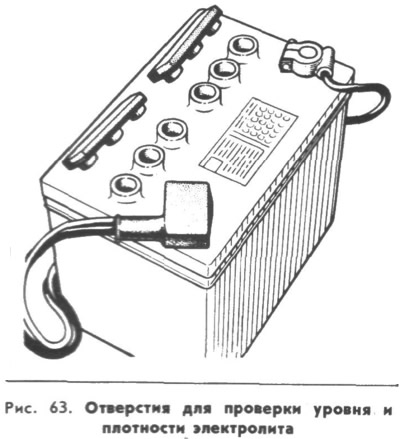
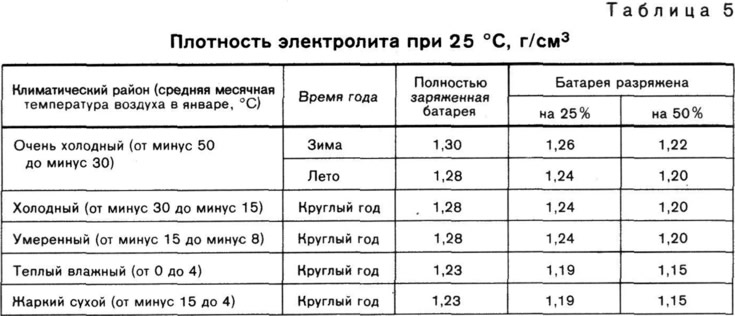
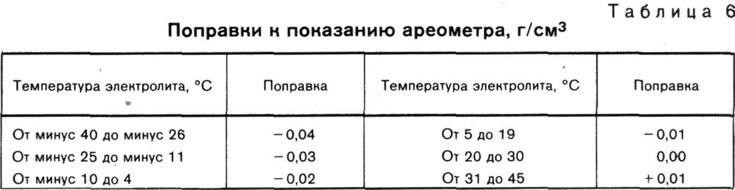
Every 10,000 km mileage, and also in case of frequent cases of unreliable engine starting, check the battery charge level by measuring the density of the electrolyte with a hydrometer. At the factory, cars are equipped with batteries with an electrolyte density of 1.280 (for the tropics - 1.230). Depending on the climate zone in which the car is operated, the electrolyte density should correspond to the data in Table 5. If the electrolyte temperature does not correspond to 25°C, then use Table 6 of corrections to the hydrometer reading. Remove the battery from the car if it is discharged by more than 25% in winter or 50% in summer and recharge it.
If you stop using the car for a period of up to one month, disconnect the negative cable ("to ground") from the battery. Do not leave the cable clamp on the surface of the battery. If you stop using the car for a longer period, remove the battery from the car, fully charge it and store it in a cool, dry room if possible. The minimum storage temperature should not be below minus 50°C. During storage, check the density of the electrolyte once every 12 months and recharge the battery if necessary. It is unacceptable to store the battery in a discharged state, as this will lead to sulfation of the plates and complete loss of battery performance.
Every 20,000 km after running, clean the clamps and terminals of the battery with sandpaper and lubricate them with a thin layer of VTV-1 auto lubricant in an aerosol can.