




2. Disconnect the wiring harness connector from the brake fluid level sensor installed in the reservoir cap.
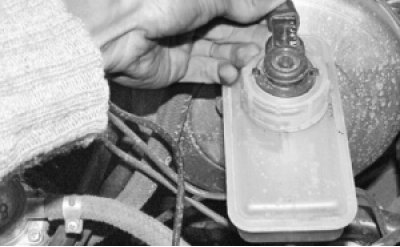
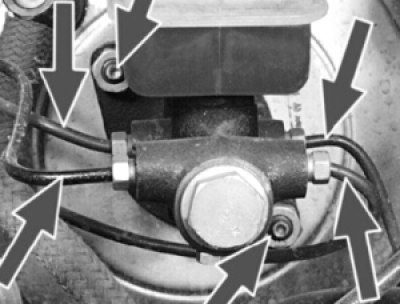
3. Loosen the four brake pipe mounting nuts. Unscrew the two nuts securing the master cylinder to the vacuum booster and carefully remove the master cylinder from the studs. Finally, unscrew the brake pipe mounting nuts. Note that a small amount of fluid will leak out of the master cylinder, so place a rag under the cylinder.
4. Turn the cylinder over and drain the brake fluid from the reservoir.
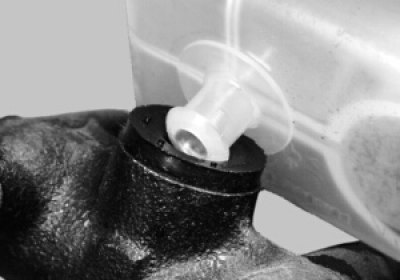
5. If the new cylinder does not have a reservoir, remove the reservoir from the old cylinder and take out the two rubber bushings that secure the reservoir. Replace any torn, cracked or loose bushings. Install the bushings and reservoir on the new cylinder.
6. Install the master cylinder, tighten its mounting nuts and pour brake fluid into the reservoir. Place a container or a rag under the master cylinder to collect the brake fluid.
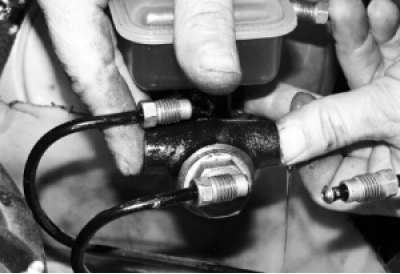
7. Cover the brake pipe holes in the master cylinder with your fingers. Have an assistant slowly press the brake pedal until brake fluid starts to flow out of the front holes in the cylinder.
(The original source is located on the website: VAZbook.ru)
8. At this point, connect the tubes to the front holes of the cylinder and tighten the nuts that secure them. At this time, the assistant should hold the pedal down.
Connect the tubes to the rear holes of the cylinder in the same way.
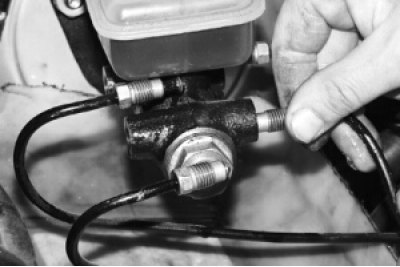
9. Install all removed parts in the reverse order. Press the brake pedal and, if it is "soft", bleed the brake system (see "Bleeding the brake system").