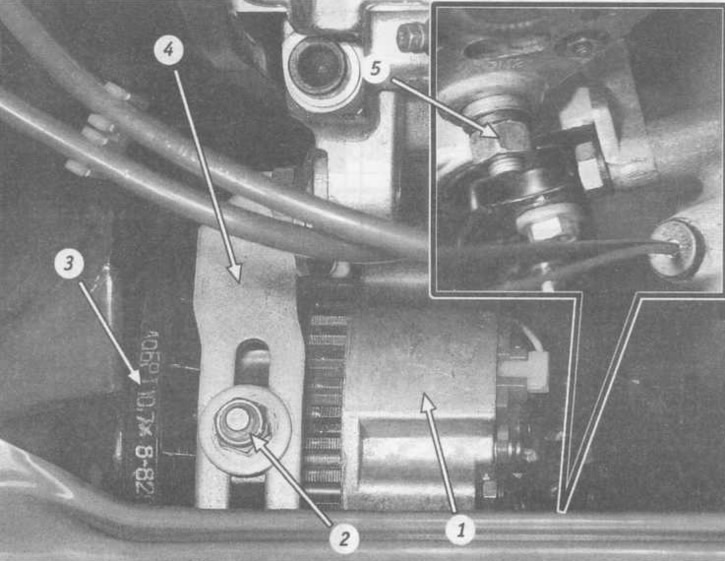
Installing the generator on the engine: 1 - generator; 2 - nut for fastening the generator to the tension bar; 3 - generator drive belt; 4 - tension bar; 5 - nut for fastening the generator to the bracket.
You will need: 17 and 19 mm wrenches, a wheel wrench, and a mounting blade.
If you find any tears, fraying, or delamination of the rubber during inspection of the belt, replace the belt. It can break at the most inopportune moment.
If traces of grease are found on the belt, replace it. Before installing a new belt, be sure to wipe all pulleys driven by the belt with a rag soaked in gasoline.
Warnings:
- Insufficient belt tension impairs battery charging and leads to increased belt wear.
- If the belt is too tight, the generator bearings may fail.
- When turning the crankshaft using the pulley mounting bolt, the gear shift lever must be in neutral position.
According to the manufacturer, the generator drive belt should deflect by 10-15 mm under a force of 100 N (10 kgf).
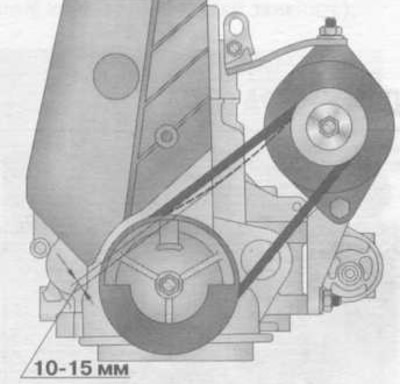
Press your finger on the belt in the middle between the generator and crankshaft pulleys. If the belt deflection differs from the nominal value, adjust its tension.
Loosen the nut securing the generator to the bracket and...
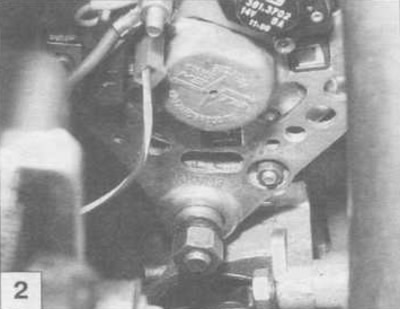
...nuts securing the generator to the tension bar.
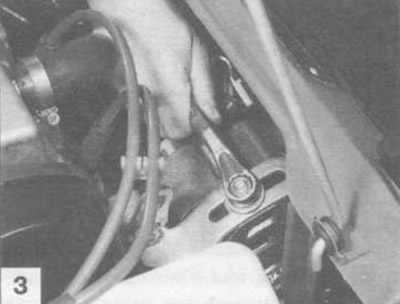
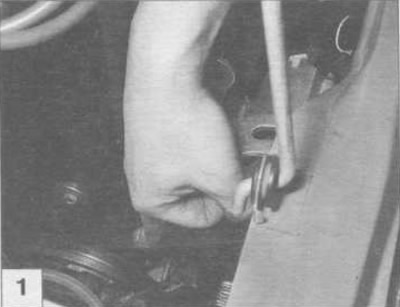
Use a tire iron to push the alternator away from the cylinder block to tighten the belt or...
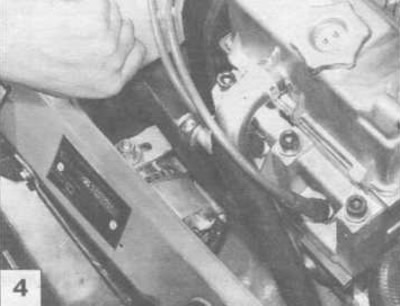
...move the generator to the block to loosen it (place a rag under the mounting blade to avoid damaging the bodywork).
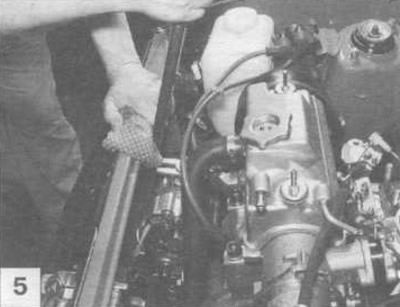
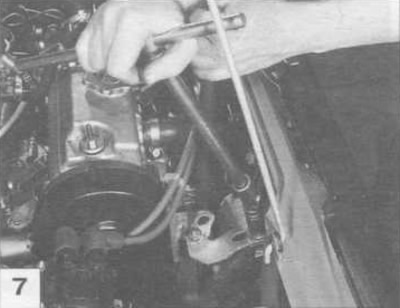
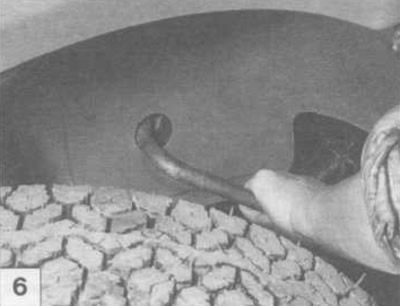
Turn the crankshaft two turns clockwise using the wheel wrench through the hole in the right wheel well by the pulley mounting bolt and check the belt tension again. Repeat the adjustment if necessary.
Tighten both generator mounting nuts.