




If you have failed to start the engine after repeated attempts, remove the spark plugs before starting it from another car's battery. Rotate the engine crankshaft several times with the starter to remove gasoline from the cylinders. Inspect the spark plugs: dry wet plugs or replace them with new ones.
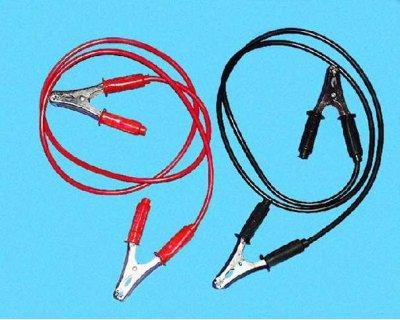
Special wires for starting the engine from an external power source
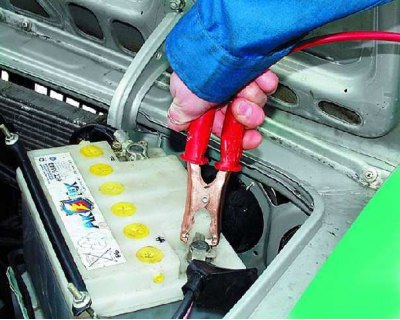
1. Position the cars so that their batteries are as close to each other as possible and the cables are long enough. Connect the red cable to the "+" terminal of the charged battery (on the "donor car").
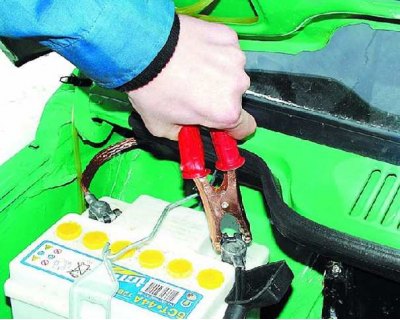
2. Connect the other end of the red wire to the "+" terminal of your car's battery.
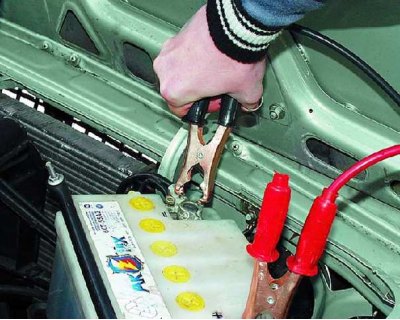
3. Connect the black wire to the "–" terminal of the charged battery (on the "donor car").
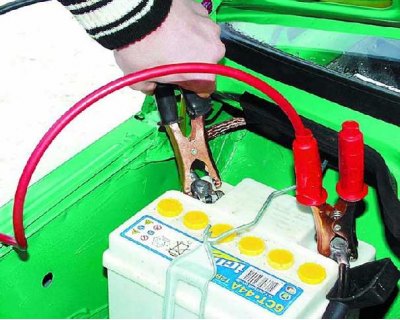
4. Connect the other end of the black wire to the "–" terminal of your vehicle's battery.
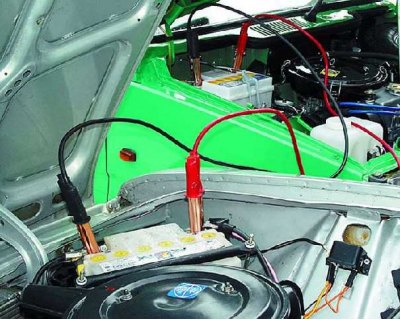
5. Start the engine of the "donor car". Try to start the engine of your car. If the engine does not start, wait a few minutes and try again. After the engine starts, let it idle for a few minutes.
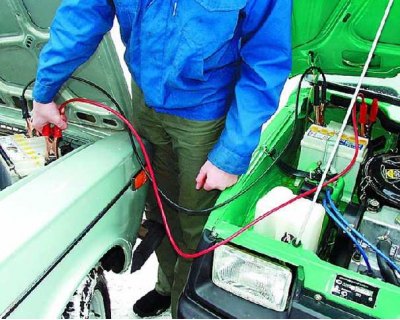
6. Stop the engine of the "donor car" and disconnect the wires in the reverse order of connection.
Starting the engine using a battery charger
You will need: a charger and starting device.
Attention! The design of the chargers and starters may vary, so strictly follow the rules for using a specific device in accordance with the manufacturer's instructions.
Warning! If the battery is completely discharged, try to recharge it using a charger and starting device (see subsection 3.38.).
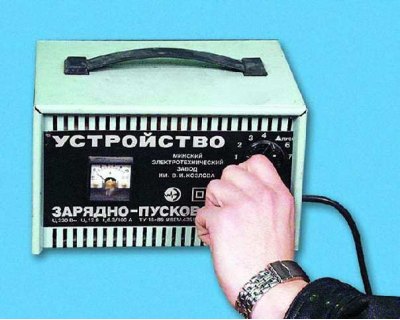
7. Move the charger to the "START" position in accordance with the manufacturer's instructions.
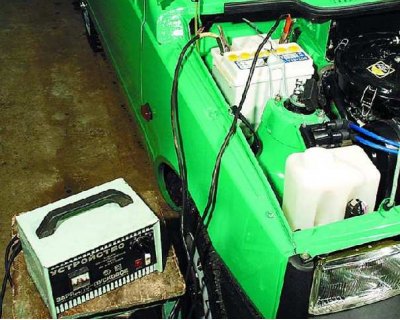
8. Connect the wires of the charger-starter to the terminals of the battery, observing the polarity.
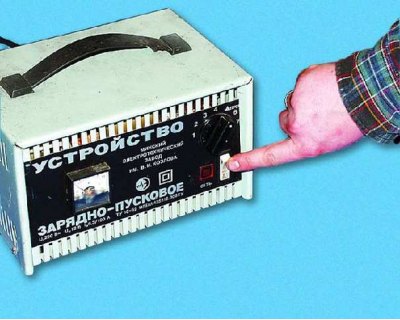
9. Turn on the charger and jumper.
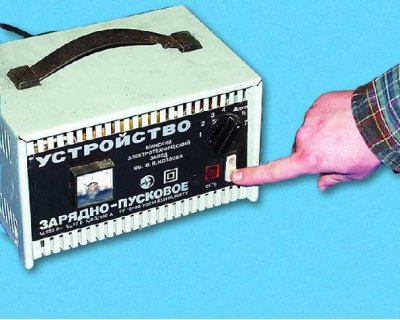
10. Start the engine. If the engine starts, first turn off the charger and then disconnect its wires from the battery terminals.