




The crankshaft speed at idle should be within 820-900 rpm, and the carbon monoxide (CO) content in the exhaust gases within 0.5-1.2% (at 20°C and 760 mm Hg). Adjustment is performed by adjusting the composition (quality) and quantity screws of the carburetor mixture. On a new carburetor, plastic bushings are pressed onto the screws, which limit the rotation of the quality screw within 50°, and the quantity - 90°. This is done in order to maintain the factory adjustment during the warranty period.
We adjust the idle speed on a warm engine, with the carburetor air damper fully open.
To perform adjustments you will need a car tester (multimeter with engine speed measurement function) and a gas analyzer.
Sequence of execution
1. Prepare the vehicle for operations (see "Preparing a car for maintenance and repair").
2. Before adjustment, check the ignition timing angle and adjust it if necessary (see "Ignition timing - checking and adjustment").
3. Connect one probe of the car tester in the crankshaft speed determination mode to the terminal of the primary winding of the ignition coil, and the other to the ground.
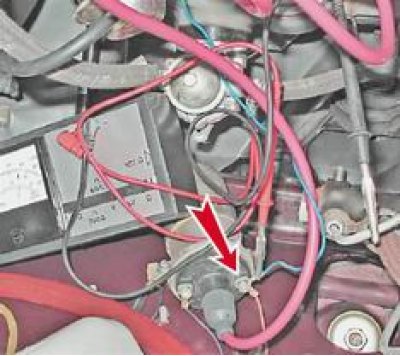
4. Insert the gas analyzer sensor into the exhaust pipe and turn on the gas analyzer (see instructions for use).
5. Start the engine.
6. Using a slotted screwdriver, turn the mixture quantity screw to set the crankshaft speed to 820-900 rpm.
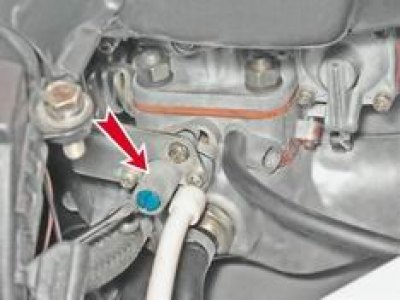
7. If the gas analyzer readings do not correspond to the norm, adjust the mixture composition. By turning the mixture composition (quality) screw with a slotted screwdriver, we achieve the required concentration of CO in the exhaust gases. In this case, the crankshaft rotation speed will change.
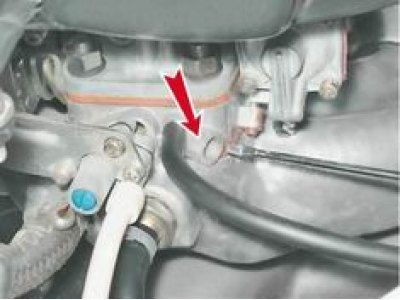
8. Repeating the operations specified in points 6 and 7, we achieve the required values of crankshaft speed and CO concentration in the exhaust gases.
9. If it is not possible to make adjustments within the limits allowed by the limiting bushings, remove them and make adjustments again.
10. To check the correctness of the idle speed adjustment, sharply press and release the gas pedal. The engine should increase the crankshaft speed without interruption, and should not stall when the pedal is released.