




Contents: Removal ↓ Installation ↓
Removal
1. Place the vehicle on an inspection pit or overpass (see "Preparing a car for maintenance and repair").
2. Disconnect the wire from the negative terminal of the battery (see "Battery - Removal and Installation").
3. With a special hose (see "Tools, accessories and operating materials") we pump out fuel through the filler neck of the tank.
4. Having folded back the mat on the left side of the luggage compartment, using a Phillips screwdriver, unscrew the two screws securing the hatch cover and remove it.
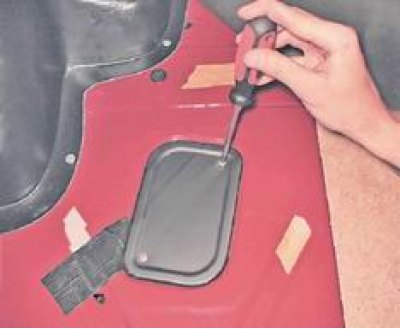
5. Disconnect the wire ends from the fuel level sensor output.
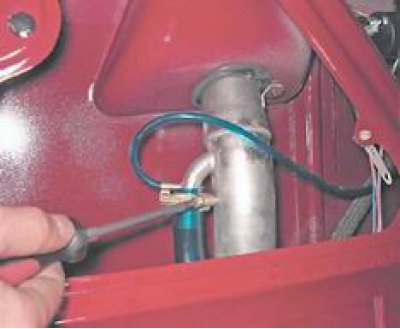
6. Using a Phillips screwdriver, loosen the clamp and disconnect the fuel hose from the fitting.
7. Using a Phillips screwdriver, unscrew the screw securing the luggage compartment trim on the left side and remove the trim (see "Rear bumper - removal and installation"). Using the same tool, loosen the clamp securing the tank ventilation hose and remove the hose from the filler pipe fitting.
8. Under the car with a socket wrench by 10 mm we unscrew the screw of the rear fastening of the fuel tank pipe casing to the side member.
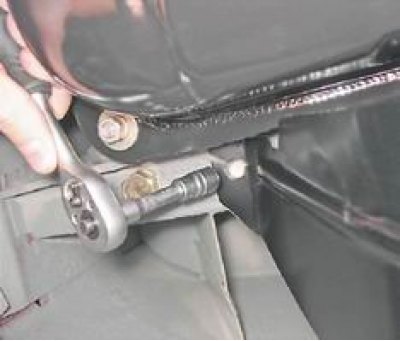
9. Using the same tool, unscrew the two bolts securing the casing to the rear wheel arch.
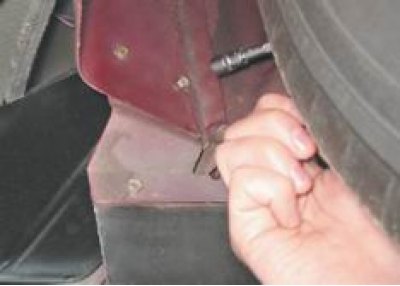
10. Remove the casing.
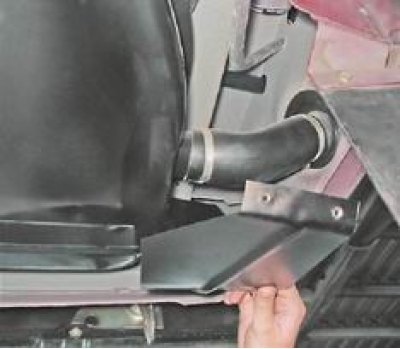
11. Loosen the clamp securing the tank pipe to the filler pipe and remove the pipe.
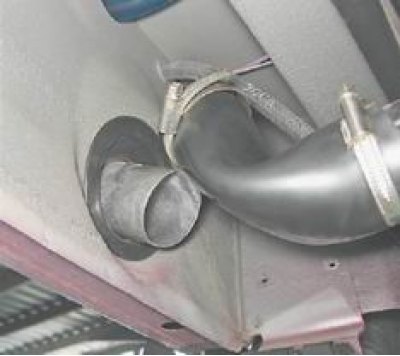
12. Place a jack under the tank and use a socket wrench by 13 mm using an extension, unscrew the four fuel tank mounting nuts.
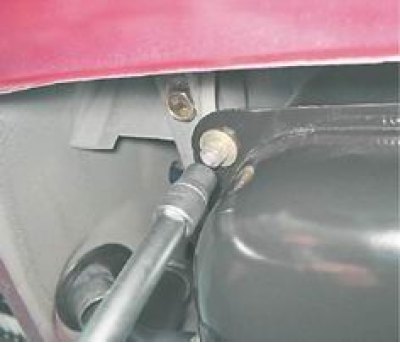
13. Lowering the tank, remove the ventilation hose from the hole in the side member.

Installation
1. Installation of the fuel tank is performed in the reverse order.
2. Raise the tank with a jack, while the assistant pulls it out (from the luggage compartment side) ventilation hose from the hole in the side member.
3. After filling the tank with fuel, turn on the ignition to create pressure in the fuel system and check the tightness of the connections.