




Rubber seals
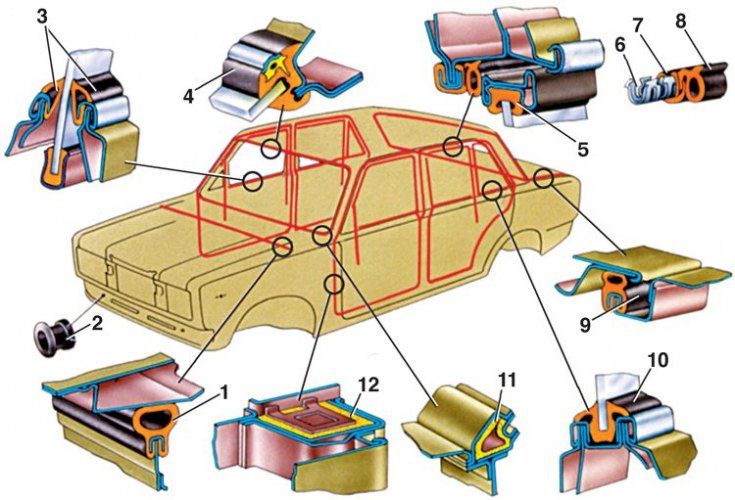
1 - hood; 2 – bumper connectors; 3 – lower door glass seal; 4 – windshield and rear window; 5 – drop glass; 6 – seal frame; 7 – seal edge; 8 – door opening; 9 – trunk lids; 10 – fixed door glass; 11 – windshield frames; 12 – front pillar
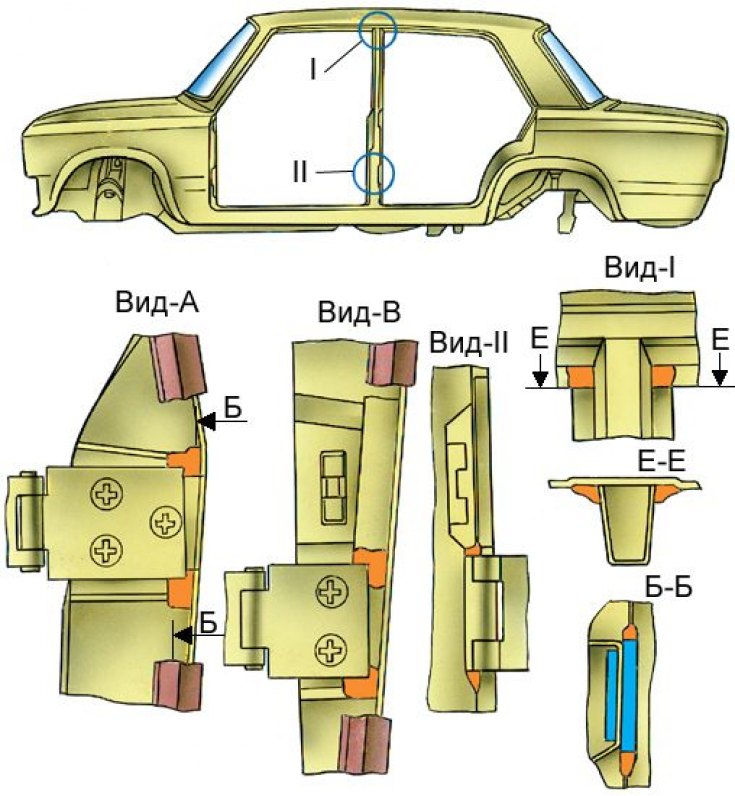
Places of application of sealing mastic in door openings
Welded seams and joints to which sealing mastic is applied (left side view of the body)
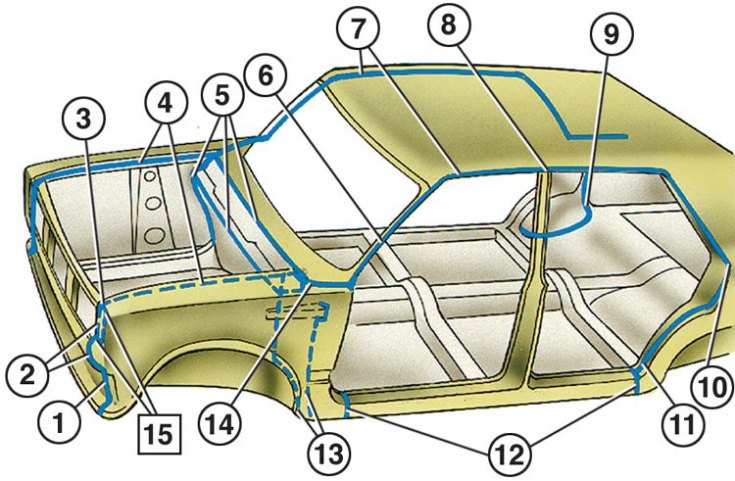
1 - front wing with front panel; 2 – wing connector with wing and mudguard; 3 – wing reinforcement with upper front crossmember; 4 - hood drainage channels with wings and windshield frame; 5 – front shield and air intake box with front panel and side panels; 6 – roofs with windshield frame; 7 - Roof gutters with roof panel and sides; 8 – upper end of the central pillar; 9 – floors with bases of the rear suspension spring cup and rear wheel arches; 10 - outer corner panels with rear wing; 11 – rear wing with sidewall; 12 – floor thresholds with wings; 13 – sidewalls with internal panels; 14 – wings with windscreen frame; 15 – angles of the wing connector with the wing and mudguard;
Designations in circles – plastisol D-4A;
Designation in the square – mastic 51-G-7
Welded seams and joints to which sealing mastic is applied (view of the body from below)
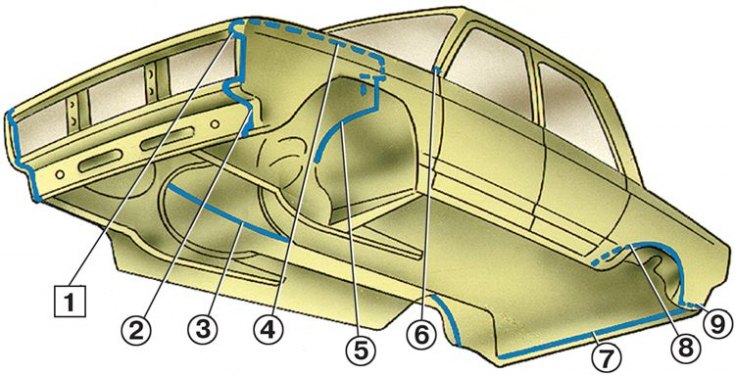
1 – wing reinforcement with upper front crossmember; 2 - front wing with front panel; 3 – floor casing with floor; 4 – hood drainage channel with front wing; 5 – mudguard with front shield; 6 – front wing with windscreen frame; 7 – lower rear panel with rear floor; 8 – inner and outer wheel arches; 9 - spare wheel and fuel tank floors with rear fenders;
Designations in circles – plastisol D-4A;
Designation in the square – mastic 51-G-7
Welded seams and joints to which sealing mastic is applied (view of the body from the inside)
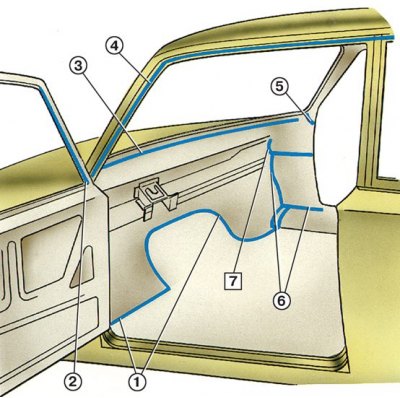
1 – front shield with floor casing and floor; 2 – front and rear door frames; 3 – inner panel of the windscreen frame with the upper panel of the front; 4 – roof gutter with sidewall (bottom); 5 – bases of the front pillar; 6 - side panels with front shield and floor; 7 – front side panel with upper front reinforcement;
Designations in circles – plastisol D-4A;
Designation in the square – mastic 51-G-7
Welded seams and joints to which sealing mastic is applied (rear view of the body)
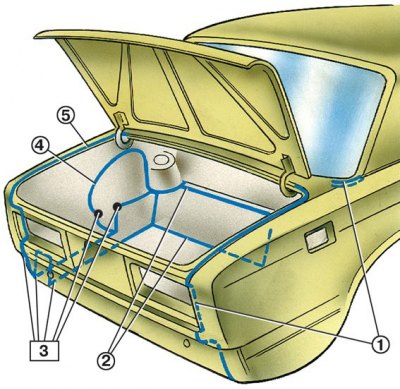
1 – rear fenders with upper and lower rear panels; 2 - floors with the rear floor; 3 - floor corners with rear panel, rear side members, wheel arches and rear fenders; 4 – rear wheel arches with rear wing; 5 - trunk drainage channels with rear wings and rear panels;
Designations in circles – plastisol D-4A;
Designation in the square – mastic 51-G-7
The body is sealed using various rubber seals (see fig. Rubber seals), sealing mastics, rubber plugs for technological holes and careful adjustment of mating parts.
When removing or installing seals with metal frames, do not allow the frame to become crushed or corrugations to form on the seals.
When installing door opening seals, apply 88-NP-35 glue under the seals from the upper edge of the rear wing along the top of the door openings and along the central pillar to the door sills.
After installing the doors, apply sealing mastic 51-G-7 to the corners of the hinges, as shown in Fig. Places to apply sealing mastic in door openings. When replacing or rearranging door opening seals, apply sealing mastic 51-G-7 to the upper corners of the central pillars.
The contact spot welds used to weld the stamped body parts do not provide a tight connection. They are subject to intense corrosion, especially at the bends of sheets with small rounding radii and in places of metal overstress.
The welded seams at the automobile plant are sealed with D-4A plastisol to protect them from moisture and dirt.
When replacing individual body parts, after welding and applying primer, coat the welds on both sides with D-4A plastisol and apply non-drying mastic 52-G-7 to the corner joints in the places shown in Fig. Welded seams and joints to which sealing mastic is applied (left side view of the body), fig. Welded seams and joints to which sealing mastic is applied (view of the body from below), fig. Welded seams and joints to which sealing mastic is applied (view of the body from the inside) and Fig. Welded seams and joints to which sealing mastic is applied (rear view of the body).