




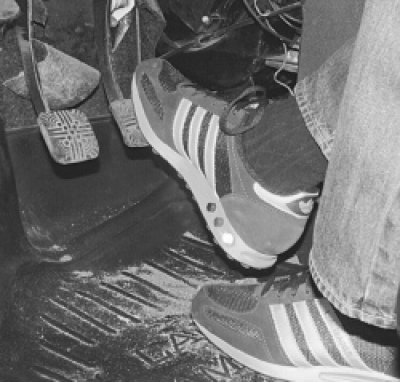
1. The reason for the decrease in braking efficiency may be unsatisfactory operation vacuum booster. For a quick check, press the brake pedal several times with the engine off to remove the vacuum in the booster, and then, holding the pedal, start the engine. If the pedal drops slightly after starting the engine, the vacuum booster is working properly.
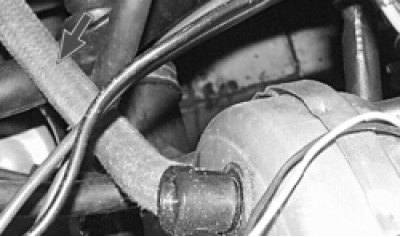
2. If the pedal remains motionless, check the integrity and reliability of the hose that connects the vacuum booster to the engine intake manifold. Replace or repair a faulty hose. If the hose is in good condition, it is necessary replacement of vacuum booster.
If braking is accompanied by beating and pulsation of the brake pedal, you should first check the condition of the front disc brakes.
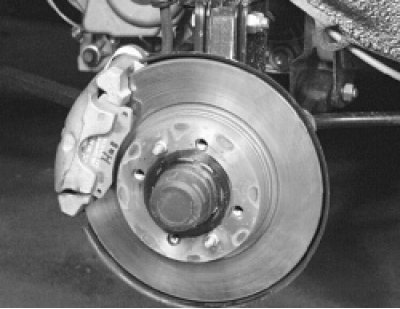
3. Having installed the car on the jack, remove the front wheel and inspect the brake disc.
The brake disc thickness should be at least 10.8 mm. The disc surface should be flat and smooth on both sides. If the disc surface is covered with rust in places, which usually happens after a long period of parking of the car with un-dried brakes, try to clean the working surface with a fine emery cloth. If this procedure does not help, you will have to give the discs for grinding or replace with new ones.
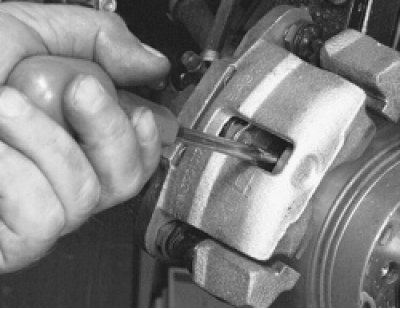
4. Check the mobility of the brake pads. To do this, try to move the pads away from the brake disc with a screwdriver. If the pads cannot be moved apart, then the piston in the brake cylinder is "jammed".
Warning! Jamming of the brake cylinder piston results in constant braking of the corresponding wheel when the pedal is released and skidding of the car when braking.
Note: The parking brake operates the rear brakes via a cable that connects the parking brake lever and the brake shoe control mechanism. Many drivers try to use the parking brake as little as possible to extend its life, and... achieve the opposite result. If you do not use the parking brake, dirt and moisture stagnate in the cable sheaths, the cable becomes covered with rust, stops moving and breaks. Therefore, use the parking brake when necessary, but do not forget from time to time adjust the parking brake drive.
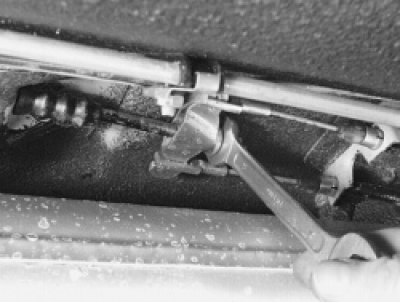
5. To adjust the parking brake, lift the lever up four or five clicks on the ratchet mechanism. While under the car, loosen the tensioner lock nut and use the adjusting nut to tighten the cable.
Helpful Hint: After adjustment, check if the rear wheels rotate freely. If they rotate stiffly, loosen the adjusting nut a little and secure it with a lock nut.