




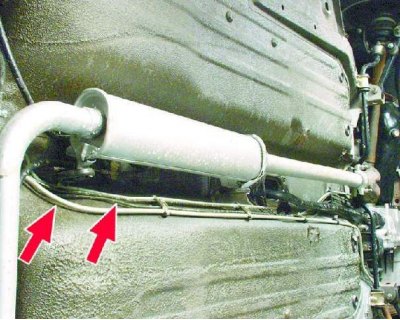
1. Inspect the pipelines - they should not be damaged or heavily corroded. Also check the fastenings of the pipelines in the holders. Loose or broken holders due to vibrations can cause the pipelines to break.
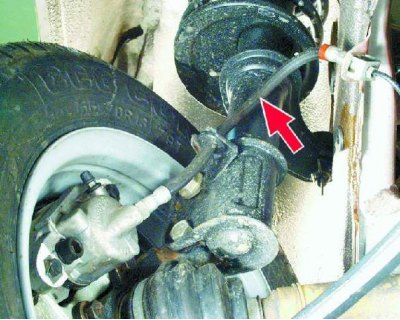
2. Carefully inspect the brake hoses - there should be no cracks, tears or signs of wear. Fully depress the brake pedal - if there are any bulges on the hose, replace it (the work is carried out with an assistant).
Warnings:
- Avoid contact with mineral oils and lubricants, which destroy rubber, on brake hoses.
- Be sure to replace the brake hoses every 125,000 km or after 5 years, as the hoses may break due to aging rubber.
- Defective parts of the hydraulic brake system must be replaced.
(The text is copied from the online resource: www.VAZbook.ru)
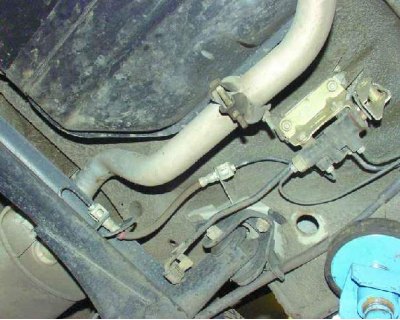
3. Check all pipe and hose connections.
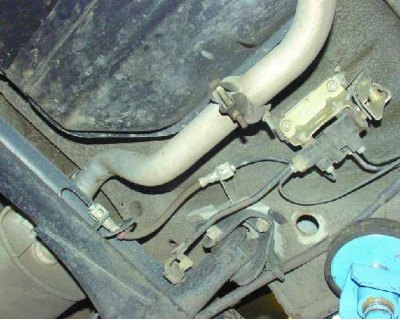
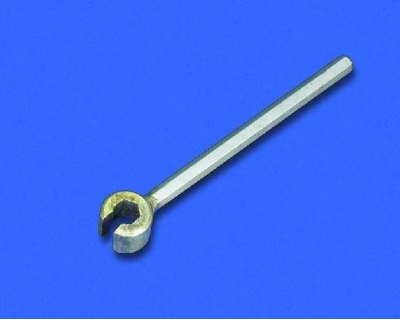
4. If a leak is detected, tighten the fastening nuts with a special key. If you are unable to eliminate the leak yourself, be sure to contact a specialist.
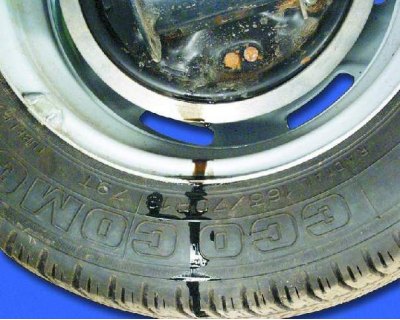
5. If there are traces of brake fluid on the brake shield or the inner side of the wheel, then the wheel cylinder is leaking. To eliminate this defect, contact specialists.
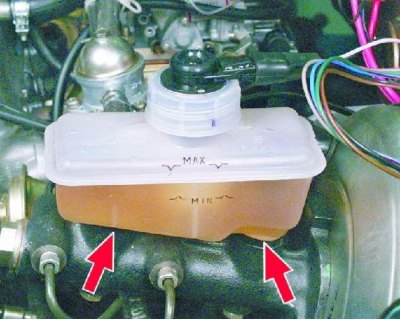
6. Check for leaks from under the master cylinder reservoir. We recommend contacting a service station to replace the reservoir bushings.