




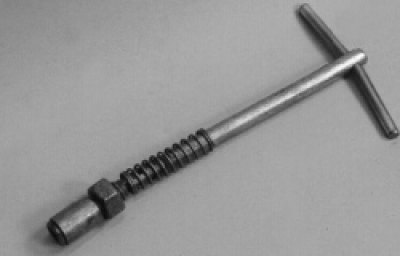
In addition, ready-made manual valve holders are available for sale.
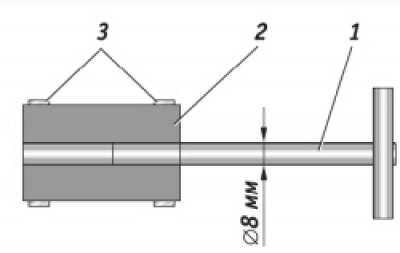
4.14. Device for grinding valves: 1 - metal rod; 2 - rubber hose; 3 - screw clamp
If they are not available, you can use a device made according to the drawing (Fig. 4.14).
1. Remove the cylinder head (see "Replacing the cylinder head gasket").
2. Remove the valves from the head and thoroughly clean the valves and seats (see "Cylinder head (repair)").
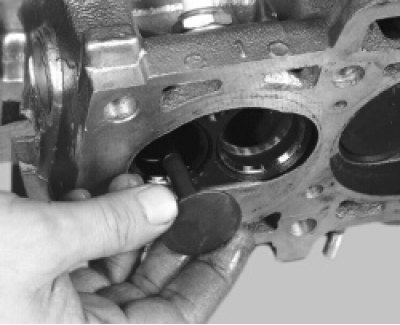
3. Insert the valve into the cylinder head.
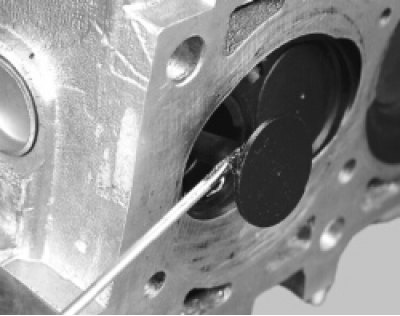
4. Apply a thin layer of lapping paste to the working chamfer of the valve.
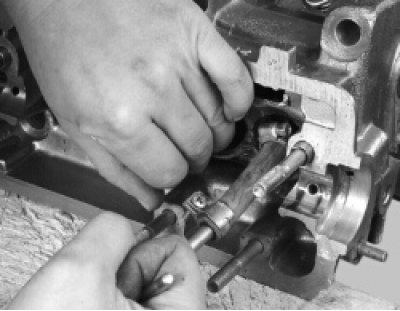
5. Secure the valve stem in a valve grinding tool and use the tool to turn the valve in both directions, periodically pressing the valve against the seat.
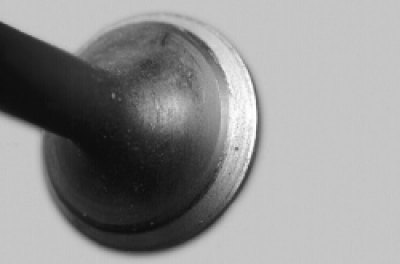
6. An external sign of satisfactory lapping is a uniform matte-gray color of the working chamfer of the valve and seat.
7. After grinding, carefully wipe the valve and seat with a clean cloth and rinse to remove any remaining grinding paste. Check the valve for leaks by installing it in the head with springs and crackers. Then lay the head on its side and pour kerosene into the channel that is closed by the valve. If kerosene does not leak into the combustion chamber within 3 minutes, the valve is sealed.
(The text is on the website: VazBook.ru)