




- wrenches "13", "19", a special wrench for holding the shock absorber rod or an open-end wrench "8"
- suspension spring tensioner
Warning! Before removing the shock absorber, it is necessary to fix the spring in a compressed state. The travel of the spring, which has considerable rigidity, is greater than the travel of the shock absorber rod. When unscrewing the nut of the upper shock absorber mount, the released spring can tear the nut off the last threads of the thread and sharply throw up the relatively light rear part of the body. There is a real danger of throwing the car off the paws of the lift or supports and getting injured from the nut and washers torn off the shock absorber rod.
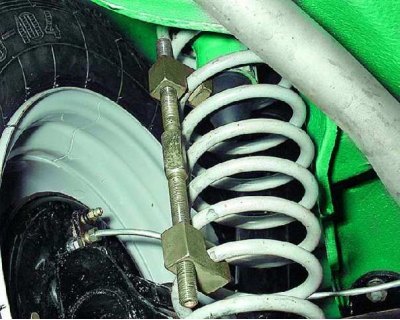
1. Install the clamp on the rear suspension spring on the side of the shock absorber being replaced and compress the spring slightly. If there is no clamp, the spring can be tied in a compressed state with strong wire.
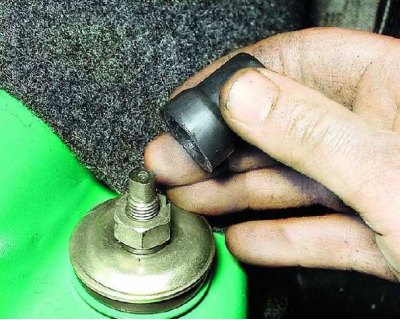
2. Open the tailgate and remove the rubber protective cap from the end of the shock absorber rod in the luggage compartment.
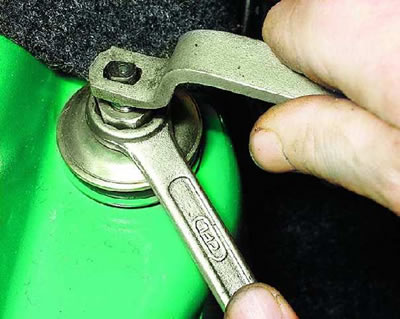
3. Using a second key to prevent the rod from turning by the flats, unscrew the upper shock absorber mounting nut.
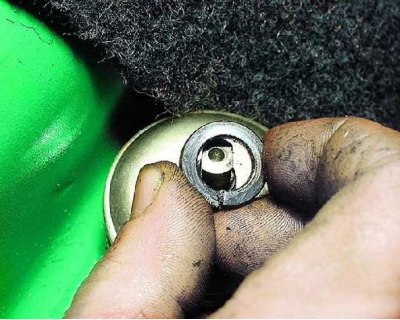
4. Remove the spring washer from the rod...
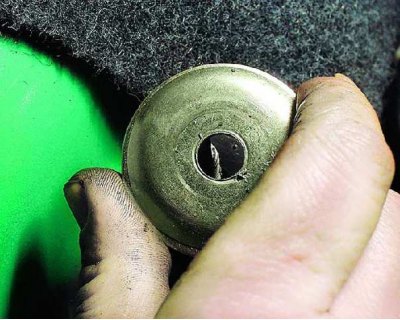
5....a cup and...
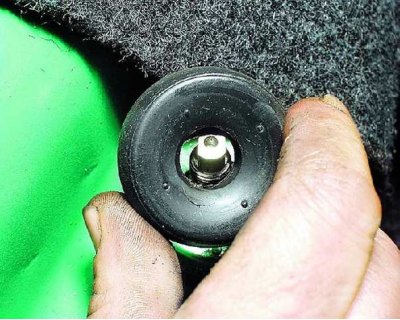
6....the upper rubber cushion.
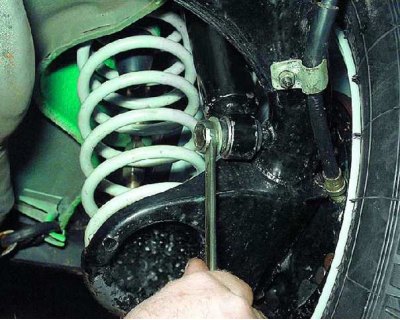
7. Remove the bolt securing the lower end of the shock absorber to the suspension arm...
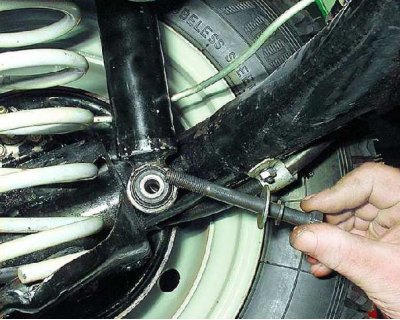
8.... remove the bolt together with the washers from the lever hole and...
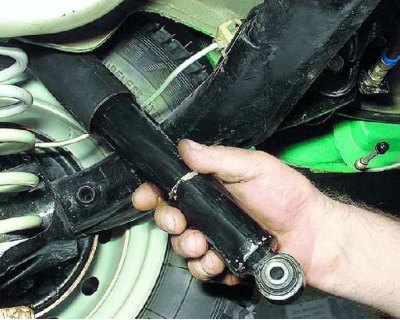
9....remove the shock absorber.
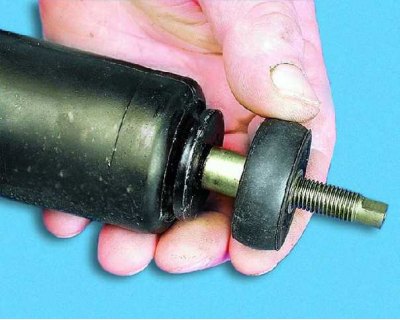
10. Remove the lower rubber cushion from the shock absorber rod and...
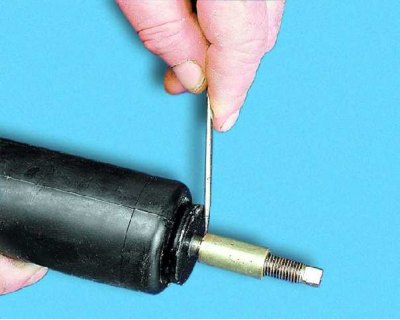
11....a spacer sleeve.
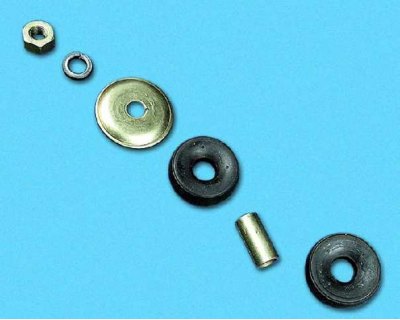
12. Inspect the removed shock absorber mounting parts. The rubber cushions should not have cracks or tears. Replace damaged or heavily compressed cushions. The cup and spacer sleeve should not be deformed, and the nut should not have crushed edges or damaged threads.
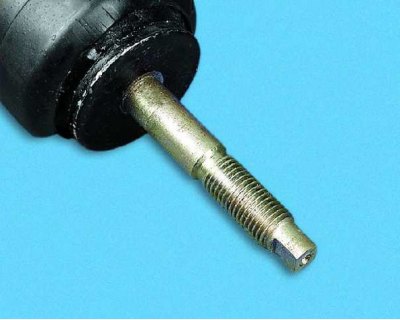
13. Inspect the stem. The threads should not be damaged and the stem itself should not be bent.
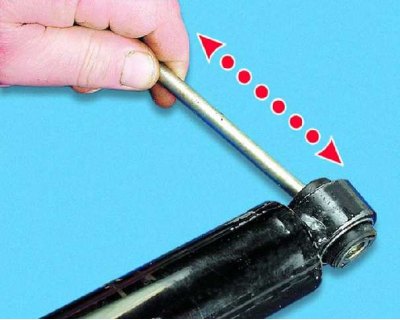
14. The rubber bushing of the lower hinge should not rotate in the shock absorber eye, and its spacer sleeve should not move when pressed.
The text is taken from the online resource (www.vazbook.ru)
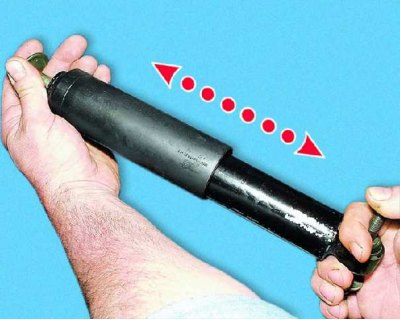
15. Check the operation of the shock absorber by manually moving its rod in both directions until it stops. The rod should move smoothly, without jamming or dips, and the force of the recoil stroke should be significantly higher than the force of the compression stroke.
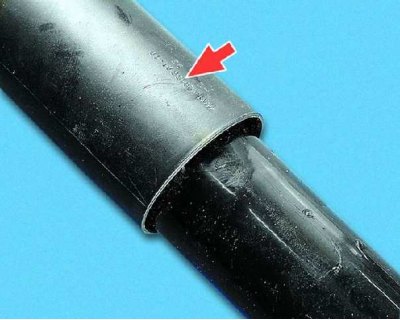
16. Pay attention to the marking on the piston rod housing. Install a new shock absorber with the same marking. If you are replacing both shock absorbers, their markings must be the same. Install the shock absorber in the reverse order of removal.