




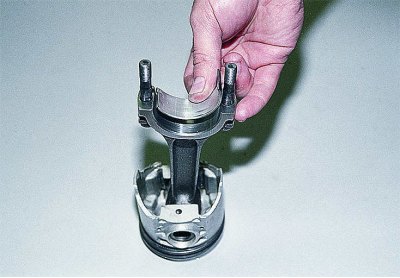
In the lower heads...
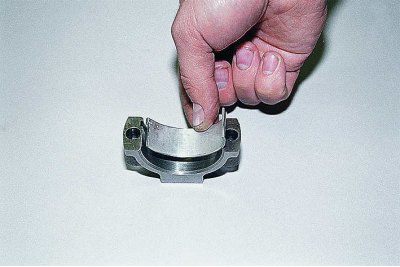
...and the connecting rod caps are fitted with steel-aluminum liners.
They are kept from turning by locks that fit into the slots in the beds.
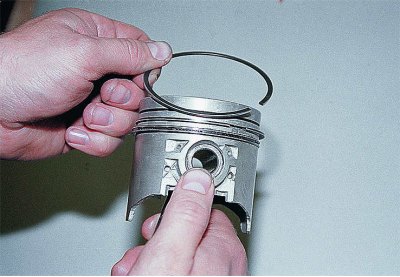
We clamp the connecting rod in a vice and, by loosening it, remove the upper...
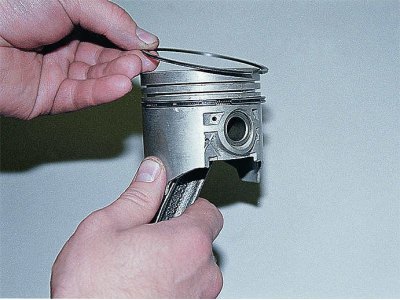
...and the lower compression rings. When installing them later, the "TOP" or "TOP" mark should be directed toward the piston bottom.
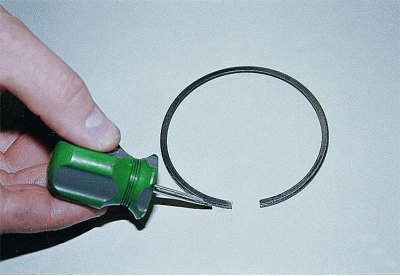
There may not be any inscription on the ring, but the lower compression ring is always installed with the chamfer facing down.
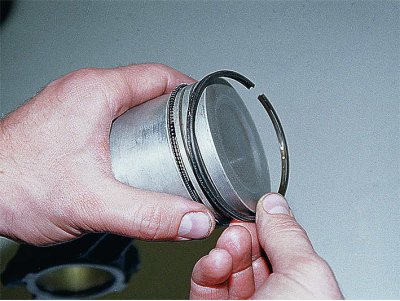
We remove the oil scraper ring...
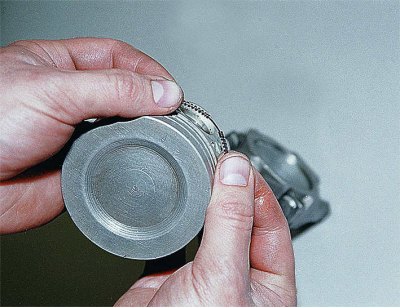
...with an expander.
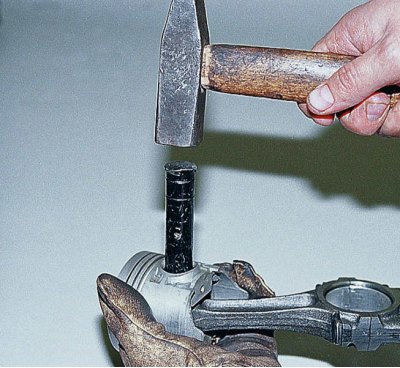
Having installed the piston on a wooden mandrel with a hole or holding it in the air, we knock out the pin.
We assemble the connecting rod and piston group in the reverse order.
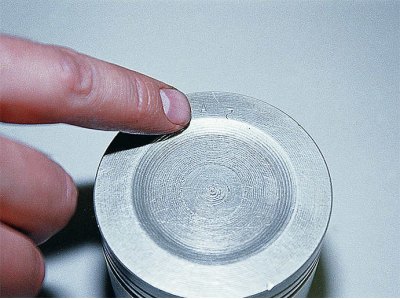
Selecting a new piston. The piston class is designated by a letter, and the pin category is designated by a number (see table of mating parts).
The gap between the piston and the cylinder for new parts is 0.05–0.07 mm. When worn, the maximum permissible gap is 0.15 mm.
A correctly selected pin, lubricated with engine oil, should enter the piston holes under the force of the thumb and not fall out of the piston in a vertical position.
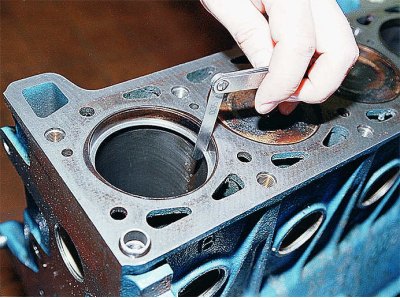
Having installed the ring in the cylinder, we check the gap in its lock with a set of feeler gauges. It should be 0.25–0.40 mm for all rings. If the gap is increased, the rings must be replaced.
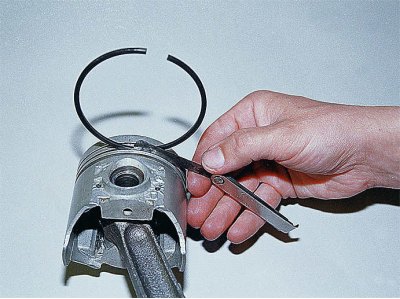
The gap between the ring and the piston groove is also checked with a set of feeler gauges. For the upper compression ring, it should be 0.045–0.077, the lower one – 0.025–0.057, and the oil scraper ring – 0.020–0.052 mm. The maximum permissible gap during wear is 0.15 mm.
We install the rings into the piston grooves, then orient them as follows:
- the lock of the upper compression ring is oriented at an angle of 45° to the axis of the piston pin;
- we turn the lock of the lower compression ring relative to the lock of the upper ring in the opposite direction;
- the oil scraper ring lock is set at 90° relative to the locks of the other rings. In this case, the joint of its expander should be on the opposite side of the lock of the ring itself.
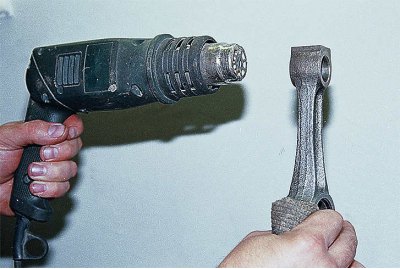
We heat the upper head of the connecting rod to 240°C, clamping it in a vice.
The finger can be pre-chilled in the freezer.
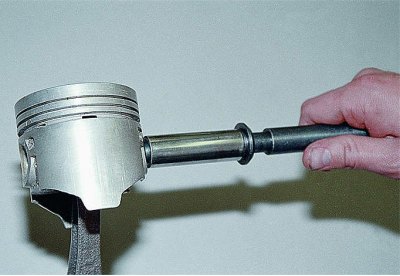
We put the piston on the connecting rod and, using a mandrel, quickly press in the pin.
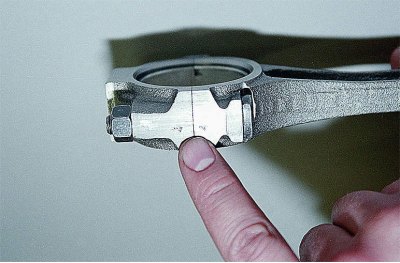
The numbers on the connecting rod and its cover indicating the cylinder number must be on the same side and match.
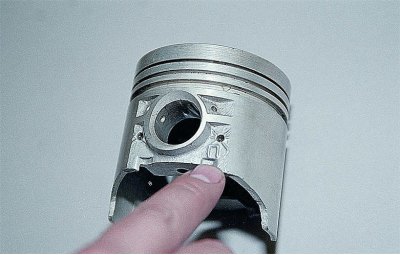
The "P" mark on the piston must be directed towards the front of the cylinder block.