
Contents: Anti-corrosion compounds ↓ Preparation and anti-corrosion…↓ Restoration of the protective…↓
Anti-corrosion compounds
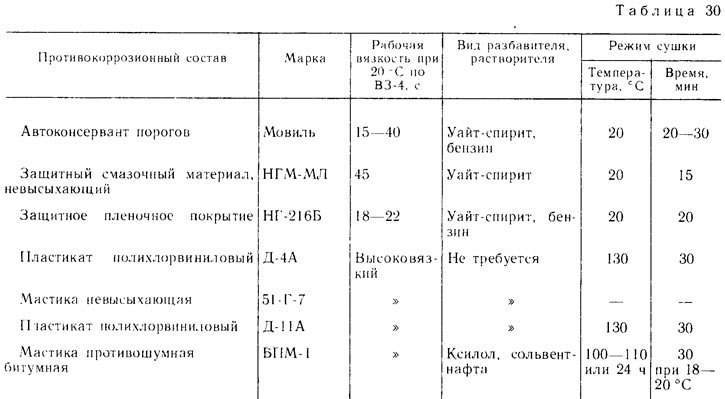
The load-bearing hollow (hidden) cavities of the body, the bottom, the lower parts of the doors, pillars, and the joints of body parts, including the places of spot welding, are most susceptible to corrosion. In this regard, during the operation of the car, additional protection of the hidden cavities of the body is required by applying special anti-corrosion compounds, and the joints of the parts - by applying sealing mastics. The materials used for anti-corrosion treatment are shown in Table 30.
Protective lubricant NGM-ML is used for treating hidden cavities. This material is used to treat hidden cavities of all new cars.
Auto preservative Movil is also used to treat hidden cavities during vehicle operation. It is recommended to treat cavities every 2 years.
Protective film coating NG-216B is used to cover parts of the car under the body during transportation.
Plastisol D-4A is used for sealing welded seams and joints of parts on the external and internal surfaces of the body.
Mastic 51-G-7 is used for sealing body joints, corner joints and gaps.
Plastisol D-11A is used to protect the underside of the car body from corrosion, abrasive wear and noise insulation of new cars. Coating thickness is 1-1.5 mm.
Bitumen anti-noise mastic BPM-1 is used to protect the underbody from corrosion during vehicle operation. The mastic is applied with a thickness of 1-1.5 mm.
The anti-corrosion substance is filed into the hidden cavities of the body using air or airless spraying. Air spraying requires compressed air with a pressure of 5-8 kg/cm², a spray gun with a tank, hoses and extended spray nozzles. The best quality of the coating is achieved with airless spraying under a pressure of 90-120 kg/cm², which allows spraying materials of significant viscosity.
Preparation and anti-corrosion treatment of hidden cavities
Due to the use of complex technological equipment and the need for high-quality work, it is recommended that the treatment of hidden cavities be performed only at vehicle service stations.
The sequence of work is as follows:
- install the car on a lift, open the holes closed with plugs, remove parts and upholstery that prevent access to hidden cavities;
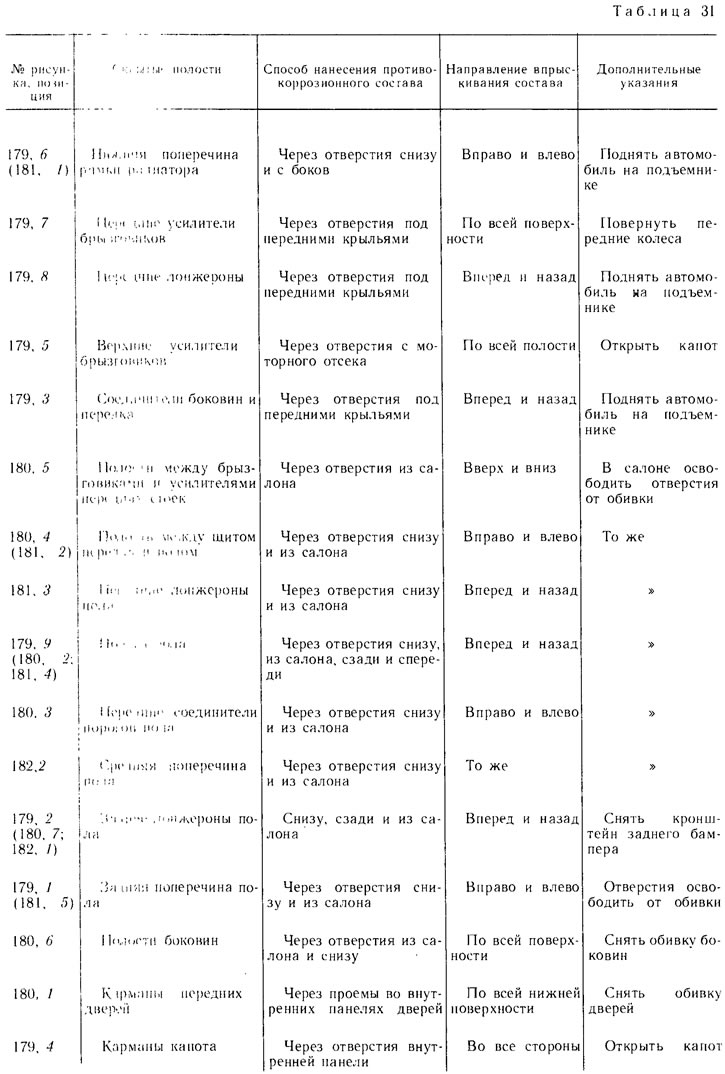
- wash with warm water (40-50°C) through technological and drainage holes hidden cavities (Table 31), the bottom of the body, wheel arches until clean water flows out. In this case, the door windows must be raised;
- remove moisture that has entered the interior, blow out all hidden cavities and other places where the anti-corrosion compound has been applied with compressed air. Keep the car in natural conditions until it dries completely;
- the vehicle is driven into the chamber for applying the anti-corrosion compound and installed on a lift. The anti-corrosion compound is sprayed onto the areas indicated in Figures 179–182. The treatment is performed at a temperature of at least 15°C;
- remove the car from the lift, clean the front surfaces of the body from dirt with a rag soaked in white spirit.
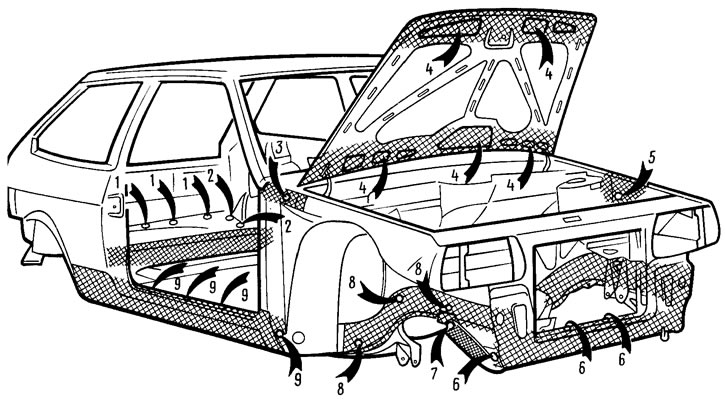
Figure 179. Hidden cavities of the body - front view
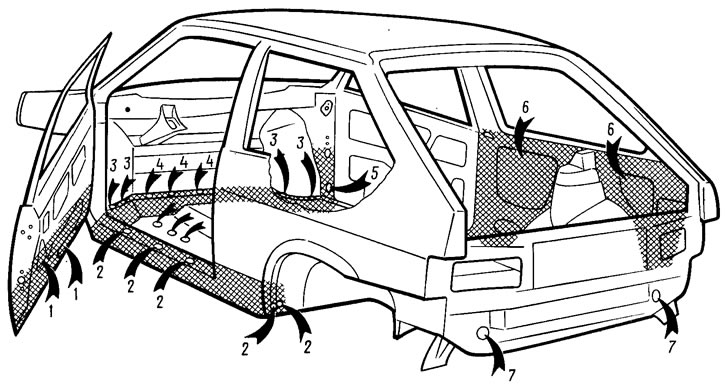
Figure 180. Hidden cavities of the body - rear view
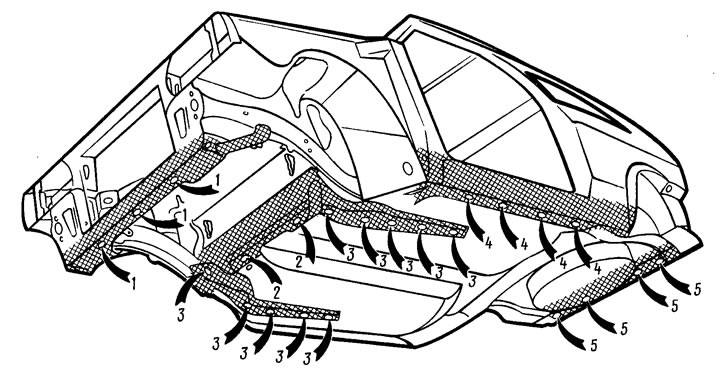
Figure 181. Hidden cavities of the body - view from below, front
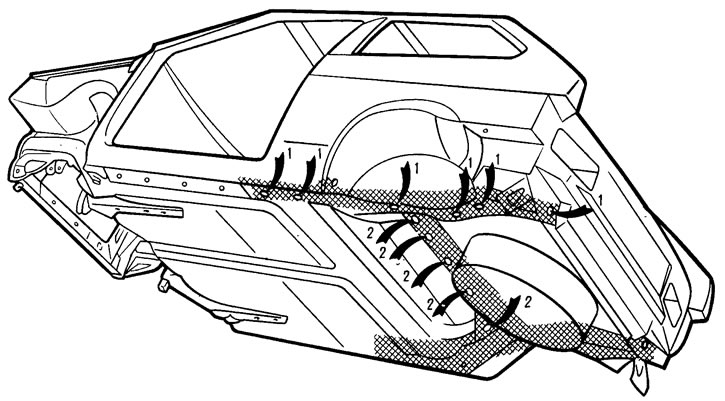
Figure 182. Hidden cavities of the body - bottom rear view
Restoration of the protective coating of the underbody and wheel arches
During vehicle operation, the underbody coating is destroyed and worn out by exposure to gravel, sand, salt and moisture. The exposed metal is subject to corrosion. At the automobile plant, 1-1.5 mm thick polyvinyl chloride plastic compound plastisol D-11A is applied to the underbody, side members and wheel arches for protection and soundproofing. If the protective coating of the underbody is damaged without disturbing the primer layer, the damaged areas are cleaned of dirt, degreased with a rag soaked in white spirit and 1-1.5 mm thick BPM-1 mastic is applied to the dry surface with a brush. The coating is dried in natural conditions for 24 hours or at a temperature of 100-110°C for 30 minutes.
In case of significant damage to the protective coating with damage to the primer layer, clean the damaged areas of the surface down to the metal from dirt and rust and apply primer GF-073 to the dry, degreased surface. Apply mastic BPM-1 to the primed areas of the surface with a brush.
If the vehicle's service life does not exceed 1.5 years, the overlap of a new layer of mastic over the old D-11A should be minimal. With longer vehicle service, the mastic is applied over the entire surface of the bottom and wheel arches.
In the cold season, before use, the mastic is kept in a warm room to a temperature of at least 20°C. The thickened mastic is diluted with xylene (up to 3% by volume). Paint and varnish coatings contaminated with mastic are cleaned with a rag soaked in white spirit.
[The original can be seen on the website: VAZBOOK.RU]