




To locate the leak, start the engine and inspect the entire system. Run your hand over the possible leak areas, without touching the system components, as they heat up to a high temperature when the engine is running.
Caution: Allow the exhaust system to cool before repairing it.
Warning! Exhaust gases are toxic and poisoning occurs unnoticed, so be sure to open the garage door before starting the engine!

1. Carefully inspect the exhaust system. If necessary, replace rusted and burnt-out components.
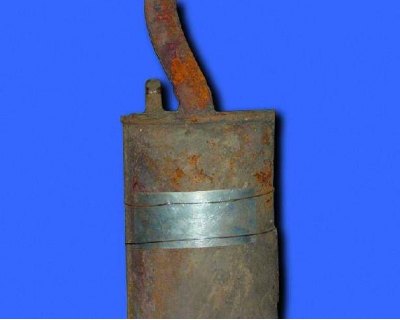
2. If it is not possible to replace the defective unit at the moment, you can temporarily restore its functionality by applying a metal patch to the damaged area and securing it with clamps or wire. Place a sheet of asbestos under the patch.
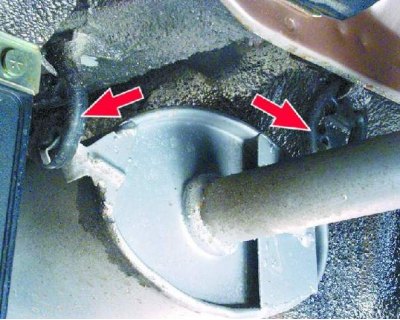
3. Inspect the rubber cushions of the muffler and resonator suspension. Replace any torn, cracked or loose cushions.
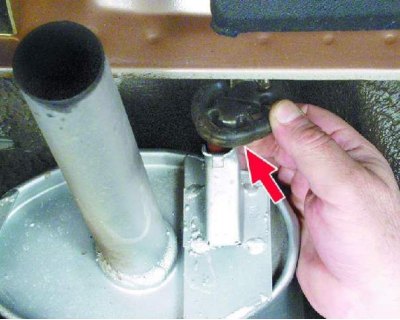
4. To replace the cushion, lift the system unit (for example, a muffler) and remove the old cushion from the bracket on the body and on the unit, then install the new cushion.
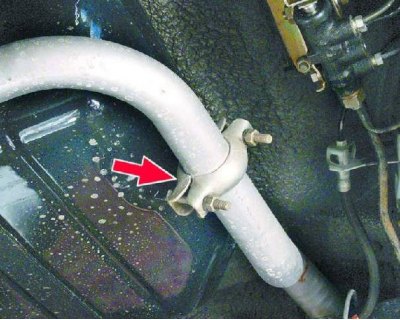
5. Inspect and replace clamps if damaged or rusted.