




Open large image in new tab »
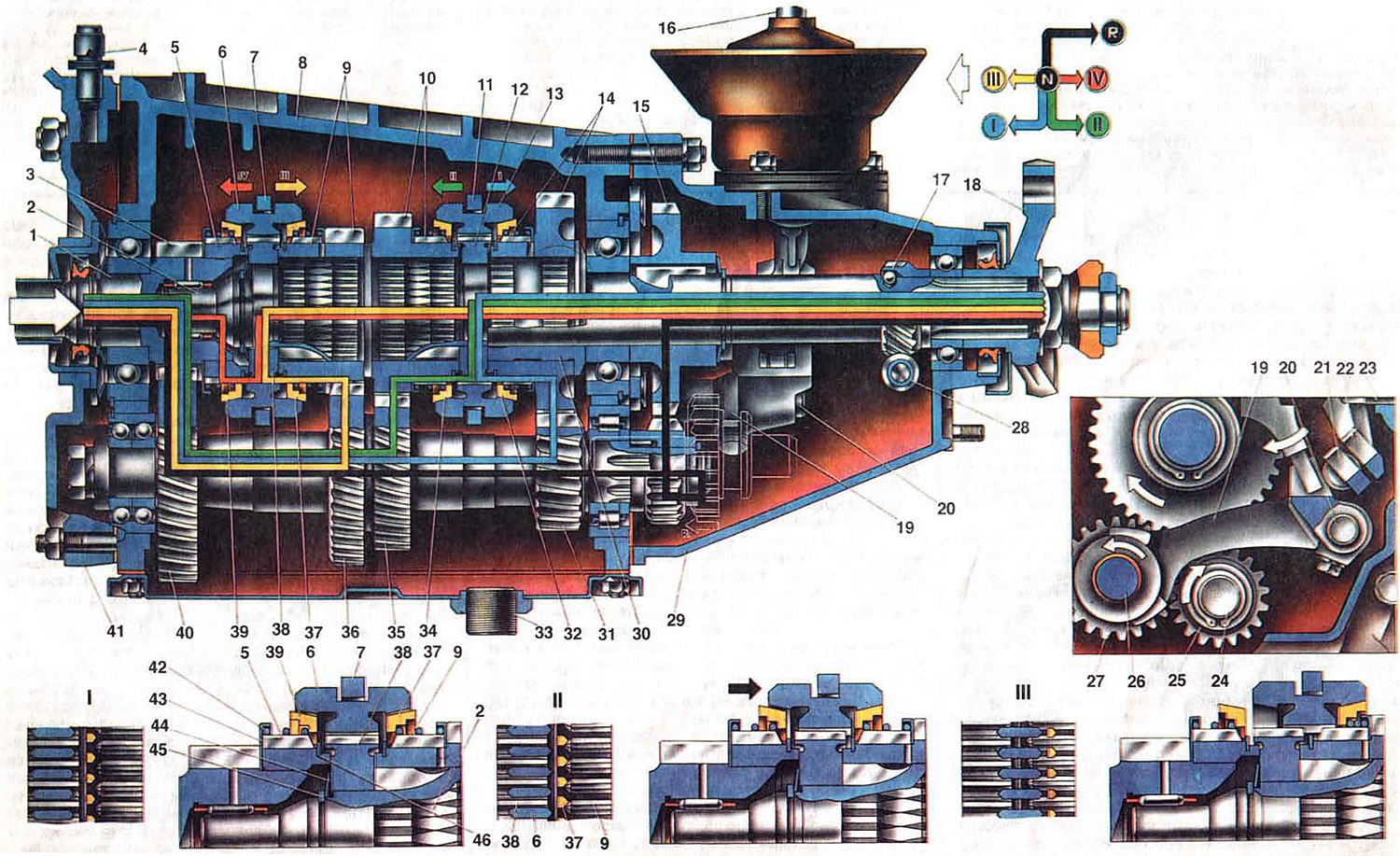
Fig. 16. Operation diagram of a four-speed gearbox.
1. Primary shaft; 2. Secondary shaft; 3. Primary shaft constant mesh gear; 4. Sapun; 5. Synchronizer ring gear of the 4th gear; 6. Sliding clutch of synchronizer III and IV gears; 7. Fork for shifting III and IV gears; 8. Gearbox housing; 9. Gear and ring gear of the synchronizer of the third gear; 10. Synchronizer pinion and ring gear of the 2nd gear; 11. Fork for shifting 1st and 2nd gears; 12. Hub of the synchronizer clutch of the 1st and 2nd gears; 13. Sliding clutch of synchronizer of 1st and 2nd gears; 14. Gear and ring gear of the 1st gear synchronizer; 15. Reverse gear; 16. Gear shift lever; 17. Speedometer drive pinion; 18. Flexible coupling flange; 19. Reverse gear fork; 20. Reverse gear fork rod; 21. Fork rod for engaging III and IV gears; 22. Fork rod for engaging 1st and 2nd gears; 23. Limit screw for engaging 1st and 2nd gears; 24. Intermediate shaft; 25. Intermediate shaft reverse gear; 26. Reverse intermediate gear shaft; 27. Reverse intermediate gear; 28. Speedometer drive driven gear; 29. Rear cover of the gearbox; 30. 1st gear bushing; 31. Gear of the 1st gear of the intermediate shaft; 32. 1st gear synchronizer locking ring; 33. Drain plug; 34. Locking ring of the 2nd gear synchronizer; 35. Gear of the 2nd gear of the intermediate shaft; 36. Gear of the third gear of the intermediate shaft; 37. Locking ring of synchronizer of the 3rd gear; 38. Synchronizer hub for 3rd and 4th gears; 39. Synchronizer locking ring of IV gear; 40. Intermediate shaft constant mesh gear; 41. Clutch housing; 42. Synchronizer locking ring spring; 43. Spring thrust washer; 44. Disc spring; 45. Synchronizer hub retaining ring; 46. Synchronizer locking ring retaining ring; I. Neutral position; II. Start of third gear engagement; III. Full engagement of third gear.
1. Primary shaft; 2. Secondary shaft; 3. Primary shaft constant mesh gear; 4. Sapun; 5. Synchronizer ring gear of the 4th gear; 6. Sliding clutch of synchronizer III and IV gears; 7. Fork for shifting III and IV gears; 8. Gearbox housing; 9. Gear and ring gear of the synchronizer of the third gear; 10. Synchronizer pinion and ring gear of the 2nd gear; 11. Fork for shifting 1st and 2nd gears; 12. Hub of the synchronizer clutch of the 1st and 2nd gears; 13. Sliding clutch of synchronizer of 1st and 2nd gears; 14. Gear and ring gear of the 1st gear synchronizer; 15. Reverse gear; 16. Gear shift lever; 17. Speedometer drive pinion; 18. Flexible coupling flange; 19. Reverse gear fork; 20. Reverse gear fork rod; 21. Fork rod for engaging III and IV gears; 22. Fork rod for engaging 1st and 2nd gears; 23. Limit screw for engaging 1st and 2nd gears; 24. Intermediate shaft; 25. Intermediate shaft reverse gear; 26. Reverse intermediate gear shaft; 27. Reverse intermediate gear; 28. Speedometer drive driven gear; 29. Rear cover of the gearbox; 30. 1st gear bushing; 31. Gear of the 1st gear of the intermediate shaft; 32. 1st gear synchronizer locking ring; 33. Drain plug; 34. Locking ring of the 2nd gear synchronizer; 35. Gear of the 2nd gear of the intermediate shaft; 36. Gear of the third gear of the intermediate shaft; 37. Locking ring of synchronizer of the 3rd gear; 38. Synchronizer hub for 3rd and 4th gears; 39. Synchronizer locking ring of IV gear; 40. Intermediate shaft constant mesh gear; 41. Clutch housing; 42. Synchronizer locking ring spring; 43. Spring thrust washer; 44. Disc spring; 45. Synchronizer hub retaining ring; 46. Synchronizer locking ring retaining ring; I. Neutral position; II. Start of third gear engagement; III. Full engagement of third gear.
The principle of operation of the gear transmission is based on changing the engagement of those pairs of gears that participate in the transmission of torque from the primary shaft 1 to the secondary shaft 2. This is achieved by moving the sliding clutches 6 and 13 of the synchronizers or the intermediate gear 27 of the reverse gear using the gearshift lever. In this case, the gear ratios of the gears change, and therefore the magnitude of the transmitted torque. In direct fourth gear, the torque transmitted to the drive wheels of the car is almost equal to the torque on the crankshaft of the engine. In first gear, the torque increases by 3.75 times, in second - by 2.30 times, in third - by 1.49 times, and when reverse gear is engaged, by 3.87 times.
When the gearshift lever is in neutral, no torque is transmitted to the secondary shaft. But since the engine is running and the clutch is engaged, rotation from the primary shaft 1 is transmitted to the intermediate shaft via constant mesh gears 3 and 40. From gears 31, 35 and 36 of the intermediate shaft, rotation is transmitted to gears 14, 10 and 9 of the secondary shaft. Since these gears are not directly connected to shaft 2, they will rotate freely on the secondary shaft. The connection of these gears to shaft 2 is carried out through synchronizers.
When the first gear is engaged, the force from the gearshift lever is transmitted through the rod and fork 11 to the sliding clutch 13. Moving along the splines of its hub 12, the clutch engages with the straight-toothed ring gear 14. Thus, the synchronizer clutch connects the hub 12 and the gear 14. And since the hub 12 is rigidly connected to the shaft 2, the torque from the gear 14 is transmitted through the clutch 13 to the hub 12 and from it to the secondary shaft of the gearbox.
When the second gear is engaged, clutch 13 connects hub 12 with the straight-toothed ring gear 10, and torque is transmitted from gear 10 to hub 12 and to the secondary shaft.
The third and fourth gears are engaged by another synchronizer. When the third gear is engaged, the torque from the primary shaft through gears 36 and 9 is transmitted through clutch 6 to hub 38 and then to the secondary shaft.
The fourth gear is called direct, since the torque is transmitted directly from the primary shaft 1 to the secondary shaft 2, bypassing the gears of the intermediate shaft. In this case, the clutch 6 connects the toothed ring 5 of the primary shaft with the hub 38. The rotation speed of both shafts will be the same, and the magnitude of the torque transmitted from the engine to the drive wheels will not change. When the reverse gear is engaged, the force from the gear shift lever is transmitted through the rod 20 and the fork 19 to the intermediate gear 27. Moving on the axis 26, it will connect the gears 25 and 15 of the reverse gear, and the torque is transmitted from the primary shaft through gears 5 and 40 to the intermediate shaft and then through gears 25, 27 and 15 to the secondary shaft. In this case, the latter will rotate in the opposite direction, ensuring the reverse rotation of the drive wheels of the car.
As can be seen from the gearbox operation diagram, all forward gears are synchronized. The principle of operation of the synchronizer when engaging third gear is shown in diagrams I, II, III. With the gearshift lever in neutral (see diagram I) there is a gap between the sliding clutch 6 and the blocking rings 37. The blocking rings are pressed by springs 42 to the locking rings 46. In this position, the teeth of the blocking rings are in the depressions of the toothed rims 5 and 9. Due to the gap between the clutch 6 and the blocking rings 37, the torque from the toothed rim 9 is not transmitted through the blocking ring.
At the initial moment of engaging the third gear (see diagram II) sliding clutch 6, moving along the splines of hub 38, is pressed against the conical surface of the blocking ring. Semi-dry friction occurs between the conical surfaces of the clutch and the ring, as a result of which the blocking ring is braked and rotates at a small angle (circumferential stroke from 2.5 to 5 mm). In this case, the side bevels of the teeth of the locking ring rest against the side bevels of the teeth of the ring 9, and further rotation of the locking ring stops. At the same time, resistance is created to further axial movement of the clutch 6. This occurs until the rotation frequencies of the secondary and intermediate shafts are equalized. As soon as this moment occurs, the friction force between the conical surfaces of the clutch and the ring decreases. Under the action of the axial force transmitted from the rod to the sliding clutch of the synchronizer, the locking ring begins to slide along the bevels of the teeth of the ring 9 and, together with the clutch, moves along the teeth of the ring. Thus, the clutch connects the hub 38 and the toothed ring 9. The third gear is fully engaged (see diagram III). In this position, the synchronizer sleeve together with the rod is held by a ball retainer.
The selected gear ratios provide intensive acceleration, high average speed of the car and economical operation of the engine. And the helical gears of constant engagement provide silent and durable operation of the gearbox.