




Contents: Cold engine starting ↓ Engine idling ↓ Light and medium loads ↓ Maximum engine power ↓ Accelerator pump ↓ Operation of the pneumatic drive of…↓
Open large image in new tab »
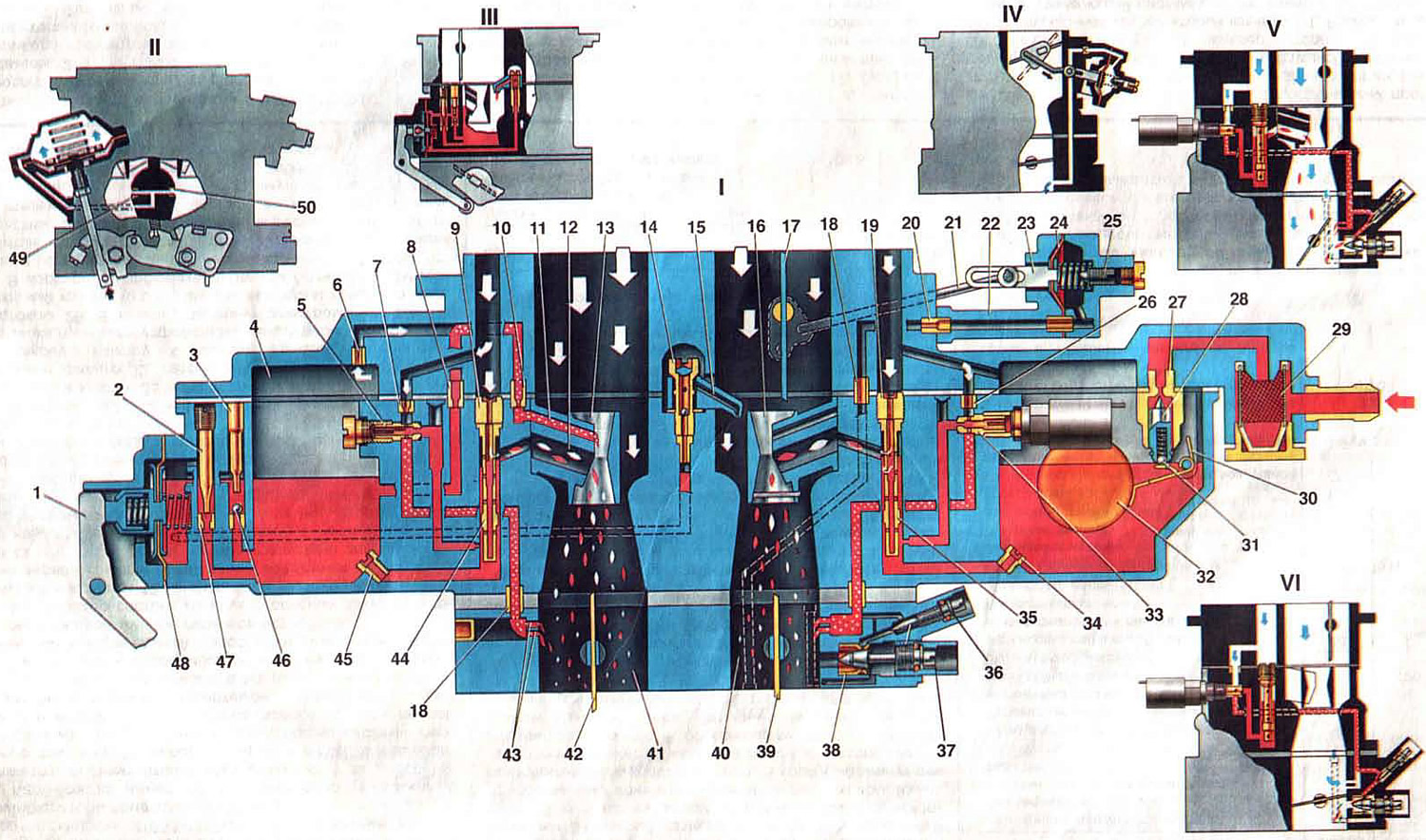
Fig. 9. Operation of carburetor 2107-1107010-20.
1. Accelerator pump lever; 2. Accelerator pump fuel supply adjustment screw; 3. Accelerator pump check valve plug; 4. Float chamber; 5. Fuel jet of the transition system of the second chamber; 6. Economizer air jet (econostat); 7. Air jet of the transition system; 8. Economizer fuel jet; 9. Main air jet of the second chamber; 10. Economizer emulsion jet; 11. Economizer sprayer; 12. Sprayer of the main dosing system of the second chamber; 13. Small diffuser of the second chamber; 14. Accelerator pump spray valve; 15. Accelerator pump nozzle; 16. Small diffuser of the first chamber; 17. Air damper; 18. Carburetor channel connecting sleeve; 19. Main air jet of the first chamber; 20. Air jet of the starting device; 21. The rod connecting the air damper axis lever to the starting device rack; 22. Starter housing; 23. Starter rail; 24. Launcher diaphragm; 25. Starter adjustment screw; 26. Idling system air jet; 27. Needle valve seat; 28. Needle valve; 29. Fuel filter; 30. Float bracket with stop and tongue; 31. Needle valve damper ball; 32. Float; 33. Idle speed system fuel jet; 34. Main fuel jet of the first chamber; 35. Emulsion tube of the first chamber; 36. Idle mixture composition (quality) adjustment screw; 37. Idle mixture quantity adjusting screw; 38. Adjusting screw seat; 39. Throttle valve of the first chamber; 40. First mixing chamber; 41. Second mixing chamber; 42. Second chamber throttle valve; 43. Non-adjustable openings of the transition system; 44. Emulsion tube of the second chamber; 45. Main fuel jet of the second chamber; 46. Accelerator pump check valve; 47. Accelerator pump bypass jet; 48. Accelerator pump diaphragm; 49. Pneumatic drive jet located in the second chamber; 50. Pneumatic drive jet located in the first chamber; I. Scheme of carburetor operation at maximum engine power; II. Scheme of operation of the pneumatic drive of the second chamber throttle valve; III. Accelerator pump operation diagram; IV. Scheme of operation of the starting device; V. Scheme of carburetor operation in throttling modes; VI. Scheme of carburetor operation at idle speed.
1. Accelerator pump lever; 2. Accelerator pump fuel supply adjustment screw; 3. Accelerator pump check valve plug; 4. Float chamber; 5. Fuel jet of the transition system of the second chamber; 6. Economizer air jet (econostat); 7. Air jet of the transition system; 8. Economizer fuel jet; 9. Main air jet of the second chamber; 10. Economizer emulsion jet; 11. Economizer sprayer; 12. Sprayer of the main dosing system of the second chamber; 13. Small diffuser of the second chamber; 14. Accelerator pump spray valve; 15. Accelerator pump nozzle; 16. Small diffuser of the first chamber; 17. Air damper; 18. Carburetor channel connecting sleeve; 19. Main air jet of the first chamber; 20. Air jet of the starting device; 21. The rod connecting the air damper axis lever to the starting device rack; 22. Starter housing; 23. Starter rail; 24. Launcher diaphragm; 25. Starter adjustment screw; 26. Idling system air jet; 27. Needle valve seat; 28. Needle valve; 29. Fuel filter; 30. Float bracket with stop and tongue; 31. Needle valve damper ball; 32. Float; 33. Idle speed system fuel jet; 34. Main fuel jet of the first chamber; 35. Emulsion tube of the first chamber; 36. Idle mixture composition (quality) adjustment screw; 37. Idle mixture quantity adjusting screw; 38. Adjusting screw seat; 39. Throttle valve of the first chamber; 40. First mixing chamber; 41. Second mixing chamber; 42. Second chamber throttle valve; 43. Non-adjustable openings of the transition system; 44. Emulsion tube of the second chamber; 45. Main fuel jet of the second chamber; 46. Accelerator pump check valve; 47. Accelerator pump bypass jet; 48. Accelerator pump diaphragm; 49. Pneumatic drive jet located in the second chamber; 50. Pneumatic drive jet located in the first chamber; I. Scheme of carburetor operation at maximum engine power; II. Scheme of operation of the pneumatic drive of the second chamber throttle valve; III. Accelerator pump operation diagram; IV. Scheme of operation of the starting device; V. Scheme of carburetor operation in throttling modes; VI. Scheme of carburetor operation at idle speed.
Cold engine starting
When starting a cold engine, close the air damper 17 by pulling the control handle towards you until it stops. In this case, the rod 21 will take the extreme left position in the slot of the rack 23, and the rod 44 (see fig. 8), falling down, under the action of the rotation of the three-arm lever 38, will turn the lever 46 and slightly open the throttle valve of the first chamber to the required value. In this case, the resulting vacuum is transmitted both to the openings of the autonomous idle system and through the slightly open throttle valve 39 (see fig. 9) the first chamber to the sprayer of the main dosing system.
Under the action of vacuum, fuel begins to flow intensively from the holes of the idle system and the sprayer. From the holes of the idle system, fuel comes in the form of a fuel-air emulsion. Air is mixed with fuel through the air jet 26. At the same time, through the communication channel with the throttle space, the vacuum is transmitted to the working cavity of the diaphragm 24 of the starting device, but it is insufficient to overcome the resistance of the return spring of the diaphragm. When stable flashes appear, the vacuum increases, the diaphragm 24 with the rack 23 are drawn in, and the rod 21 slightly opens the air damper 17. In this case, the spring located in the telescopic rod is compressed. The starting device, automatically opening or closing the air damper, does not allow excessive enrichment or depletion of the mixture.
Engine idling
The throttle valves are closed, the transition holes of the system are located slightly above the upper edge of the valves, the air valve is fully open. The vacuum from under the throttle valve of the first chamber is transmitted through the holes of the idle system to the channels of the system. Under the action of the vacuum, the fuel entering the emulsion well from the float chamber through the main fuel jet 34 rises to the fuel jet 33, mixes with the air entering through the air jet 26, additionally mixes with the air entering through the transition holes and through the hole adjusted by the screw 37, enters under the throttle valve. In this mode, the vacuum in the small diffuser is insignificant, and the fuel from the sprayer of the main metering system does not enter the engine.
Fuel jet 33 idle has a shut-off electromagnetic valve. When the voltage is removed from the electromagnetic valve, the valve needle closes fuel jet 33, and the fuel supply stops, which eliminates the possibility of the engine running with the ignition off.
Light and medium loads
The first mixing chamber mainly operates, the required composition of the combustible mixture is ensured by the joint operation of the main metering system and the idle system. When the throttle valve of the first chamber opens, the vacuum in the sprayer increases, the fuel in the emulsion well rises, mixes with the air entering through the jet 19, and is drawn into the sprayer. The vacuum in the mixing chamber is sufficient, so the fuel also comes from the holes of the idle system. The fuel consumption of both systems is limited by the main fuel jet 34.
When the throttle valve opens at an angle of approximately 48°, the pneumatic drive begins to open the throttle valve of the second chamber. Fuel begins to flow out of the sprayer of the main metering system of the second chamber. The absence of dips in the engine's operation at the moment the throttle valve of the second chamber begins to open is ensured by the holes 43 of the transition system, which comes into operation from this moment. Subsequently, the second chamber operates similarly to the first.
Maximum engine power
The throttle valves of both chambers are fully open: the main metering systems, the idle system, the transition system, and also the economizer when the required vacuum is reached are operating. Due to a slight decrease in the vacuum in the channels of the idle system and the transition system with the throttle valves fully open, the fuel outflow from these systems is insignificant.
When sufficient vacuum is reached in the small diffuser of the second mixing chamber, the economizer comes into operation, enriching the combustible mixture at full load. Fuel from the float chamber enters through the economizer jet 8, mixes with air entering from the jet 6, and then through the emulsion jet 10 and the atomizer 11 is sucked into the mixing chamber.
Accelerator pump
The accelerator pump operates in the engine load increase mode; in this case, the necessary enrichment of the mixture is achieved by injecting an additional portion of fuel into the air flow of the first mixing chamber.
With a sharp increase in load (the throttle valve opens abruptly) the cam of the accelerator pump drive on the valve axis acts on the lever 1, which compresses the spring placed inside the telescopic cup of the working diaphragm 48. When released, the spring moves the diaphragm, ensuring a smooth, prolonged injection of fuel through the sprayer 15.
Operation of the pneumatic drive of the second chamber throttle valve
[The text is taken from the online resource: www.VazBook.ru]
At low engine loads, when the throttle valve of the first chamber is slightly open, the vacuum in the diffusers is insufficient to operate the pneumatic drive, and under the action of the spring, the pneumatic drive rod is lowered. As the load increases and the throttle valve of the first chamber opens, the vacuum in it increases and at a certain point leads to the movement of the diaphragm mechanism up to its full stroke with simultaneous twisting of the spring on the axis of the throttle valve of the second chamber. However, the throttle valve of the second chamber remains closed until the throttle valve of the first chamber is opened to an angle of approximately 48°. With the throttle valve of the first chamber fully open and a large air flow (high crankshaft speed) the throttle valve of the second chamber opens completely. The position of the throttle valve of the second chamber is adjusted automatically, depending on the speed mode of the engine.
When the throttle valve of the first chamber is suddenly closed, the throttle valve of the second chamber is also forcibly closed.