




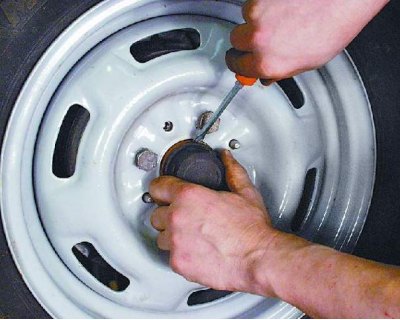
1. Remove the hub nut protective cap by prying it off with a screwdriver.
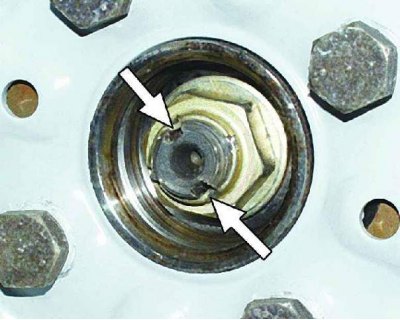
2. Loosen the hub nut and loosen its tightening.
3. Turn on the first gear and install the anti-recoil stops ("shoes") under the front wheels. Lift the rear part of the vehicle and place it on the supports. Remove the wheel.
When loosening the hub nut, the car must be on the ground.
Loosen and tighten the wheel mounting bolts only with the vehicle on the ground. The tightening torque of the bolts is 65–95 N·m (6.5–9.5 kgf·m).
4. Remove the brake pads.
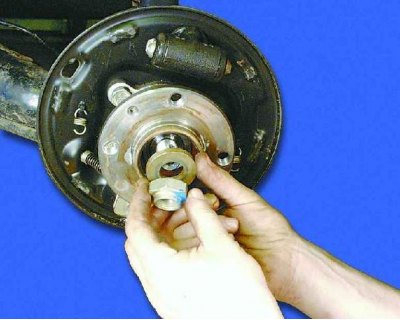
5. Completely loosen the hub nut and remove the thrust washer.
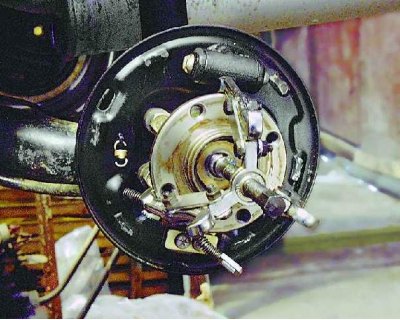
6. Use a puller to press the hub off the journal.
Information copied from the portal [VAZbook]
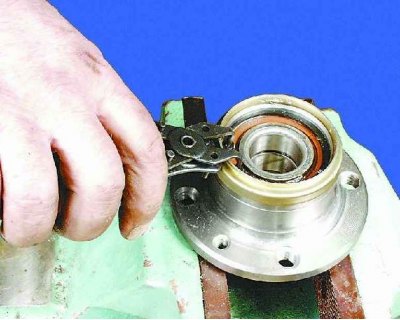
7. Secure the hub in a vice and remove the retaining ring from the inside of the hub.
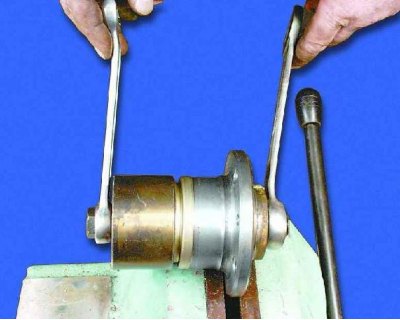
8. Using a puller, press the bearing out of the hub.
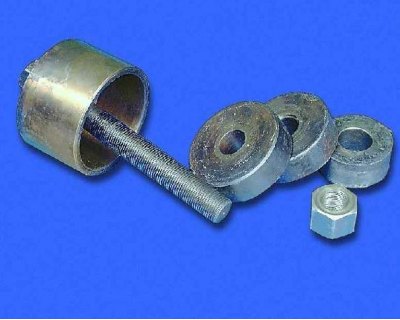
Universal puller for pressing out hub bearings.
The wheel hub has a double-row ball bearing that does not require adjustment or lubrication during operation. When pressed out, the bearing is destroyed. Therefore, press out the hub only to replace the bearing.
If you don't have a mandrel or puller for pressing out and pressing in the bearing, you can use the rings from the old bearing.
9. Press in the new bearing using a puller and install the retaining ring.
Before assembly, thoroughly clean all parts from dirt.
10. Press the hub onto the journal, applying force to the inner bearing race.
11. Install the brake shoes and drum.
12. Install the wheel.
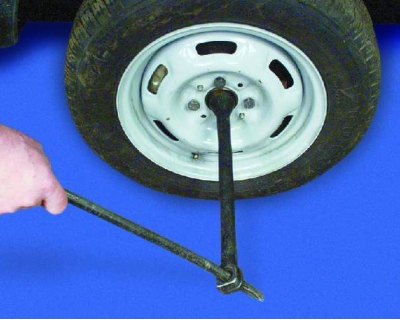
13. Place the vehicle on the ground and tighten the hub nut to 225–250 N·m (22.5–25 kgf·m).
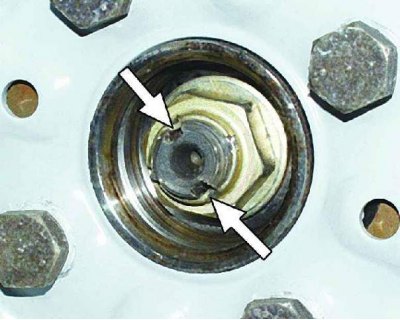
14. Then, prick the nut flange into the grooves of the threaded part of the drive shaft. Put on the protective cap.