




- wheel wrench
- keys for "12" and "13"
- jack
- stand
- pliers
- beard
Place support blocks under the front wheels.
Remove the rear wheel.
Check that the parking brake lever is fully depressed (the car is released).
Clean the brake mechanism from dirt.
The minimum permissible thickness of the friction linings of the pads is 1.5 mm. If the linings wear to 1.5 mm or more, replace the pad sets.
Warning! Do not use gasoline, diesel fuel or any other mineral solvents to clean brakes.
Attention! The pads are replaced on both sides of the car.
Warning! It is not allowed to replace the front and rear pads with each other, as well as between the left and right wheels. This may lead to uneven braking.
Caution! If the brake fluid level in the reservoir is at or near the "MAX" mark, pump out some of the fluid from the reservoir.
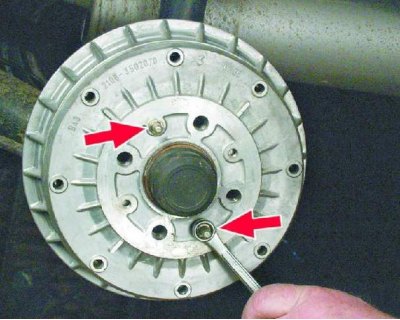
1. Unscrew the two guide pins.
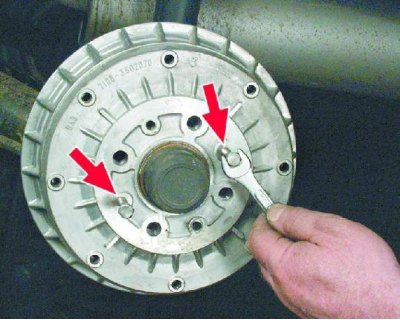
2. Remove the brake drum. If you have difficulty removing it, screw two M8 bolts into the threaded holes of the drum and press it down, screwing the bolts evenly.
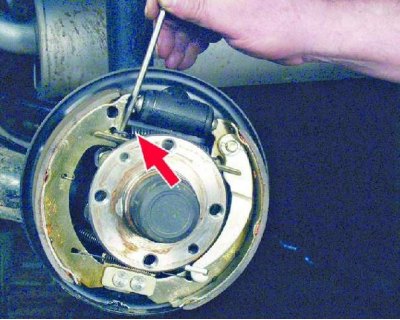
3. Remove the upper tension spring with a punch or pliers.
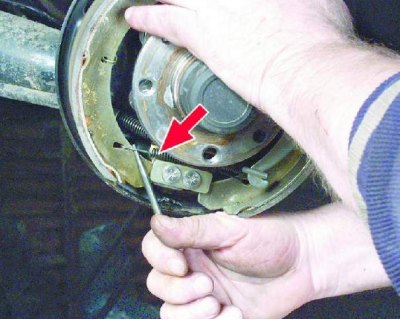
4. Remove the lower tension spring in the same manner.
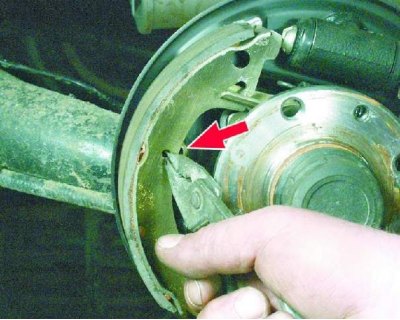
5. Remove the front shoe guide spring.
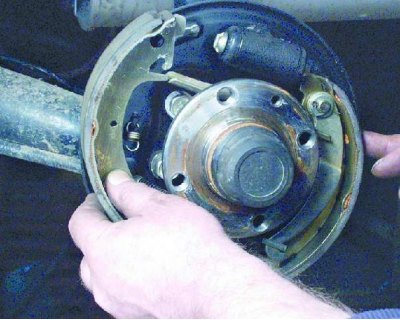
6. Remove the front shoe.
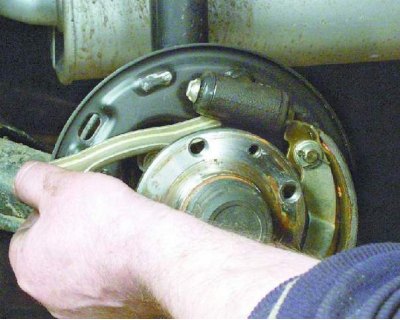
7. Remove the expansion bar.
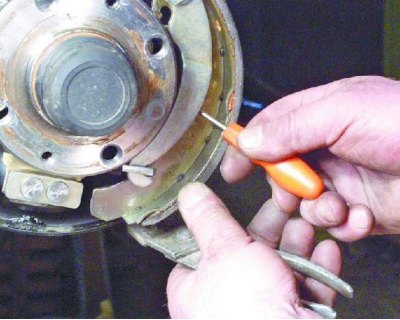
8. Remove the rear shoe guide spring.
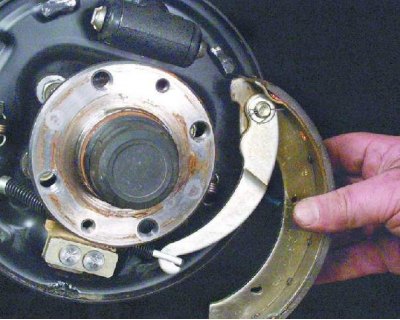
9. Remove the rear shoe by disconnecting the drive lever from the parking brake cable end.
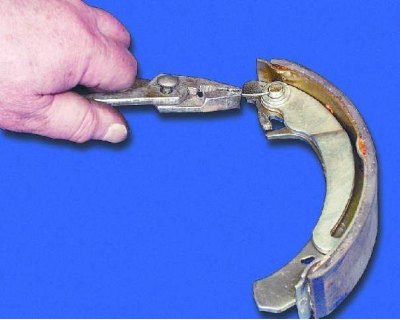
10. Remove the cotter pin from the rear shoe.
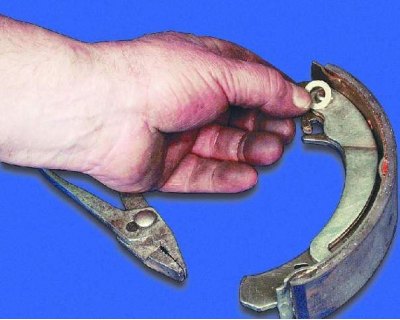
11. Remove the thrust washer.
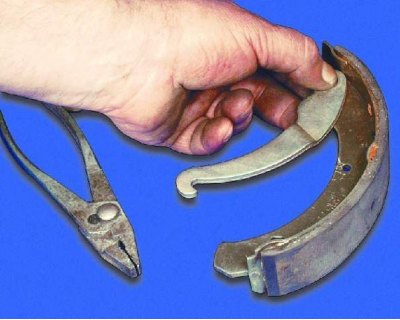
12. Press the pin and remove the drive lever from the shoe. Remove the pin from the shoe.
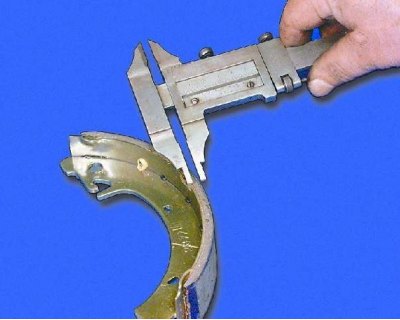
13. Check the condition of the brake shoe friction linings. Replace them in the following cases: a) the lining thickness is less than 1.5 mm; b) the surface of the linings is oily; c) the friction lining is not firmly connected to the base. The linings should not have deep grooves or chips.
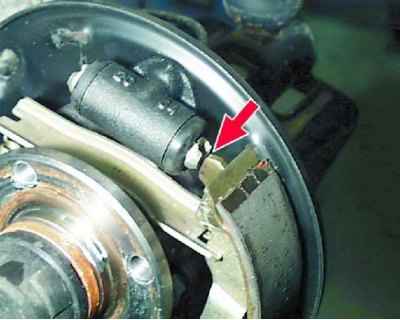
14. Install new pads in the reverse order of removal. When installing, insert the upper pad tips into the piston grooves.
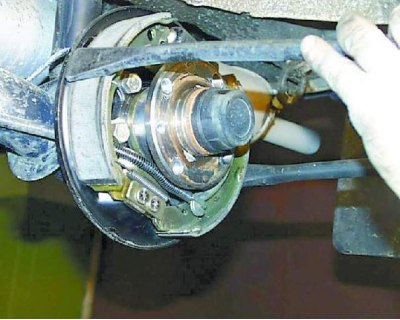
15. Before installing the drum, use two tire irons to push the brake shoes together to move the pistons toward the center of the cylinder.