

A sign of the presence of air in the brake system is an increased stroke and "softness" brake pedals.
Before bleeding the brake system, inspect it to make sure it is tight.
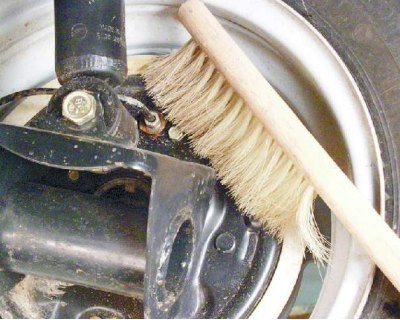
1. Clean the air release valve on the brake mechanism from dirt and dust.
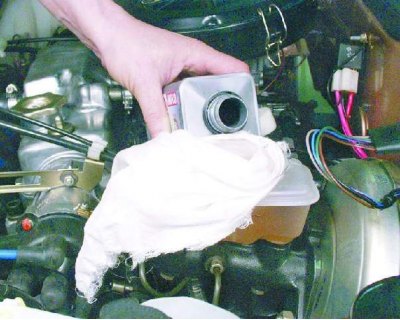
2. Check the level and, if necessary, add brake fluid to the reservoir up to the mark "MAX".
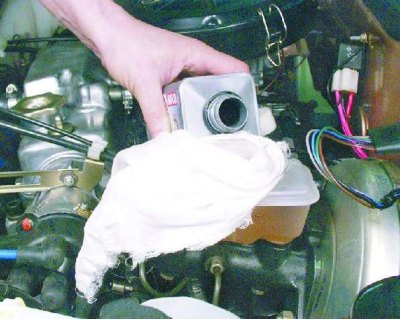
3. Remove the protective cap from the air release valve.
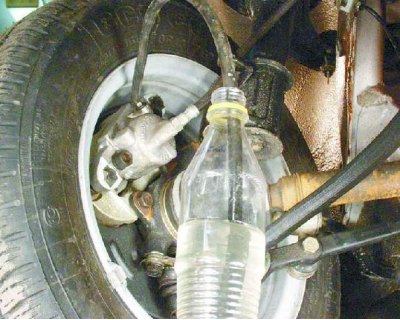
4. Place a rubber hose over the valve head and immerse the end of the hose in a clean, transparent container partially filled with brake fluid.
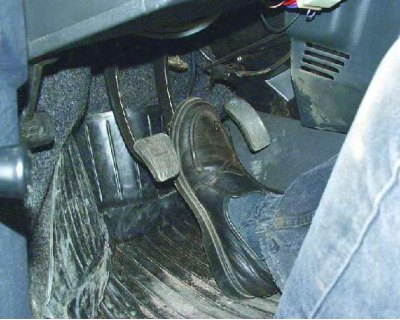
5. The assistant should sharply press the brake pedal 4-5 times (with an interval between pressing 1–2 s). After the last stroke, keep the pedal depressed.
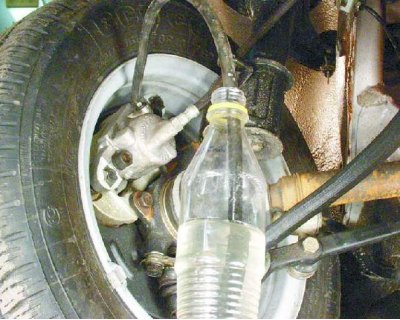
6. Turn on1/2 -3/4 turns air release valve. Air bubbles will be visible in the liquid flowing from the hose. When the fluid stops flowing from the hose, fully tighten the release valve, after which the assistant should release the brake pedal.
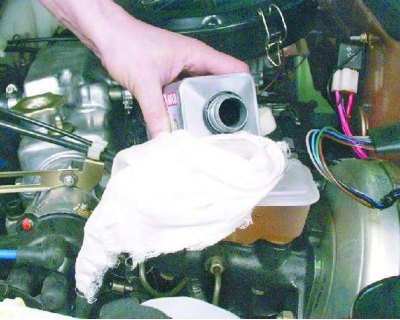
7. Repeat steps 5-6 until no more bubbles appear in the escaping liquid. When pumping, control the level of brake fluid and, if necessary, add it to the tank, preventing the level from dropping below the mark "MIN".
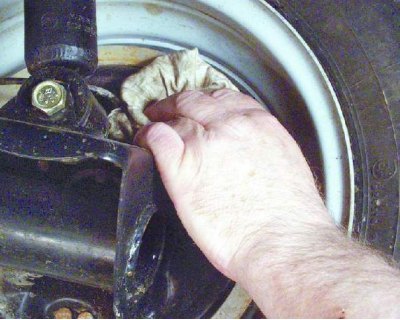
8. Remove the hose, wipe dry the valve fitting and put on the cap.
9. Bleed the brakes on the remaining wheels, if necessary.