




There should be no burrs or deep scratches on the working surface of the drum. Otherwise, replace the drum or turn its working surface on a lathe. After turning, grind the surface with fine-grained abrasive bars; the drum diameter should not exceed 201 mm. Replace the drum if cracks are found in it.
1. Engage 1st gear and place chocks under the front wheels.
2. The parking brake lever must be lowered all the way down (the car is released).
3. Remove the wheel and clean the brake mechanism from dirt.
4. Remove the two mounting pins.
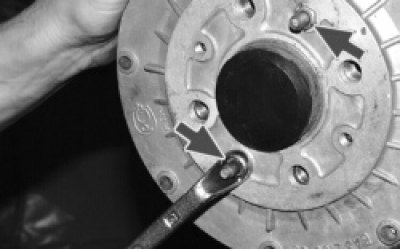
5. Apply a liquid such as WD-40 to the hub and, after waiting a few minutes, clean off any dirt or rust from the area.
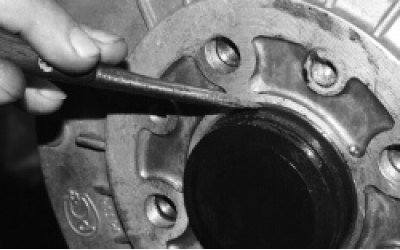
6. Knock the drum off the hub using a rubber or polymer hammer.
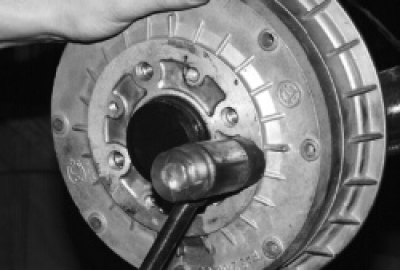
7. Remove the drum from the hub. If this is not possible, knock it off with a rubber mallet or…
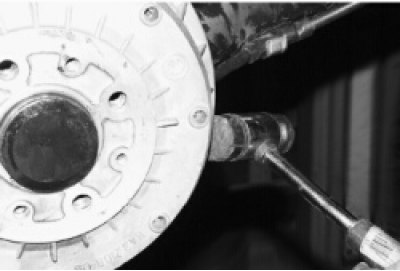
8. …press by evenly screwing pins or suitable bolts into the two threaded holes of the drum.
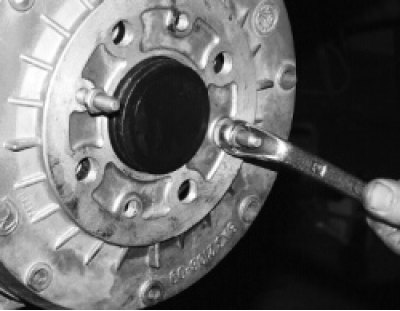
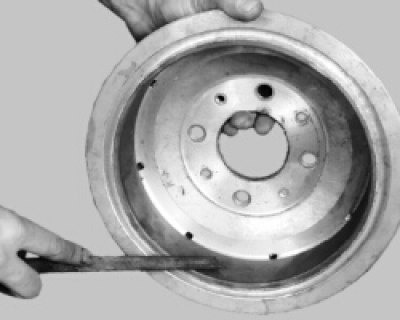
9. When installing the old drum, use a file to remove the ridge on the working surface of the drum that has formed as a result of wear.
10. Install the drum in the reverse order of removal. Pre-lubricate the hub seat belt with graphite grease or LSC-15 grease and bring the pads together using two mounting blades.
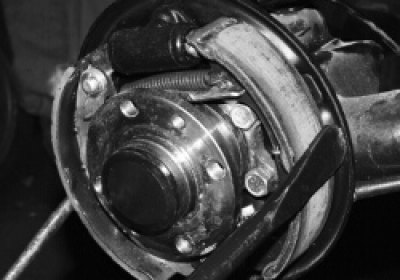
11. Check the ease of rotation of the wheel. Slight contact of the drum with the pads is permissible.
12. With the vehicle on the ground, press the brake pedal two or three times to bring the shoes to the drum.