




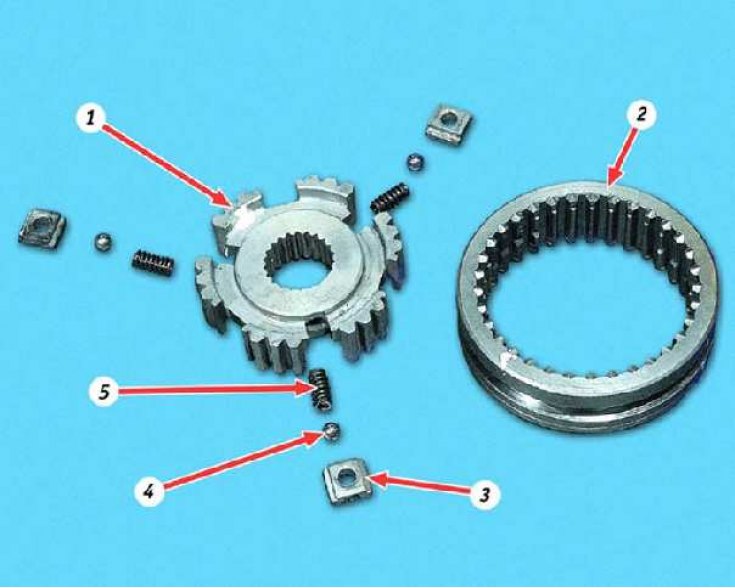
Synchronizer details: 1 – hub; 2 – coupling; 3 – cracker; 4 – ball; 5 – spring
If the gear engages unclearly or with great effort or does not engage at all, before disassembling the secondary shaft, check the operation of the synchronizer: the synchronizer clutch should move manually with little effort. If the clutch is difficult to move (does not move or moves only with great effort), repair the synchronizer or replace it as a whole. Spontaneous gear disengagement indicates wear or damage to the synchronizer clutch teeth and gear rims.
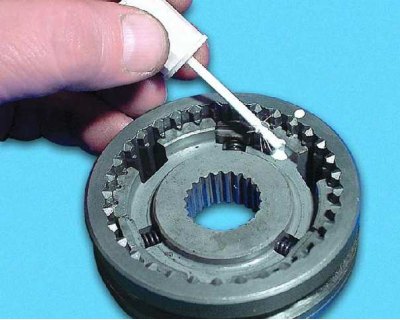
1. Before disassembling, mark the position of the coupling relative to the hub.
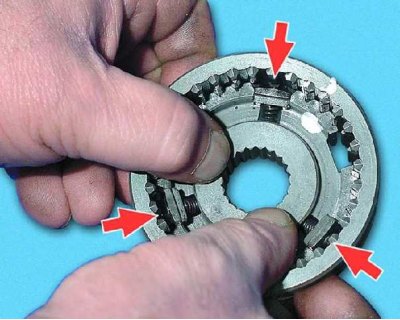
2. Carefully disassemble the synchronizer by removing the coupling from the hub. While doing this, make sure that the spring-loaded crackers with balls do not fly apart in different directions.
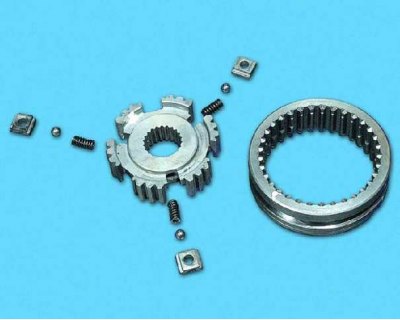
3. Inspect the synchronizer parts. Chips and nicks on the splines of the hub and coupling are unacceptable (pay special attention to the ends of the coupling teeth), damage or signs of seizing on crackers, balls and springs. Replace defective parts or the synchronizer assembly.
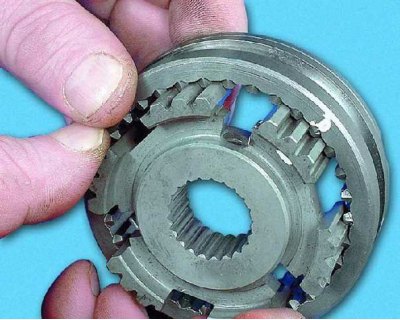
4. Install the coupling on the hub in accordance with the previously made marks. In this case...
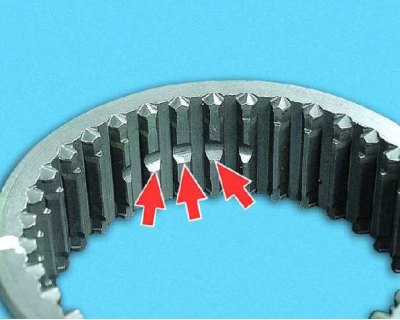
5....the three large grooves on the splines of the coupling must match...
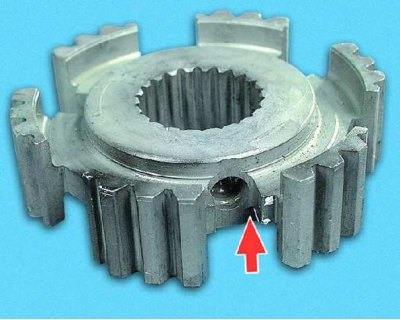
6....with hub grooves for clamps (with holes).
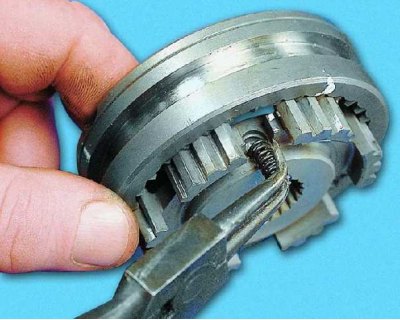
7. Lubricate the retainer spring with Litol-24 grease and insert it into the hole in the hub groove.
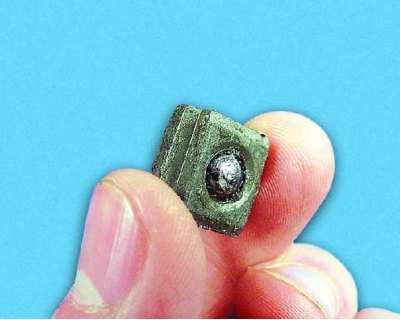
8. Lubricate the cracker with Litol-24 grease and insert the ball into its hole.
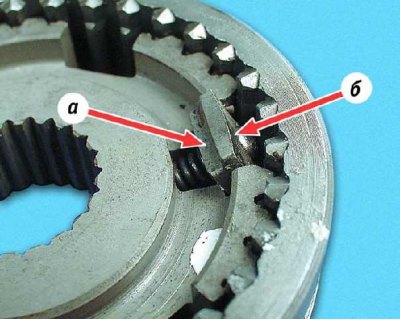
9. While compressing the spring, insert the cracker with the ball into the groove of the hub. The grooves a on the cracker should be facing outward, and the spherical (large) surface b should face the coupling.
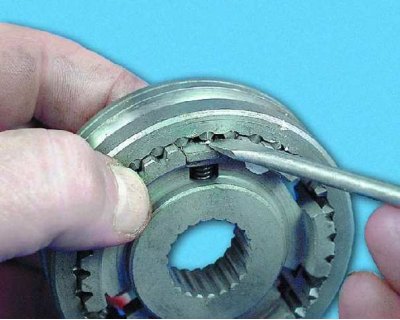
10. Push the cracker so that the ball enters the grooves on the splines of the coupling.
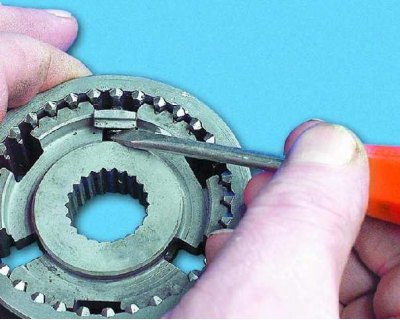
11. Use a screwdriver to adjust the spring so that it fits into the cracker hole. Install the remaining clamps in the same way.
(The original source is published on the website: VazBook)