The anti-corrosion agent is supplied to the hidden cavities of the body by air or airless spraying. Air spraying requires compressed air at a pressure of 5...8 kgf/cm², a spray gun with a tank, hoses and extended spray nozzles. The best coating quality is achieved with airless spraying under a pressure of up to 90...1.20 kgf/cm², which allows spraying materials of significant viscosity.
The following anti-corrosion compounds are used: the threshold auto-preservative "Movil-2" and the protective lubricant NGM-ML. "Movil-2" can be used to treat surfaces previously coated with transmission or other oils, as well as rusty surfaces. The drying time of "Movil-2" is 20...30 minutes at a temperature of 20°C. If necessary, the auto-preservative is diluted with white spirit or gasoline. The protective lubricant NGM-ML is used to treat hidden cavities of new cars at the car factory. The drying time of NGM-ML is 15 minutes at a temperature of +20°C. If necessary, NGM-ML is diluted with white spirit.
The sequence of anti-corrosion treatment of hidden cavities of a car is as follows:
- 1. Place the vehicle on a lift, remove parts and upholstery that prevent access to hidden cavities.
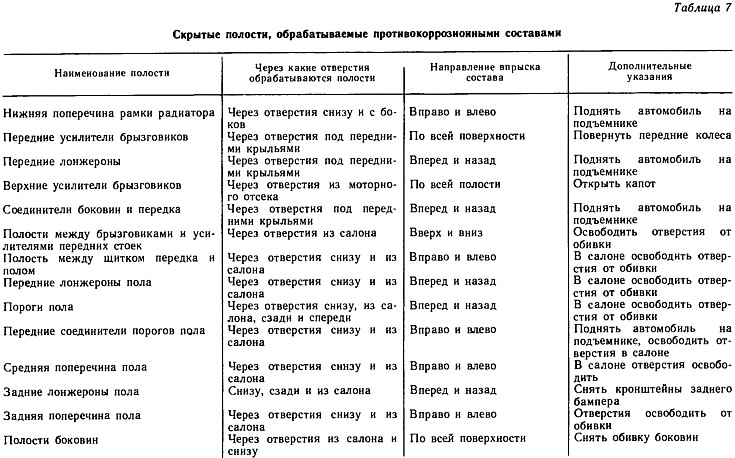
- 2. Rinse with warm water (40...50°C) through technological and drainage holes, hidden cavities (Table 7), the bottom of the body and wheel arches until clean water flows out. In this case, the front and rear door windows must be raised.
- 3. Remove any water that has entered the interior, blow out all hidden cavities and other areas where the anti-corrosion compound will be applied with compressed air.
- 4. Drive the car into the chamber for applying the anti-corrosion compound and place it on a lift. Spray the anti-corrosion compound to the places indicated in Figures 161, 162, 163 and 164.
- 5. Lower the car and clean the front surfaces of the body from dirt with a rag soaked in white spirit.
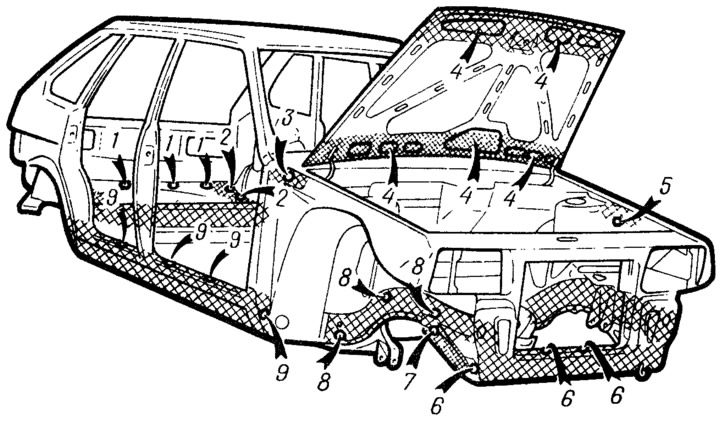
Figure 161. Hidden cavities of the VAZ-2109 body (front view):
1 - rear floor cross member; 2 - rear floor rails; 3 - side and front connectors; 4 - hood pockets; 5 - Upper mudguard reinforcements; 6 - lower cross member of the radiator frame; 7 - Front mudguard reinforcements; 8 - front side members; 9 - floor thresholds.

Figure 162. Hidden cavities of the VAZ-2109 body (rear view):
1 - lower parts of door pockets; 2 - floor thresholds; 3 - floor threshold connectors; 4 - cavity between the front shield and the floor; 5 - side member cavities; 6 - cavities between mudguards and front strut reinforcements; 7 - cavities between the outer and inner side panels; 8 - rear side members.
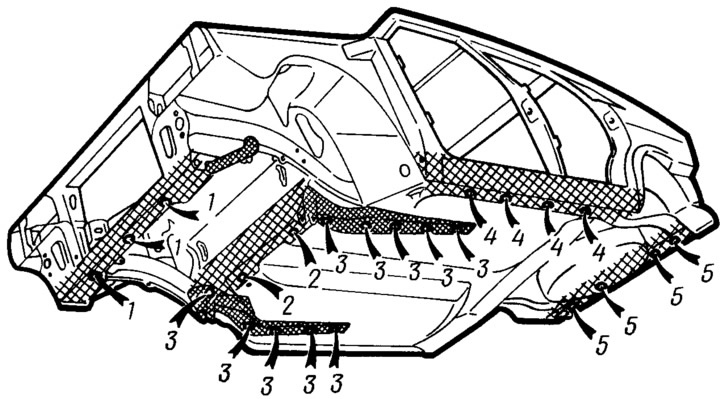
Figure 163. Hidden cavities of VAZ-2109 (view from below from the front):
1 - lower crossbar of the radial beam frame; 2 - the cavity between the shield and the floor is not uncommon; 3 - front floor rails; 4 - thresholds of the hearth; 5 - rear floor cross member.
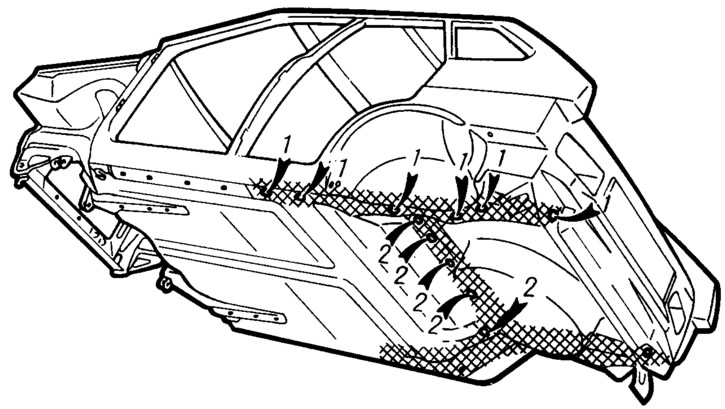
Figure 164. Hidden cavities of the VLZ-2109 body (bottom view from behind):
1 - rear floor side members: 2 - middle floor cross member.