




Contents: Removal ↓ Installation ↓
To complete the work you will need:
- three and two-jaw pullers;
- sliding circlip pliers;
- cup puller.
Removal
1. Prepare the car for work (see "Preparing the car for maintenance and repair").
2. Using a slotted screwdriver, remove the hub cover.
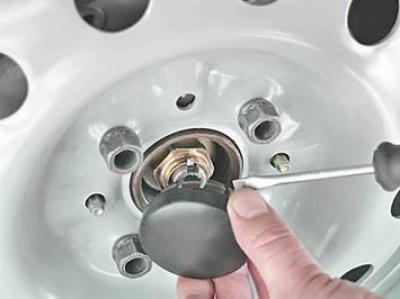
Warning: Attempting to remove the hub axle nut without straightening the dented edge may damage the axle threads.
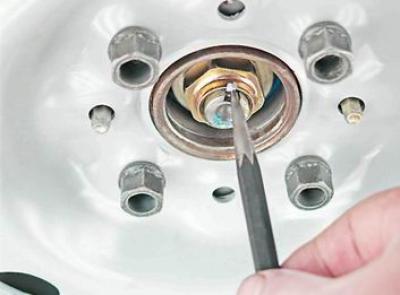
3. Lightly tapping the center punch with a hammer, bend back the edge of the nut that is pressed into the groove of the hub axle.
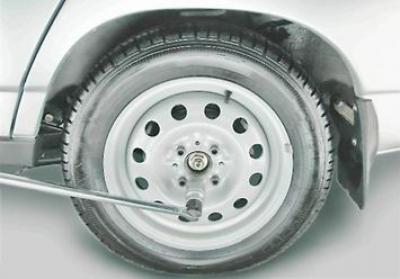
4. With a socket wrench by 30 mm using a long handle, loosen the hub nut.
5. Place the car on a stand, remove the wheel and brake drum (see "Brake drum - removal and installation").
6. Remove the nut and thrust washer from the hub nut.
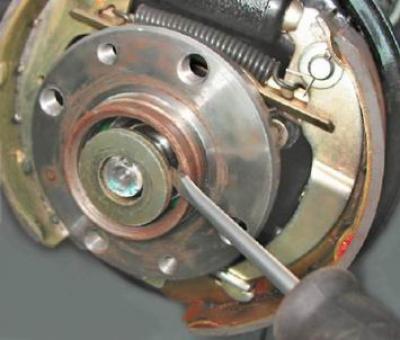
7. Using a three-jaw puller, press the hub off the axle together with the bearing.
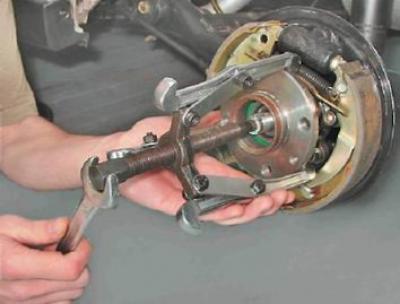
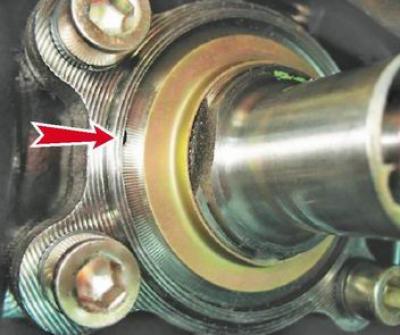
8. If the hub bearing has been destroyed and its inner ring remains on the axle, press it off with a two-jaw puller, installing its jaws in special recesses.
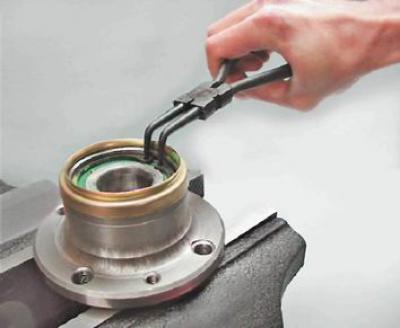
9. Place the hub in a vice.
10. Using special pliers, squeeze and remove the bearing retaining ring.
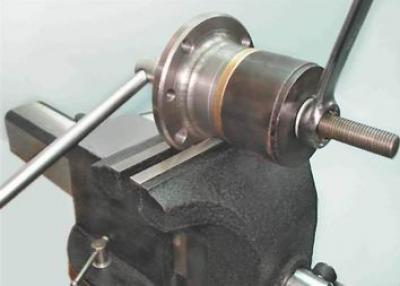
11. Using a cup puller, press the bearing out of the hub.
Installation
Warning! When pressing in a bearing, force may only be applied to its outer ring
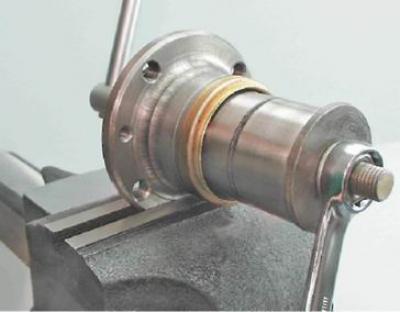
1. Using the outer ring of the old bearing as a mandrel, press the new bearing into the hub with a puller.
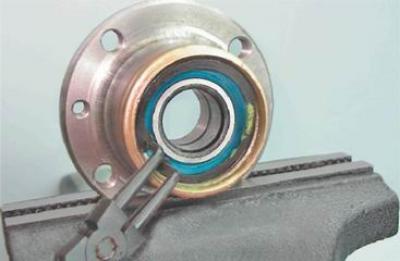
2. Install the bearing retaining ring.
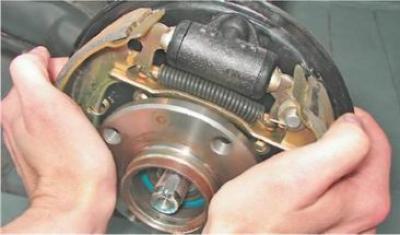
3. Install the hub on the axle.
4. Install the thrust washer and new hub nut.
5. By tightening the nut, we press the bearing onto the hub axle.
6. Install the brake drum and wheel.
7. Lower the car onto its wheels.
8. Tighten the hub nut to a torque of 186.3-225.6 N·m (19-23 kgf·m) and press the edge of the nut into the groove of the hub axle.
9. Put the cover on the hub and the decorative cap on the wheel.