




Contents: Removal ↓ Installation ↓
Removal
1. Prepare the car for work (see "Preparing the car for maintenance and repair").
2. Release the parking brake lever completely.
3. Release the tension on the parking brake cables (see "Parking brake - adjustment").
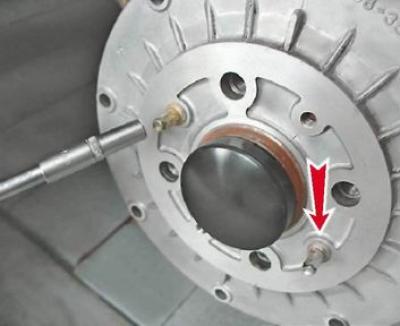
4. With a deep-head socket wrench by 7 mm unscrew the two guide pins
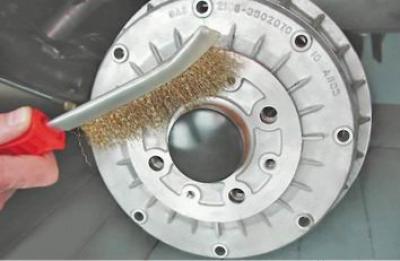
5. Carefully clean the cylindrical seating surface of the brake drum on the hub from dirt and corrosion.
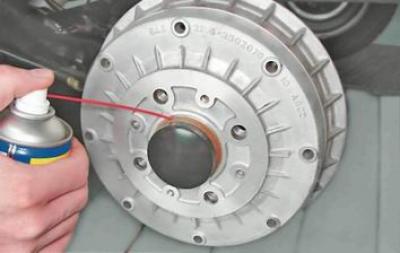
6. Treat the drum seat on the hub with penetrating lubricant.
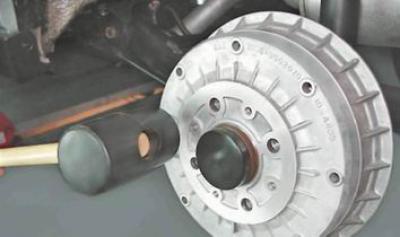
7. To make it easier to remove the drum, tap it with a hammer with a rubber striker on the seating surface of the wheel.
8. Using a puller or by screwing M8 bolts into two threaded holes in the drum (length of threaded part 60-70 mm) and evenly tightening the bolts, we press the drum off the hub.
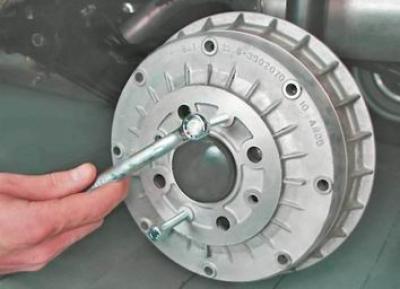
Warning: To avoid damaging the wheel cylinder, do not press the brake pedal with the brake drum removed.
9. Check the brake drum for cracks, severe wear, or deep scratches on the working surface of the drum. Replace the brake drum if necessary.
Installation
Warning! The maximum internal diameter of the brake drum is 201.5 mm. A worn drum must be replaced.
1. Using two mounting blades, resting the ends of the blades against the flange of the brake mechanism support shield, we move the pads in the opposite direction.
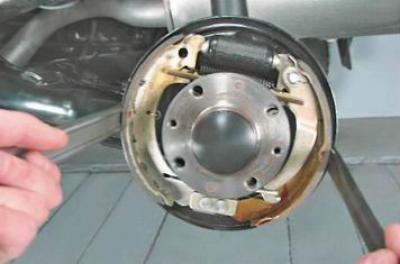
2. Install the drum in reverse order.
3. To automatically adjust the gap between the brake pads and the brake drum, press the brake pedal several times.
4. Adjust the parking brake (see "Parking brake - adjustment").