




Clutch pedal and master cylinder
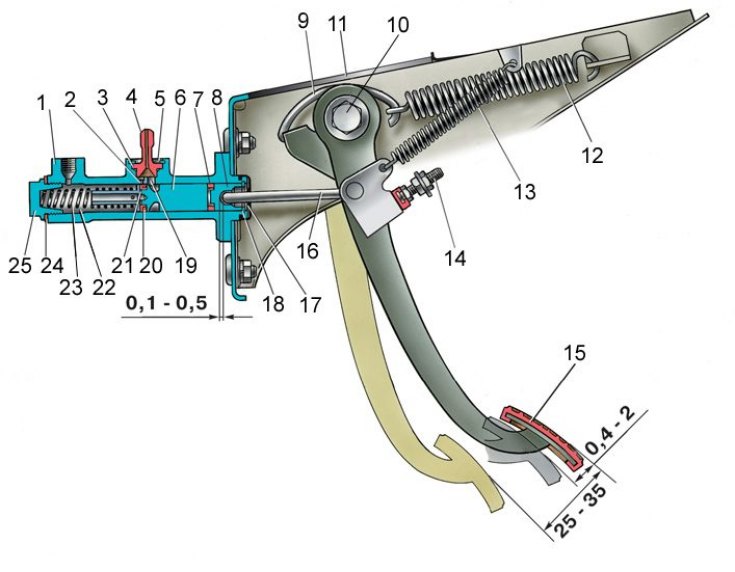
1 – master cylinder body; 2 – bypass (compensatory) hole; 3 – gasket of the fitting; 4 – nipple; 5 – locking spring washer; 6 – master cylinder piston; 7 – sealing ring; 8 – pusher piston; 9 – hook; 10 – pedal axle; 11 – clutch and brake pedal bracket; 12 – clutch pedal servo spring; 13 – clutch pedal release spring; 14 – Clutch pedal travel limiter; 15 – clutch pedal; 16 – piston pusher; 17 – protective cap; 18 – retaining ring; 19 – inlet; 20 – sealing ring (ring valve); 21 – piston bypass hole; 22 – working cavity of the cylinder; 23 – spring; 24 – gasket; 25 – cork
1. A gap of 0.1–0.5 mm is set between the pusher and the piston of the master cylinder (see fig. Clutch pedal and master cylinder). This gap, necessary for complete disengagement of the clutch, is regulated by the clutch pedal limiter 14. The gap is determined by the free travel of the pedal, equal to 0.4–2 mm.
2. The free travel of the clutch release fork pusher, equal to 4–5 mm, is adjusted by nut 5 (see Fig. Slave cylinder and clutch release fork), which is fixed with lock nut 6.
3. The amount of free travel of the pusher is controlled by a special template.
4. After making the above adjustments, the free travel of the clutch pedal before the clutch starts to disengage should be 25–35 mm.