




Contents: Voltage regulator ↓ Battery charge indicator lamp relay ↓ Generator system operation ↓ Temperature compensation ↓ Operation of the voltage regulator ↓
Open large image in new tab »
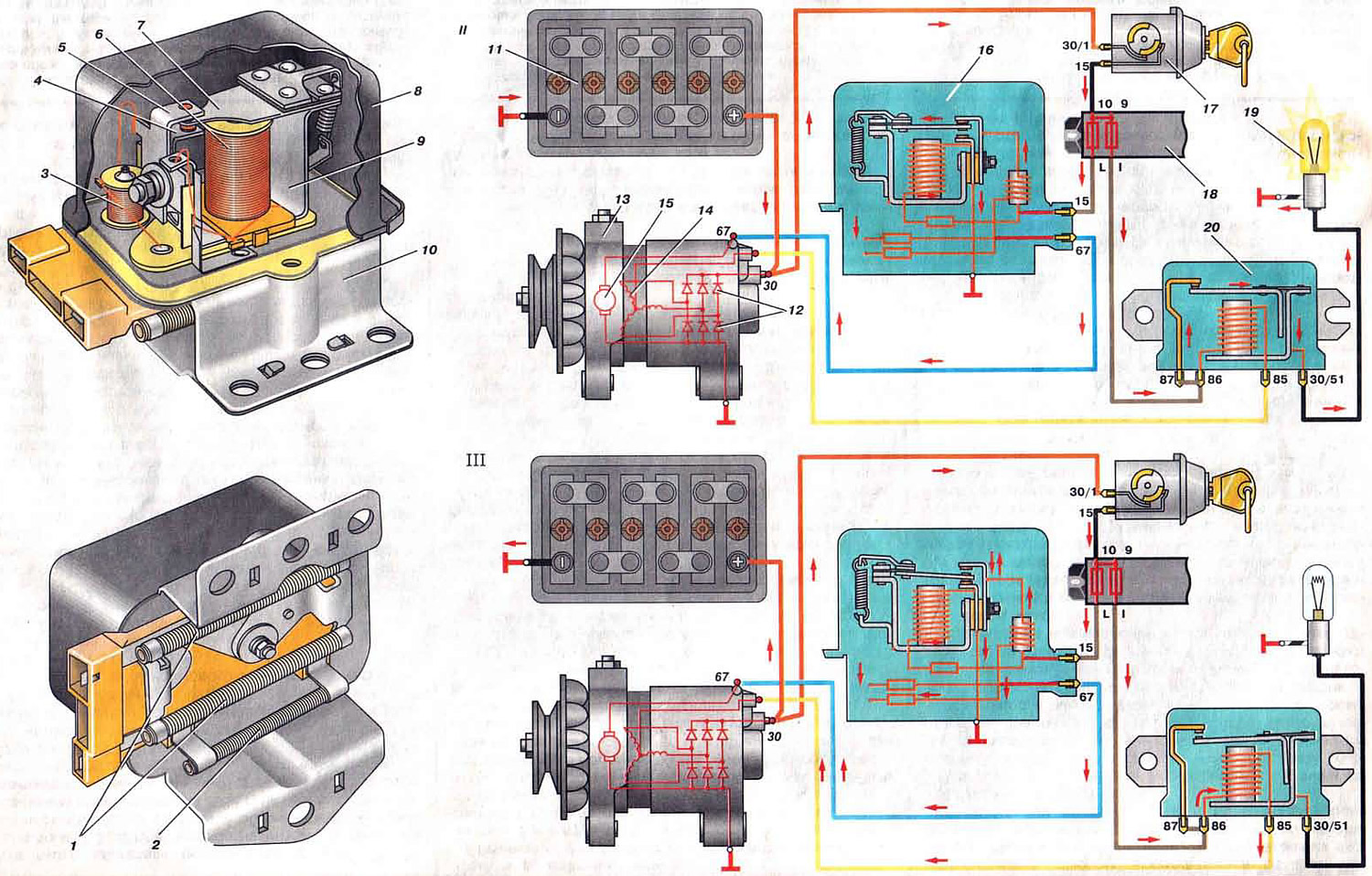
Fig. 29. Operation of the generator system.
1. Temperature compensating resistor; 2. Additional resistors; 3. Throttle; 4. Rack with lower contact of voltage regulator; 5. Rack with upper contact of voltage regulator; 6. Voltage regulator winding; 7. Voltage regulator anchor; 8. Voltage regulator cover; 9. Voltage regulator yoke; 10. Voltage regulator base; 11. Battery; 12. Generator rectifier; 13. Generator; 14. Generator stator winding; 15. Generator rotor winding; 16. Voltage regulator; 17. Ignition switch; 18. Fuse box; 19. Battery charge indicator lamp; 20. Battery charge indicator lamp relay; I. Voltage regulator PP-380; II. Operation at low generator rotor speed; III. Operation at medium and high generator rotor speed.
1. Temperature compensating resistor; 2. Additional resistors; 3. Throttle; 4. Rack with lower contact of voltage regulator; 5. Rack with upper contact of voltage regulator; 6. Voltage regulator winding; 7. Voltage regulator anchor; 8. Voltage regulator cover; 9. Voltage regulator yoke; 10. Voltage regulator base; 11. Battery; 12. Generator rectifier; 13. Generator; 14. Generator stator winding; 15. Generator rotor winding; 16. Voltage regulator; 17. Ignition switch; 18. Fuse box; 19. Battery charge indicator lamp; 20. Battery charge indicator lamp relay; I. Voltage regulator PP-380; II. Operation at low generator rotor speed; III. Operation at medium and high generator rotor speed.
Voltage regulator
To maintain the voltage in the vehicle's on-board network at a constant level of 1314 V, regardless of the rotor speed, a vibration two-stage voltage regulator of the PP-380 type is used. Some vehicles are equipped with a contactless electronic voltage regulator of the 121.3702 type. It can be used instead of the PP-380 regulator without any alterations to the vehicle's electrical equipment circuit.
The PP-380 voltage regulator is an electromagnetic relay. Like every relay of this type, it has a magnetic system consisting of a cylindrical core and a U-shaped yoke 9, a coil with a winding 6 on a plastic frame, an anchor 7 with a movable contact and two posts 4 and 5 with fixed contacts. The grooves in the posts allow them to be moved up and down when adjusting the regulator.
The upper and lower anchor contacts in combination with the pillar contacts form two pairs of contacts - upper and lower. The anchor is pressed against the upper pillar contact by a spring. By bending the lower spring bracket, its tension can be changed and thus the voltage value at which the upper pair of contacts will open can be adjusted. Under the base on the insulating gasket there is a temperature-compensating resistor 1 and two additional resistors 2 with a total resistance of 5.5 Ohm. Choke 3 serves to reduce sparking between the upper pair of contacts.
Battery charge indicator lamp relay
Relay 20 type RS-702 is designed to turn on the control lamp in the instrument cluster when the generator voltage is insufficient to charge the battery. The relay contact opening voltage at (25±5)°C is (5.3±0.4) V, and closing voltage is 0.0-1.5 V. The winding resistance is 29 Ohm.
Generator system operation
In the operation of the generator system, three modes can be distinguished: operation at low, medium and high rotation speed of the generator rotor.
I mode. This is the engine start mode when it is not yet running or is being cranked by the starter. In this case, consumers are powered by the storage battery. In this mode, after the ignition is turned on, current flows in the generator excitation winding circuit, closing along the path: "plus" of the storage battery - ignition switch 17 - fuse "10" - plug "15", throttle core 3, closed upper contacts, anchor, yoke, plug "67" of the regulator - plug "67" of the generator - excitation winding of the generator - "ground" - "minus" of the storage battery.
This current creates a magnetic flux, which, when the generator rotor rotates, crosses the turns of the generator stator winding and induces an electromotive force in them. At the same time, current flows through winding 6 of the voltage regulator, which creates a magnetic attraction of the regulator anchor to the core, but not yet so strong as to pull the anchor to the core and open the upper pair of contacts of the voltage regulator.
At the same time, control lamp 19 lights up, signaling that all consumers are powered by the battery. Current through the lamp goes along the path: "+" of the battery - ignition switch - fuse "9" - closed contacts of relay 20 - control lamp 19 - "ground" - of the battery.
II mode. After the engine starts, the rectified voltage of the generator exceeds the voltage of the storage battery. The excitation winding of the generator and the winding of the voltage regulator are powered by the generator. In this case, the current comes from the terminal "30" of the generator and closes through the "ground" to the rectifier of the generator. The storage battery is charged.
Under the action of the rectified phase voltage, current flows through the winding of relay 20 along the path: terminal "30" of the generator - ignition switch - fuse "9" - relay winding - plug of the terminal of the zero point of the generator stator winding - generator rectifier. When the rectified phase voltage reaches 5.3-5.7 V, the relay anchor is attracted to the core, the relay contacts open, and the lamp goes out, signaling that the rectified voltage of the generator has become greater than the voltage of the battery.
As the generator rotor speed increases, the voltage increases and when it reaches 13.2-14.3 V, the magnetic force overcomes the spring tension and the anchor 7 is attracted to the core. In this case, the upper pair of contacts opens, additional resistors 2 are included in the excitation winding circuit. The generator voltage drops, and the magnetic attraction of the anchor to the core decreases accordingly. The spring pulls the anchor to its original position, the upper contacts close, the generator voltage increases again, and the described cycle repeats.
The closing and opening of the upper pair of contacts occurs with a frequency of 25-250 times per second, and the generator voltage at the rectifier output with the same frequency either increases or decreases. Due to the high frequency of opening and closing of contacts, voltage fluctuations are unnoticeable, and it can be considered practically constant, maintained at a level of 13-14 V.
With further increase in the generator rotor speed, the open state time of the contacts increases, and the closed state time decreases. Due to this, the average voltage at the generator rectifier output increases slightly.
III mode. At high generator rotor speed, the first stage of regulation (on the top pair of contacts) no longer maintains the voltage at 14 V. The generator voltage increases to 13.9-14.5 V, and the anchor is attracted to the core until the lower pair of contacts closes. In this case, both ends of the excitation winding are shorted to ground.
[The article is taken from the website: VAZbook.ru]
The current in the excitation winding drops sharply to zero, and the generator voltage also drops sharply. This leads to a decrease in the current in the regulator winding and a decrease in the magnetic attraction of the anchor to the core. The spring pulls the anchor away from the core, the lower contacts open, and the described process is repeated again with a frequency of 80-100 times per second.
Temperature compensation
When the engine is running, the temperature of the regulator increases both from the heating of its winding and resistors, and from the increase in temperature in the engine compartment. Consequently, the resistance of the copper wire of the regulator winding increases, the current flowing through it decreases, and more voltage is required to open the upper contacts and close the lower ones. To ensure that the voltage does not change with temperature fluctuations, it provides two types of temperature compensation.
The first is the inclusion in series with winding 6 of a 19 Ohm temperature compensation resistor 1 made of nichrome with a low temperature coefficient of resistance. It reduces the change in resistance in the winding circuit, but does not completely eliminate the increase in voltage. Therefore, the regulator also has a second type of temperature compensation - the anchor is attached to the yoke using a bimetallic plate. When heated, it tends to bend toward the core and creates a force that counteracts the spring pulling the anchor away from the core.
Operation of the voltage regulator
The operation of the 121.3702 voltage regulator consists of switching off the excitation winding if the voltage becomes higher than 13.4-14.6 V, and switching it on if the voltage falls below this limit. This is ensured by locking and unlocking a powerful transistor in the regulator circuit. Switching off and on of the generator voltage fluctuations is practically unnoticeable.