




Before removing air from the brake system, make sure that all brake drive units and their connections are tight, clean the lid and the surface around the tank lid, fill the tank with Neva or Tom liquid up to the MAX mark. Then thoroughly clean the air removal nipples and remove the protective caps from them. It is not recommended to use liquid drained from the system to fill the tank, as it is saturated with air, has a lot of moisture and may be contaminated.
Air is removed from the system first from one circuit, then from the other, starting with the rear brake wheel cylinders.
Put on the head of the fitting 1 (figure 114) rubber hose 2 for draining the liquid, and its free end is lowered into a transparent vessel 3, partially filled with liquid. Sharply pressing the brake pedal 3-5 times at intervals of 2-3 seconds, unscrew the nipple by 1/2-3/4 of a turn with the pedal pressed. Continuing to press the pedal, force out the liquid in the system together with the air through the hose into the vessel. After the brake pedal reaches the forward extreme position and the flow of liquid through the hose stops, screw the air release nipple all the way. Repeat these operations until bubbles stop coming out of the hose.
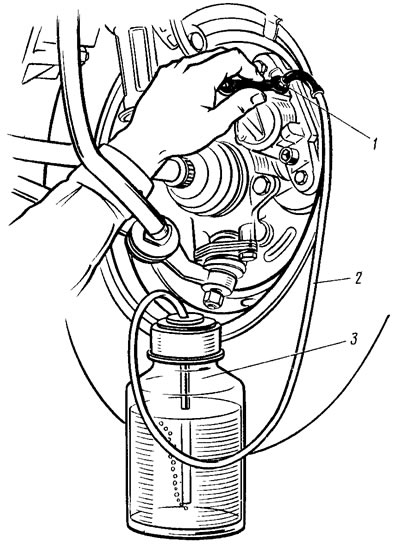
Figure 114. Bleeding air from the brake hydraulic system
Keeping the pedal pressed, tighten the nipple until it stops and remove the hose. Wipe the nipple dry and put on the protective cap. Then repeat the operations for the other wheels, first on the second wheel of the same circuit, and then sequentially on both wheels of the other circuit. When removing air, monitor the presence of liquid in the tank, not allowing its bottom to be exposed, since this will again allow air to enter the system. If there is no air in the brake drive, the brake pedal should travel about 1/2 of its full travel. To eliminate the influence of the vacuum booster on bleeding the brakes, air is removed with the engine not running.
If there is no brake fluid in the hydraulic drive, fill the system as follows:
- pour brake fluid into the reservoir;
- unscrew the fittings on the cylinders of all wheels by 1.5-2 turns;
- sharply pressing the brake pedal and smoothly releasing it, tighten the fittings as the fluid flows out of them. Then bleed the brake system. When removing air from a car whose brake system has worked for a long time, replace the fluid with new.