




Contents: Removal and installation ↓ Disassembly and assembly ↓ Checking parts before assembly ↓ Checking the tightness of the master…↓
Removal and installation
Disconnect the pipes from the master cylinder and the connector with wires from the terminals of the brake fluid emergency level sensor. Close the holes in the pipes and the master cylinder to prevent fluid leakage and dirt from getting into them. Remove the cylinder assembly with the reservoir by unscrewing the nuts securing it to the vacuum booster. Remove the brake fluid emergency level sensor and drain the brake fluid from the reservoir and cylinder. It is not recommended to remove the reservoir from the master cylinder unless necessary.
The installation of the master cylinder is carried out in the reverse order of removal. After installing the cylinder, bleed the brake hydraulic drive to remove air.
Disassembly and assembly
If necessary, remove the reservoir 13 from the master cylinder (see figure 108), for which it is pulled out with force. Having unscrewed the locking screws 10, all the parts are successively removed from the cylinder. The cylinder is assembled in the reverse order of disassembly. In this case, all the parts are lubricated with brake fluid. It is recommended to replace the gaskets under the locking screws 10 with new ones.
Checking parts before assembly
Wash all parts with isopropyl alcohol, dry with a stream of compressed air or wipe with a clean cloth, avoiding contact with mineral oils, kerosene or diesel fuel, which can damage the seals. The time for washing the sealing rings in isopropyl alcohol should not exceed 20 seconds, after which they are blown with compressed air. The cylinder mirror and the working surface of the pistons must be completely clean, without rust, scratches and other defects. Each time the cylinder is disassembled, replace sealing rings 2 and 5 (see figure 108), even if they are in good condition. Check the elasticity of the 8 piston spring, the length of which should be: 36 mm under a load of 3.5-4.2 kgf; 21 mm under load 6.35-7.35 kgf; 57.5 mm in free state.
Checking the tightness of the master cylinder
The original can be viewed on the portal: www.VAZbook.ru
The master cylinder is installed on the BS-134.000 stand and connected to the stand elements, as shown in Figure 115. Fill the cylinder reservoir 4 with brake fluid and, moving the master cylinder pistons 7 several times over the full length of their stroke, pump the system through the valves 3. Rotating the flywheel 5, slowly move the master cylinder pistons until the pressure monitored by the pressure gauges 2 reaches 125 kgf/cm². In this position, fixed by the indicator 5, the master cylinder pusher is blocked. The specified pressure must remain constant for at least 5 s. In the event of a fluid leak or a change in pressure during this time, replace the piston sealing rings. To ensure the accuracy of the pressure gauges 2, the stand is equipped with absorption cylinders 1.
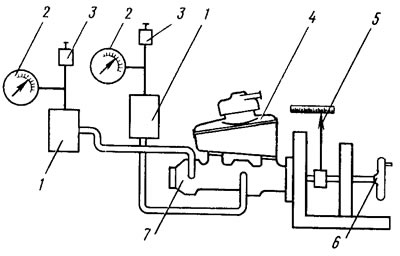
Figure 115. Master cylinder tightness test diagram