




- two screwdrivers (with flat and cross blades)
- key "8"
- caliper with depth gauge shank
Remove the air filter (see subsection 10.10.1.).
The fuel level in the float chamber affects the parameters of all carburetor systems. Exceeding the optimal level increases fuel consumption, worsens the start and operation of a warm engine. If the level is too low, engine power decreases, its cold start becomes difficult and jerks appear when accelerating the car.
Adjust the fuel level with the carburetor cover removed.
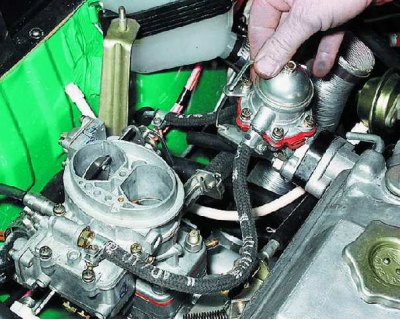
1. Using the manual fuel pump lever, fill the float chamber with gasoline until the fuel valve closes and the level stabilizes (at this point the force on the manual pumping rod will drop sharply).
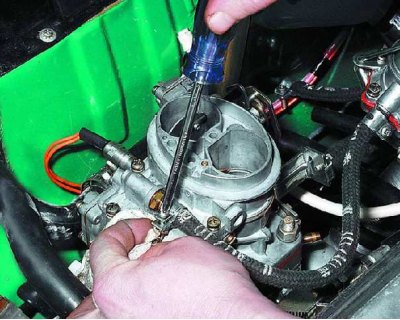
2. Loosen the fuel supply hose clamp and...
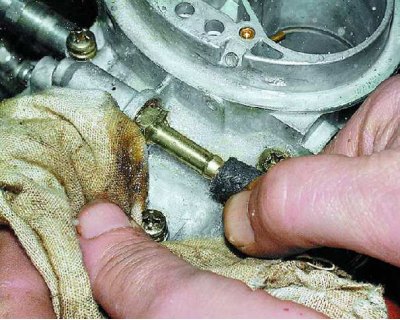
3....remove the hose from the carburetor fitting.
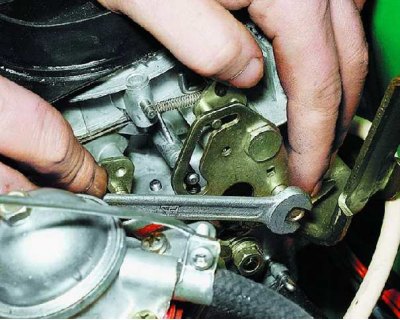
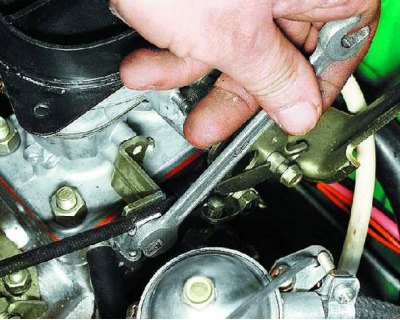
4. Loosen the bolt securing the rod to the air damper drive lever.
The text is copied from the online resource VAZBOOK
5. Using the same key, loosen the bolt securing the rod housing to the bracket and disconnect the rod from the carburetor.
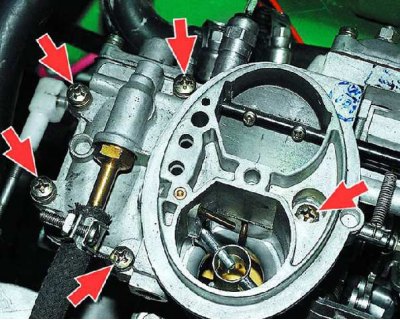
6. Remove the five screws securing the carburetor cover and...
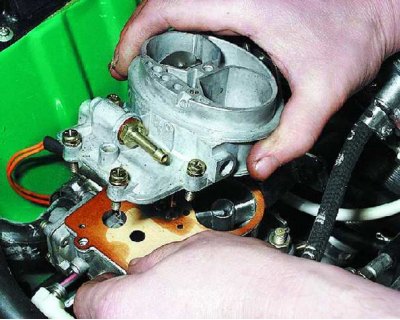
7....remove the lid. Don't lose the screws - they easily fall out when you turn the lid over.
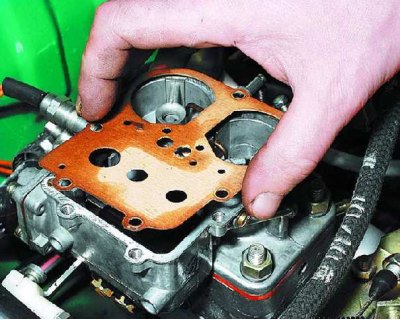
8. Carefully remove the cover gasket.
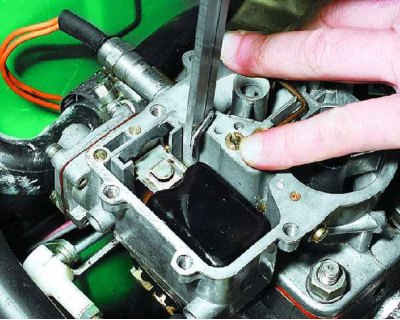
9. Using the caliper shank, measure the distance from the fuel level to the upper plane of the float chamber. It should be 22–23 mm.
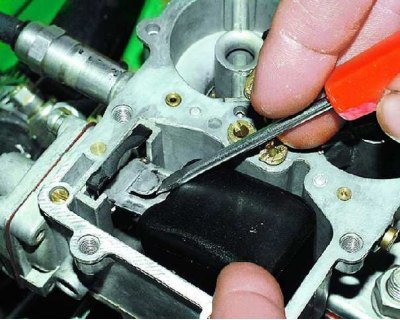
10. If the level is above normal, use a screwdriver to carefully bend the float bracket tongue upwards while holding the float.
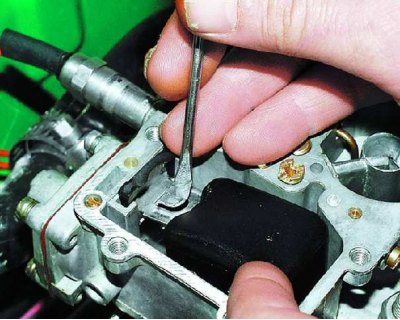
11. If the level is below the norm, bend the tongue down. To check the newly set level, pump out some gasoline from the float chamber with a rubber bulb, replace the carburetor cover, connect the fuel supply hose and refill the float chamber with gasoline using the fuel pump manual priming lever rod. Remove the carburetor cover again and measure the fuel level.