




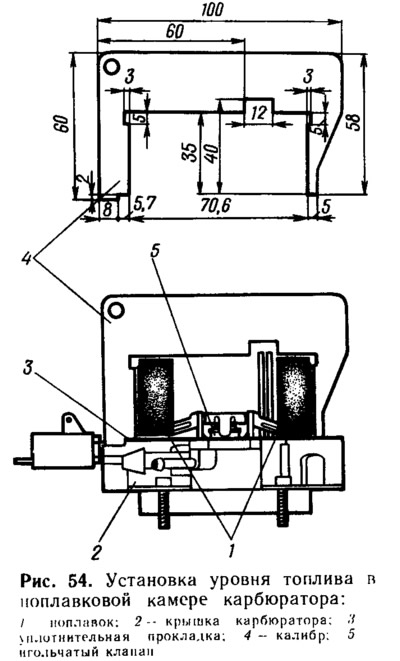
Correct installation of float 1 (figure 54) check with gauge 4, for which carburetor cover 2 is installed horizontally with the float facing up and the gauge is placed perpendicular to the cover. There should be a gap of no more than 1 mm between the gauge and the float at the top and sides. If necessary, it is adjusted by bending the tongue and float levers. The supporting surface of the tongue should be perpendicular to the axis of the needle valve 5 and should not have dents or nicks.
If there is no gauge, the fuel level can be checked by removing the float chamber cover. To do this, manually fill the float chamber with fuel, disconnect the fuel supply hose to the carburetor and remove the air filter and carburetor cover. Measure the fuel level in the chamber from the upper plane of the carburetor body with a ruler, which should be 23.5... 27 mm (the true fuel level in the float chamber with the carburetor cover installed is higher due to the lower part of the float being immersed in fuel). If necessary, the fuel level can be changed by bending the float tongue. It is necessary to ensure that the float does not touch the walls of the float chamber. Each time you check the fuel level, you should first remove the fuel from the float chamber, install the carburetor cover, connect the fuel supply hose and fill the float chamber using the manual fuel pump lever.