




When cornering, the fundamental principle is the correct choice of speed. This choice results from careful study and consideration of the following factors when approaching the corner:
- turning radius;
- the nature and condition of the road surface;
- roadway profile (ascents, descents);
- width of the roadway;
- road visibility;
- the presence and nature of the cargo being transported;
- driver experience;
- the condition and model of your "ten".
When a vehicle turns, it is subject to a centrifugal force that is directly proportional to the square of the speed and inversely proportional to the radius of the turn. It is directed away from the center and tries to throw the vehicle off the road.
The sequence of your actions when turning left on curves in the road should be as shown in Fig. 10:
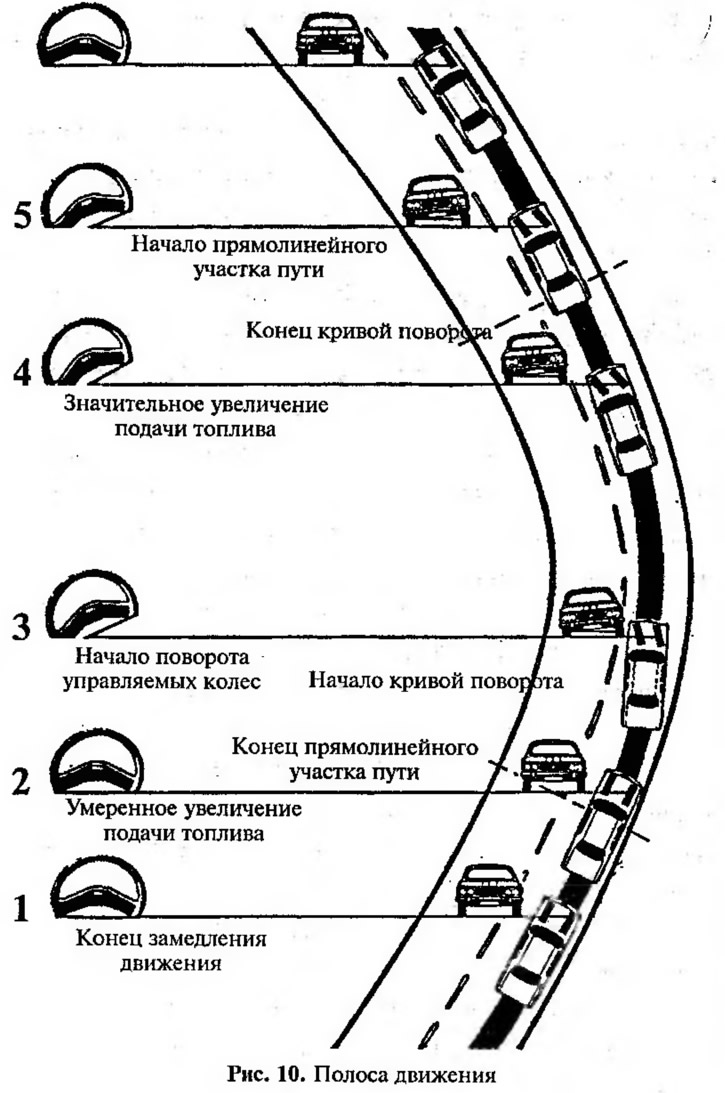
- 1 - Before entering a turn, direct the car to the right side of the traffic lane, slow down, and if there is not enough power reserve, shift to a lower gear. Choose the trajectory of your car so that its radius is greater than the radius of the turn of the road. Reduce centrifugal force;
- 2 - moderately increase the fuel supply, the car enters the turn before the steering wheel starts to turn. Once again assess the situation through the rear-view mirrors and the situation ahead;
- 3 - start turning the steering wheel smoothly but firmly; do not reduce the pressure on the gas pedal, the car goes "in tension" to maintain traction and compensate for the effect of lateral inertial force. Sharp rotation of the steering wheel can lead to the fact that the car continues to move straight with the front wheels slipping or will turn with a delay;
- 4 - then gradually turn the steering wheel to the right to the original position, allowing the car to move to the right side of the lane, and significantly increase the fuel supply;
- 5 - the car exits the turn and switches to straight-line movement.
The sequence of your actions when turning right on curves in the road should be as shown in Fig. 11:
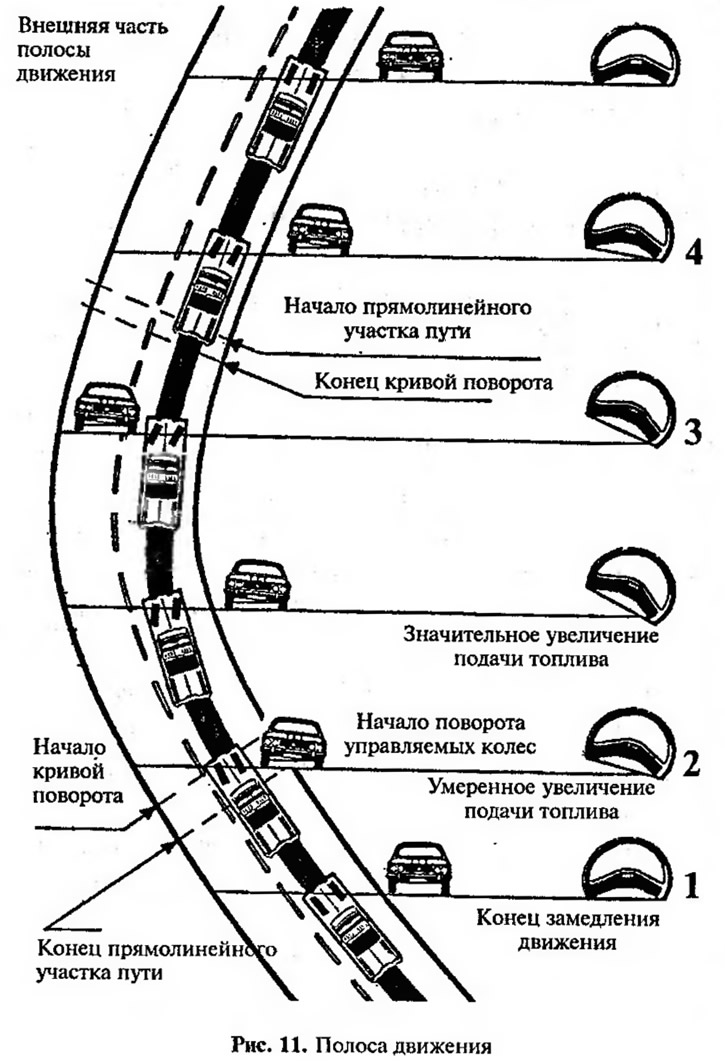
- 1 - Before the start of the curve, steer the car to the left side of the traffic lane, brake and, if there is insufficient power reserve, shift to a lower gear;
- 2 - then, while on a straight section, moderately begin to increase the fuel supply before you start turning the steering wheel;
- 3 - then smoothly turn the steering wheel to the right, without reducing the pressure on the gas pedal. Make the trajectory of your car along a curve, the turning radius of which is greater than the turning radius of the road;
- 4 - gradually turn the steering wheel to the left and increase the fuel supply significantly. Never move the car too much to the left and especially do not drive into the oncoming traffic lane - this is always dangerous.
When entering a straight section, return the steering wheel to the neutral position. Assess the situation: obstacles may appear on the turn and behind it, pedestrians may appear around the turn that you did not see, since the view is limited when turning right.