




Carburetors models 2105-1107010 and 2107-1107010 (Fig. 40) emulsion type, two-chamber, with a falling flow. They have a balanced float chamber, main metering systems (Fig. 41), enrichment device (econostat), idle system (Fig. 42), transition system, diaphragm accelerator pump, forced idle economizer, diaphragm starting device, spool device for crankcase gases suction, pneumatic drive of the throttle valve of the second chamber (Fig. 43).
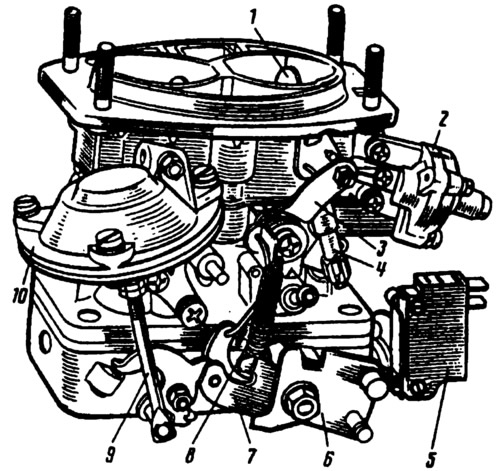
Fig. 40. Carburetor models 2105-1107010 and 2107-1107010 from the throttle drive side:
1 - air damper; 2 - starting device; 3 - three-arm air damper control lever; 4 - telescopic rod; 5 - micro switch; b - throttle actuator lever; 7 - lever limiting the opening of the second chamber throttle valve; 8 - return spring; 9 - pneumatic drive rod; 10 - pneumatic drive of the second chamber throttle valve.
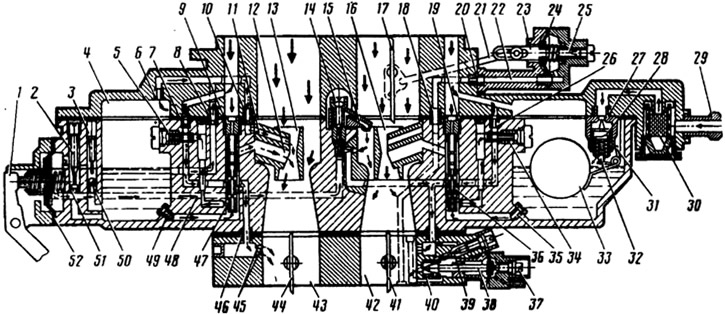
Fig. 41. Scheme of operation of the carburetor models 2105-1107010 and 2107-1107010:
1 - accelerator pump lever; 2 - adjusting screw of the accelerator pump; 3 - cork; 4 - float chamber; 5 - fuel jet housing of the transition system; 6 - economizer air jet; 7 - air jet of the transition system; 8 - fuel jet economizer; 9 - main air jet of the second chamber; 10 - emulsion jet of economizer; 11 - economizer nozzle; 12 - sprayer of the main dosing system of the second chamber; 13 - small diffuser of the second chamber; 14 - accelerator pump valve screw; 15 - accelerator pump nozzle; 16 - small diffuser of the first chamber; 17 - air damper; 18 - adapter sleeve; 19 - main air jet of the first chamber; 20 - starting device jet; 21 - starting device drive rod; 22 - air channel of the starting device; 23 - rod; 24 - diaphragm of the starting device; 25 - starting device adjustment screw; 26 - idle air jet; 27 - needle valve seat; 28 - needle valve; 29 - fuel supply pipe; 30 - fuel filter; 31 - float bracket with stop; 32 - damper ball; 33 - float; 34 - idle fuel jet; 35 - main fuel jet of the first chamber; 36 - emulsion tube of the first chamber; 37 - mixture quantity adjustment screw; 38 - forced idle economizer needle; 39 - mixture quality (composition) adjustment screw; 40 - economizer needle seat; 41 - first chamber throttle valve; 42 - first mixing chamber: 43 - second mixing chamber; 44 - second throttle valve; 45 - non-adjustable holes of the transition system; 46 - adapter sleeve; 47 - second chamber emulsion tube; 48 - fuel channel of the accelerator pump; 49 - main fuel jet of the second chamber; 50 - accelerator pump check valve; 51 - accelerator pump bypass jet; 52 - accelerator pump diaphragm.
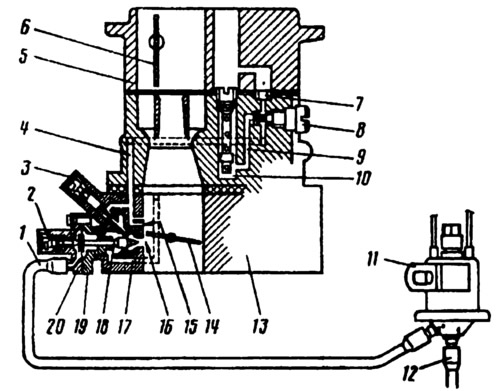
Fig. 42. Connection diagram of the pneumatic valve of the forced idle economizer:
1 - hose connecting the economizer to the pneumatic valve; 2 - mixture quantity adjustment screw; 3 - adjusting screw for mixture quality (composition); 4 - emulsion channel; 5 - carburetor cover; 6 - air damper; 7 - idling system air jet; 8 - idle fuel jet housing; 9 - fuel channel; 10 - emulsion well; 11 - economizer pneumatic valve; 12 - hose going to the intake pipe; 13 - throttle body; 14 - throttle valve; 15 - transient mode holes; 16 - idle system outlet; 17 - air supply channel; 18 - economizer needle; 19 - economizer housing; 20 - economizer cover.
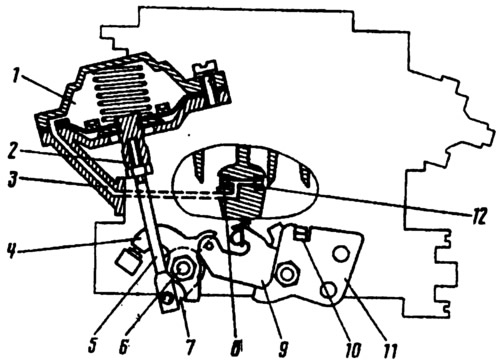
Fig. 43. Diagram of the throttle valve drive for carburetors 2105-1107010 and 2107-1107010:
1 - pneumatic drive cavity above the diaphragm; 2 - rod bushing; 3 - air channel for supplying vacuum to the pneumatic drive; 4 - second chamber throttle control lever; 5 - pneumatic drive rod; 6 - second chamber throttle valve axis; 7 - lever connected to lever 4 via a spring; 8 - pneumatic drive jet located in the diffuser of the second chamber; 9 - lever limiting the opening of the second chamber throttle valve; 10 - lever rigidly mounted on the axis of the first chamber throttle valve; I - throttle actuator lever; 12 - pneumatic drive jet located in the diffuser of the first chamber.
Carburetors models 21051-1107010 and 21053-1107010 began to be installed on cars from 1985-1987. The carburetors are structurally different from those described above and are installed on engines: 21051-1107010 with a cylinder displacement of 1.2 and 1.3 l, 21053-1107010 with a displacement of 1.45 l. The carburetors differ from each other only in their calibration data.
Carburetors models 21051-1107010 and 21053-1107010 emulsion, two-chamber, with a falling flow, with sequential forced opening of the throttle valves (Fig. 44). The carburetor has a balanced float chamber, a system for sucking crankcase gases behind the throttle valve, heating of the throttle valve of the first chamber at the outlet of the emulsion from the idle system. In the second neck of the carburetor cover above the first chamber, an air damper with manual control is installed.
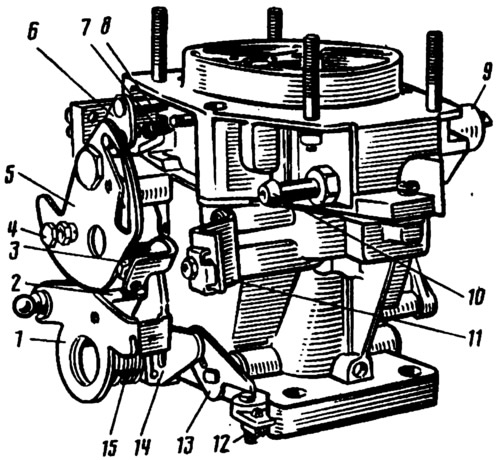
Fig. 44. Carburetor models 21051-1107010 and 21053-1107010 from the throttle drive side:
1 - throttle control lever; 2 - pin of the second chamber locking lever; 3 - adjusting screw for opening the throttle valve of the first chamber; 4 - air damper drive rod mounting screw; 5 - air damper control lever; o - air damper lever; 7 - air damper return spring; 8 - diaphragm rod of the starting device; 9 - electromagnetic shut-off valve; 10 - fuel supply pipe; 11 - bracket for fastening the traction shell; 12 - adjusting screw of the second chamber; 13 - second chamber throttle lever; 14 - second chamber throttle actuator lever; 15 - return spring.
The carburetor has two main metering systems (Fig. 45), a transition system and an idle system of the first chamber with an electromagnetic shut-off valve, a transition system of the second chamber, a power mode economizer, a diaphragm accelerator pump, and a starting device.
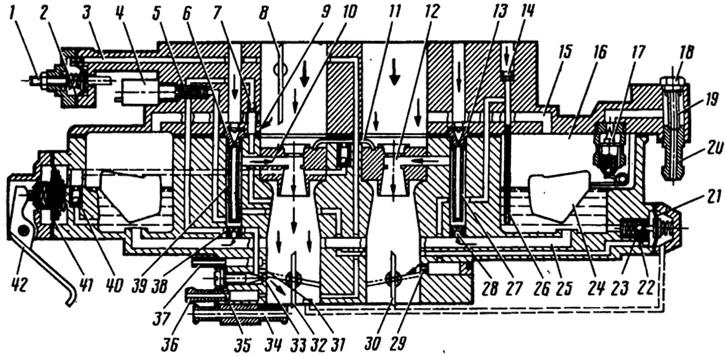
Fig. 45. The design of the carburetor models 21051-1107010 and 21053-1107010:
1 - starting device adjustment screw; 2 - diaphragm of the starting device; 3 - air channel of the starting device; 4 - electromagnetic shut-off valve; 5 - idle fuel jet; 6 - main air jet of the first chamber; 7 - idle air jet; 8 - air damper; 9 - idle flow channel; 10 - sprayer of the main dosing system of the first chamber; 11 - accelerator pump nozzle; 12 - sprayer of the main dosing system of the second chamber; 13 - main air jet of the second chamber; 14 - air jet of the transition system of the second chamber; 15 - float chamber balancing channel; 16 - float chamber; 17 - needle valve; 18 - cork; 19 - fuel filter; 20 - fuel supply pipe; 21 - power mode economizer diaphragm; 22 - fuel jet of the power mode economizer; 23 - power mode economizer ball valve; 24 - float; 25 - fuel channel; 26 - fuel jet of the transition system of the second chamber with a tube; 27 - emulsion tube of the second chamber; 28 - main fuel jet of the second chamber; 29 - outlet openings of the transition system of the second chamber; 30 - second chamber throttle valve; 31 - first chamber transition system slit; 32 - first chamber throttle valve; 33 - idle system outlet; 34 - carburetor heating unit; 35 - adjusting screw for idle mixture quality (composition); 36 - crankcase gas suction pipe; 37 - branch pipe for supplying vacuum to the vacuum ignition regulator; 38 - main fuel jet of the first chamber; 39 - emulsion tube of the first chamber; 40 - accelerator pump ball valve; 41 - accelerator pump diaphragm; 42 - accelerator pump drive lever.
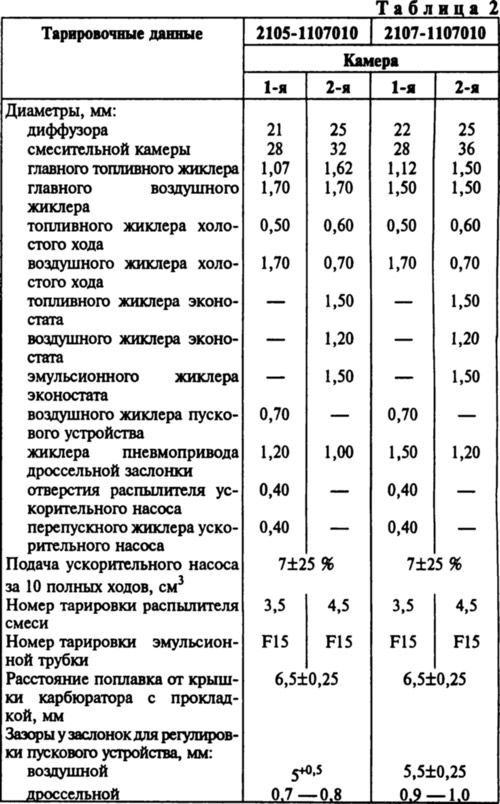
The calibration data for the carburetors are given in Table 3.
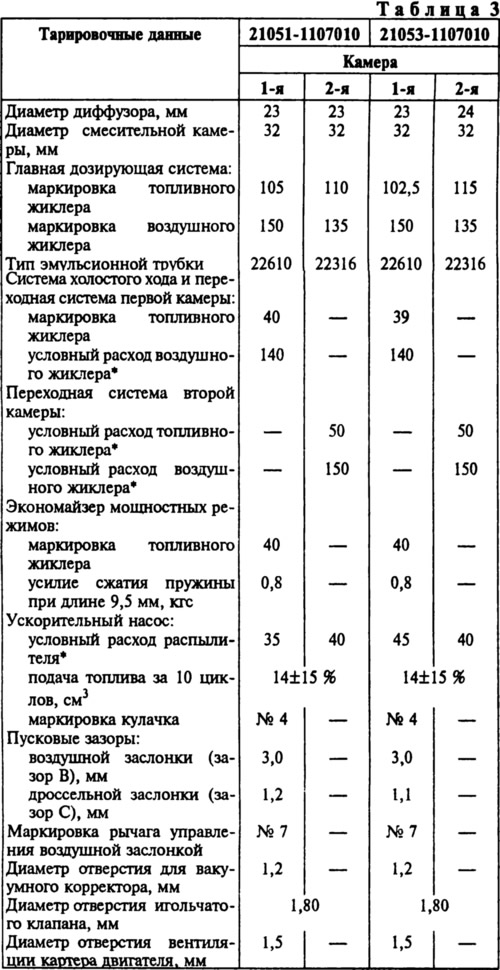
* The nominal flow rate of the jet is determined by the standard jet using a special method. It is not subject to control during operation.
Note: The marking of the jets is determined by the flow rate, which is measured using micrometers. Micrometers are adjusted according to the standard jets.