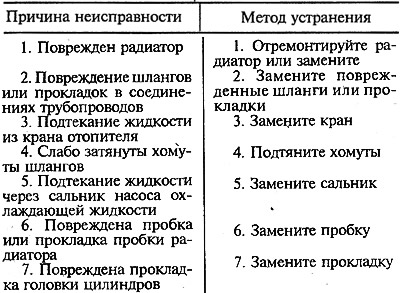
Engine won't start

Engine runs erratically or stalls at idle
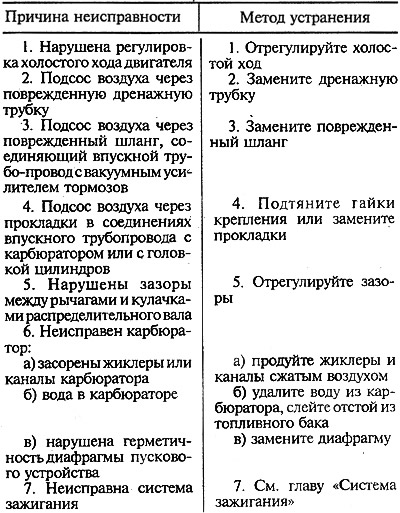
The engine does not develop full power and does not have sufficient throttle response
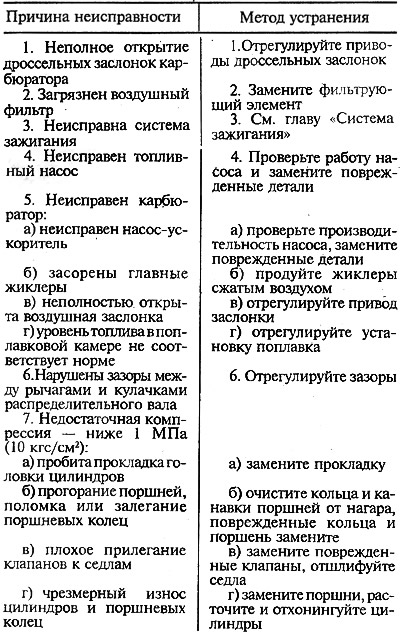
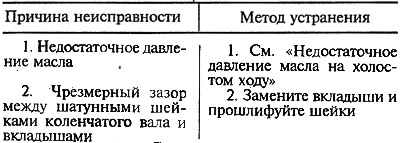
Knocking crankshaft bearings
Usually a dull tone, metallic. Detected when the throttle is suddenly opened at idle. Its frequency increases with an increase in the frequency of rotation of the crankshaft. Excessive axial clearance of the crankshaft causes a sharper knock with uneven intervals, especially noticeable with a smooth increase and decrease in the crankshaft speed.
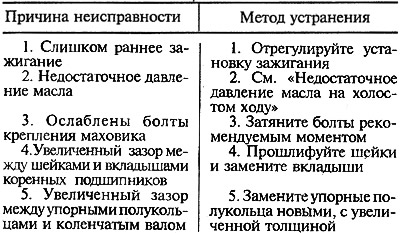
Knocking rod bearings
Usually the knock of the connecting rod bearings is sharper than the knock of the main bearings. It is heard at idle speed of the engine with a sharp opening of the throttle. The place of knocking is easy to determine by turning off the spark plugs in turn.
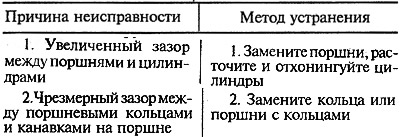
The knock of pistons
This knock is usually unvoiced, muffled; called «beating» piston in the cylinder. It is best heard at low engine speeds and under load.
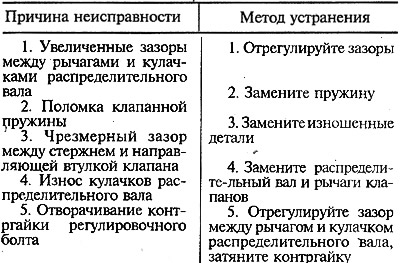
Knocking exhaust and intake valves
Working with increased clearances in the valve train causes a characteristic knock, usually at regular intervals; its frequency is less than any other knock in the engine, since the valves are driven by a camshaft whose rotational speed is half that of the crankshaft.
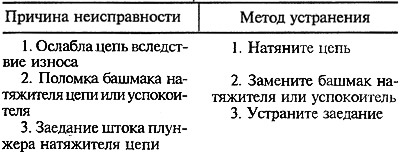
Excessive Camshaft Drive Circuit Noise
From the general noise of the engine, the noise of the camshaft drive circuit stands out when gaps appear between the gearing elements and is clearly audible at a low crankshaft speed.
Insufficient oil pressure at idle with a warm engine
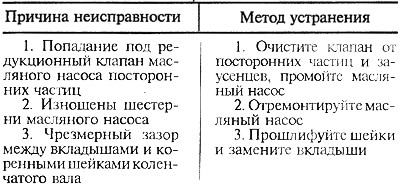
Excessive oil pressure on a warm engine
Oil pump pressure relief valve sticking - Replace valve
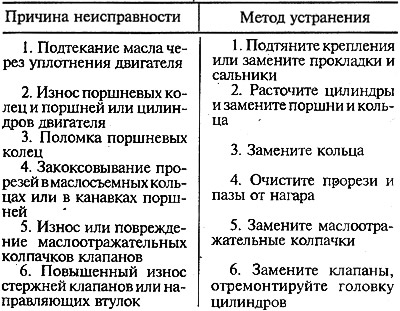
Increased oil consumption
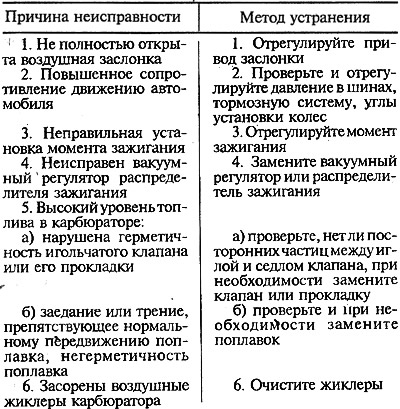
Increased fuel consumption
Engine overheating
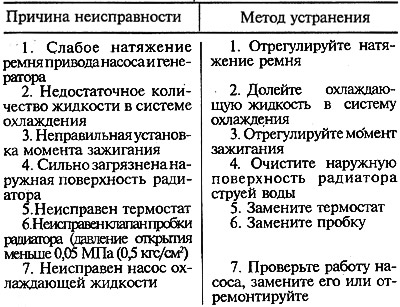
Rapid drop in fluid level in expansion tank