




The service brake system consists of the brake mechanisms of the front and rear wheels and the hydraulic drive to them. One circuit of the hydraulic drive ensures the action of the brake mechanisms of the front wheels, the other - the brake mechanisms of the rear wheels. Independent separate drive of the brake mechanisms of the front and rear wheels significantly increases the safety of the vehicle.
The hydraulic drive includes a vacuum booster 3 (Fig. 192) and a pressure regulator 19 of the rear brakes. The first increases the reliability of the brake system by reducing the force on the brake pedal and creates comfort when driving the car, and the pressure regulator reduces the likelihood of skidding of the rear wheels when braking. An automatic device for adjusting the clearance in the rear brake mechanism is located in the wheel cylinder.
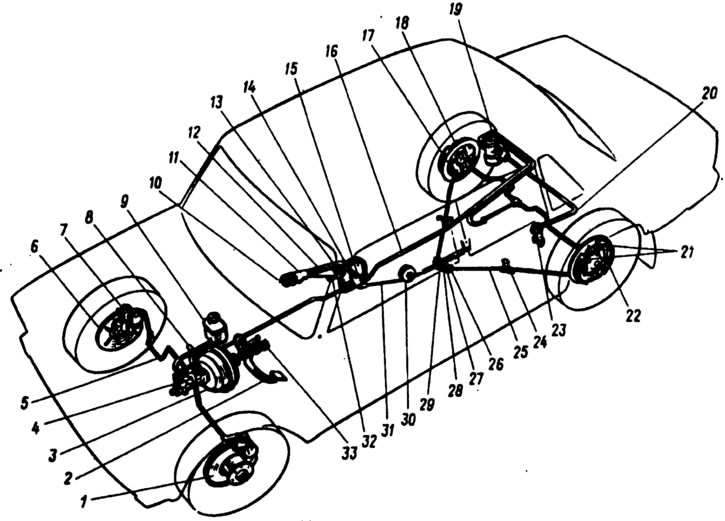
Fig. 192. Brake system diagram:
1 - brake disc; 2 - brake pedal; 3 - vacuum booster; 4 - master cylinder of the brake hydraulic drive; 5 - Front brake drive circuit pipeline; 6 - Front brake protective cover; 7 - Front brake caliper; 8 - vacuum pipeline; 9 - master cylinder reservoir; 10 - Parking brake lever button; 11 - parking brake lever; 12 - Latch rod; 13 - Lever latch; 14 - parking brake lever bracket; 15 - return lever; 16 - rear brake drive circuit pipeline; 17 - flange of the rear end of the cable sheath; 18 - rear brake wheel cylinder; 19 - rear brake pressure regulator; 20 - pressure regulator drive lever; 21 - brake mechanism deck; 22 - manual brake pad drive lever; 23 - pressure regulator drive lever rod; 24 - bracket for fastening the front end of the cable sheath; 25 - rear cable; 26 - lock nut; 27 - adjusting nut; 28 - bushing; 29 - rear cable guide; 30 - guide roller; 31 - front cable; 32 - Parking brake indicator lamp switch stop; 33 - brake light switch.
[The material is posted on the online resource: www.vazbook.ru]